In modern mining, geomembrane for mining essential for effective waste management and environmental protection. These durable synthetic barriers prevent contamination and ensure compliance with environmental regulations. Used in applications like tailings storage and heap leach pads, geomembranes are key to maintaining both sustainability and operational efficiency. This article explores why geomembranes for mining are crucial to the success of modern mining projects.
Geomembrane for Mining have become a critical component in modern mining operations, ensuring efficient waste management and environmental protection. As mining projects evolve, the environmental challenges become more complex, making containment solutions even more essential. Mining activities, whether in metal, non-metal, or coal sectors, often result in the production of vast amounts of wastewater, tailings slurry, and acidic runoff—substances that can severely impact soil, groundwater, ecosystems, and human health if not properly managed.
Given these risks, the need for highly efficient, stable, and durable anti-seepage systems in mining is undeniable. In recent years, synthetic polymer geomembrane liner have risen to prominence, offering unmatched impermeability, chemical resistance, and construction flexibility. These geomembranes are widely applied in tailings storage facilities (TSFs), heap leach pads, solution ponds, and leachate collection systems, safeguarding mining operations from hazardous contamination.
1. What is Geomembrane for Mining? Definitions and Types
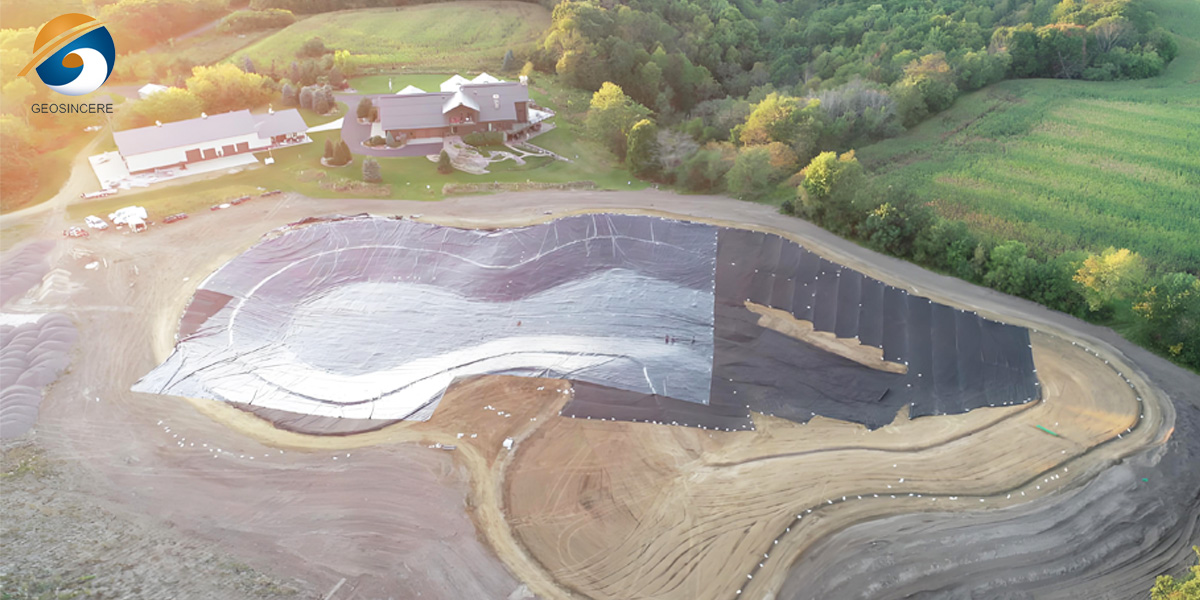
Geomembranes are synthetic materials primarily made from polymer resins, including HDPE (High-Density Polyethylene), LLDPE (Linear Low-Density Polyethylene), LDPE (Low-Density Polyethylene), PVC (Polyvinyl Chloride), and EVA (Ethylene Vinyl Acetate). These materials are typically produced using blown film or calendering processes, with thicknesses ranging from 0.3 mm to 3.0 mm. Their primary function is to create an impermeable barrier that prevents the migration of liquids and gases, ensuring containment and environmental protection.
1.1 HDPE Geomembrane (High-Density Polyethylene) for Mining
HDPE Geomembranes are highly valued for their exceptional strength, durability, and performance in demanding applications. Known for their high tensile strength, they are ideal for use in tailings storage facilities, landfills, and various mining operations. These geomembranes also offer excellent chemical resistance, withstanding a wide range of chemicals such as acids, alkalis, and solvents, ensuring their long-lasting integrity even in harsh mining environments. Additionally, UV durability makes HDPE geomembranes suitable for outdoor applications, even in regions with intense sunlight exposure, without compromising their structural integrity. This combination of strength, chemical resistance, and UV protection makes HDPE geomembranes the go-to solution for waste containment, landfill lining, and water storage in mining projects, providing reliable and impermeable barriers to prevent contamination.
1.2 LLDPE Geomembrane (Linear Low-Density Polyethylene) for Mining
LLDPE Geomembranes are known for their greater flexibility compared to HDPE, allowing them to adapt to uneven surfaces and dynamic settlement areas. This flexibility makes them especially valuable for mining sites with unstable or challenging terrain. Additionally, LLDPE offers superior weldability, enabling the creation of strong, secure seams that form continuous and reliable barrier systems. While slightly less resistant than HDPE to certain chemicals, LLDPE still provides robust protection against many mining effluents, ensuring effective containment. These qualities make LLDPE geomembranes ideal for applications such as heap leach pads and solution ponds, where both flexibility and impermeability are essential.
1.3 LDPE Geomembrane (Low-Density Polyethylene) for Mining
LDPE Geomembranes are highly valued for their puncture resistance, making them ideal for complex terrains prone to sharp objects and abrasion. Their flexibility allows them to adapt to varying slopes, making them particularly effective in sloped landfills where the geomembrane must conform without losing integrity. Additionally, LDPE offers strong chemical corrosion resistance, ensuring reliable protection in mining and landfill applications where exposure to harsh chemicals is common. These qualities make LDPE geomembranes a great choice for landfills, mining waste storage, and any application requiring a durable, flexible liner with superior puncture resistance.
1.4 Composite Geomembrane for Mining
Composite Geomembranes feature a laminated structure that combines a geomembrane (typically HDPE or LLDPE) with a layer of geotextile, enhancing both anti-seepage capabilities and mechanical reinforcement. The addition of the geotextile layer increases tensile strength, making composite geomembranes ideal for challenging mining conditions, such as high-pressure tailings storage. This structure also improves durability by preventing punctures and extending the overall service life of the liner. These geomembranes are commonly used in high-stress environments like tailings storage, heap leach pads, and ponds, where additional strength and long-term protection are crucial.
1.5 PVC and EVA Geomembranes (Polyvinyl Chloride and Ethylene Vinyl Acetate) for Mining
PVC and EVA Geomembranes are specialized materials designed for waterproofing applications, offering excellent resistance to both water and chemical migration. These geomembranes are more flexible than HDPE, which facilitates easier installation in complex underground or custom applications. Additionally, PVC and EVA geomembranes are highly customizable, allowing adjustments in thickness, color, and surface texture to meet the specific requirements of a project. PVC is commonly used in mining projects that require specialized waterproofing systems, such as underground mine water management, while EVA geomembranes are often used for custom waterproofing solutions in sensitive areas where flexibility and tailored performance are essential.
2. Key Applications of Geomembrane for Mining
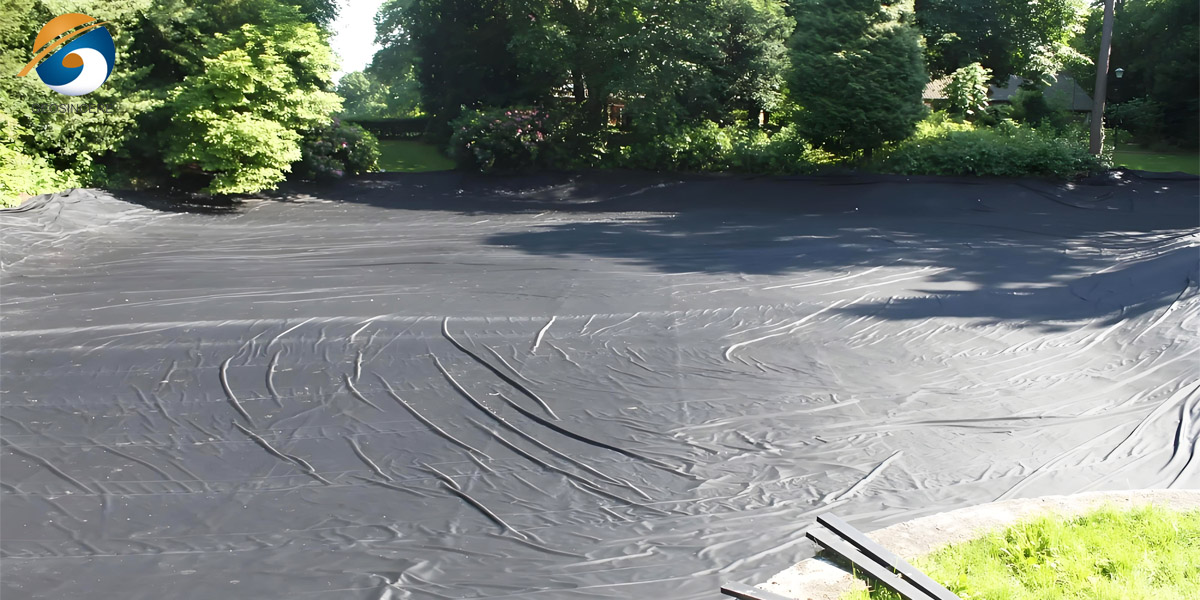
The flexibility and strength of geomembranes make them indispensable in a variety of mining applications. Whether for tailings management, leachate containment, or wastewater storage, geomembranes provide essential protection against environmental hazards.
2.1 Geomembrane for Mining Tailings Storage Facilities (TSF)
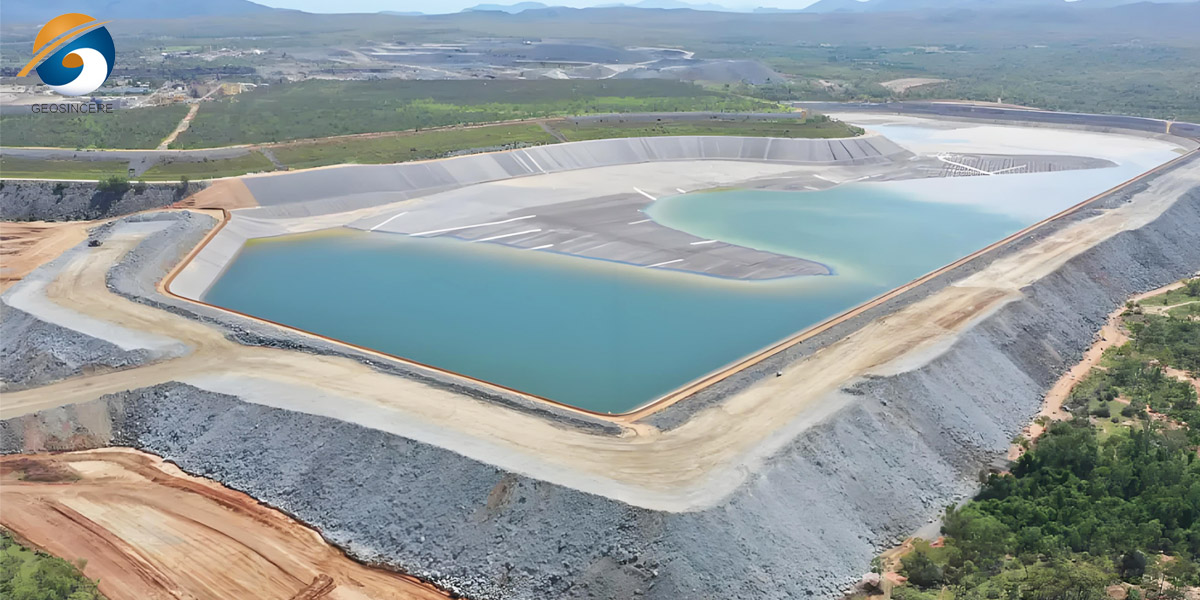
Tailings storage facilities are vital for managing mining waste. These facilities contain the slurry waste produced during ore processing, which often includes heavy metals and hazardous chemicals. HDPE geomembranes are commonly used to line these facilities, preventing the leaching of harmful substances into the surrounding environment.
- Key Benefits:
Minimizes seepage risks, ensuring compliance with international environmental standards like those set by the International Council on Mining and Metals (ICMM).
Reduces long-term closure and remediation costs by ensuring the integrity of containment systems.
2.2 Geomembrane for Mining Heap Leach Pads
Heap leaching is a widely-used process in gold, copper, and uranium extraction, involving the application of acidic or cyanide-based solutions to ore heaps. Geomembranes are used to line heap leach pads, providing a sealed environment that prevents solution loss and environmental contamination.
- Key Benefits:
Increases recovery rates of valuable metals such as gold and silver.
Prevents toxic leachate from seeping into nearby ecosystems, reducing environmental risks.
2.3 Geomembrane for Mining Solution and Water Ponds
Mining operations often require ponds for storing process solutions, stormwater, or sedimentation basins. Geomembranes, particularly HDPE and LLDPE, are essential for ensuring these ponds remain impermeable, preventing hazardous liquids from leaking into the environment.
2.4 Geomembrane for Mining Tailings Slurry Channels
Tailings slurry channels are used to transport mining waste. Geomembranes provide an effective solution to prevent erosion and leaks, helping to protect surrounding soils and extend the lifespan of slurry systems.
3. Six Key Advantages of Geomembrane for Mining Engineering
Geomembranes are highly valued in mining for their performance and cost-effectiveness. They offer a number of key advantages that make them the go-to solution for modern mining operations.
3.1 Outstanding Impermeability
Geomembranes are known for their ultra-low permeability—often less than 10⁻¹³ cm/s, which is millions of times lower than compacted clay. This makes them extremely effective at preventing the migration of liquids and gases, ensuring optimal containment.
3.2 High Chemical Resistance
Mining effluents often contain a mix of acids, heavy metals, and organic solvents. HDPE geomembranes are particularly resistant to chemical degradation, ensuring long-lasting performance in harsh mining environments, such as those involving sulfuric acid or cyanide solutions.
3.3 Efficient Installation & Cost-Effectiveness
Compared to traditional materials like compacted clay or concrete, geomembranes are lighter, easier to handle, and quicker to install, especially in remote or difficult-to-reach mining locations. Their flexibility and ease of use reduce labor costs and installation time, offering a cost-effective solution for large-scale mining projects.
3.4 Excellent Terrain Adaptability
Geomembranes such as LLDPE and composite types are incredibly flexible, allowing them to conform to irregular surfaces and slopes. This makes them ideal for mining sites with challenging topography, such as mountainous areas or unstable terrain.
3.5 Long Service Life & Aging Resistance
High-quality HDPE geomembranes are built to last, withstanding the rigors of UV exposure, temperature fluctuations, and oxidation for over 20 years. Their long service life reduces the need for frequent replacements, which ultimately lowers overall project costs.
Tip: For areas with intense sunlight exposure, combining UV protection with thicker liners ensures maximum durability.
3.6 Strong Thermal Welds for Superior Seepage Protection
Geomembranes are typically joined through thermal fusion welding, which creates strong, molecular-level bonds between sheets, providing continuous and secure seals. This process enhances the impermeability and tensile strength of the liner system, making it ideal for large-scale applications like tailings storage and heap leach pads.
4. Project Case Study: GEOSINCERE Geomembrane in a Gold Mine TSF
Quantity: 1,820,000 m²
GEOSINCERE Geomembrane was selected as the liner supplier for a gold mining company in Africa. This company, recognized for its commitment to responsible mining, needed an effective solution for its Tailings Storage Facility (TSF). The HDPE geomembranes played a crucial role in containing hazardous waste and preventing environmental contamination, aligning with the company's sustainability goals. GEOSINCERE Geomembrane successfully supplied liners to all five of the company's West African mining operations.
5. Why Choose GEOSINCERE Geomembrane for Mining Projects?
As a leading supplier of geosynthetic materials, GEOSINCERE prioritizes quality and customer satisfaction. Here’s why Geosino is the preferred choice for mining operations worldwide:
5.1 Strict Raw Material Control – 100% Virgin Resins
GEOSINCERE's HDPE/LLDPE geomembranes are made from high-grade virgin polyethylene resins, ensuring superior tensile strength, elongation, and weather resistance. These membranes are free from recycled content and impurities, guaranteeing consistent performance in demanding mining conditions.
5.2 Advanced Equipment & Automation
Our state-of-the-art production facilities use automated, wide-width blown film machines, laser-guided systems, and online thickness control, enabling precise and efficient production of geomembranes at scale.
5.3 Full International Certifications
GEOSINCERE’s geomembranes comply with global standards such as ISO, CE, and GRT. We offer third-party lab reports and certifications to meet the requirements of international mining projects.
5.4 Comprehensive Technical Support
In addition to supplying geomembranes, GEOSINCERE offers extensive technical services, including welding training, customized installation solutions, and on-site support, ensuring smooth project execution.
5.5 Customized Solutions
We provide tailored geomembrane solutions, including options for membrane thickness, surface types, color choices, and packaging, allowing for optimal performance in various mining environments.
5.6 High-Volume Production & Fast Response
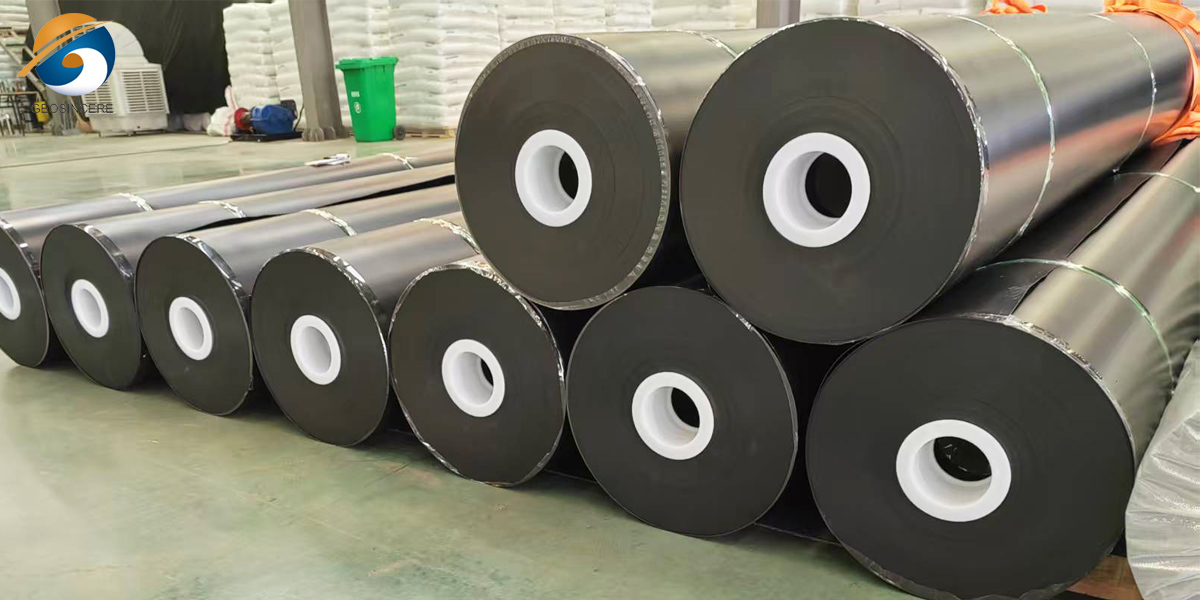
With our efficient production system, we are capable of fulfilling large-scale orders quickly, producing up to 2–3 full 40ft containers of geomembranes per day. Custom orders are manufactured swiftly to meet tight project deadlines.
5.7 Environmental Compliance & Corporate Responsibility
Choosing geomembranes reflects a commitment to environmental protection and sustainable practices. As mining regulations become stricter, adopting geomembrane systems helps companies improve their ESG (Environmental, Social, and Governance) ratings, reduce liabilities, and foster positive relationships with local communities and regulators.
Conclusion: Geomembranes for Sustainable Mining
Geomembranes are essential for modern mining operations, offering reliable, cost-effective, and environmentally responsible containment solutions. As the mining industry moves toward greener practices, geomembranes are becoming the preferred choice for effective waste containment and environmental protection.
ChoosingShandong GEOSINO New Material Co.,Ltd (
GEOSINCERE Geosynthetics) means investing in high-performance, durable, and environmentally friendly geomembranes that contribute to the sustainability and success of mining projects worldwide.
