Building a pond is a big decision, and selecting the right HDPE liner for it is one of if not the most important choice you will make. If you make a mistake with it, the cost of repair, water loss, and possible environmental problems will torture you. On the contrary, if you make the right choice, the pond will be a valuable asset for you for a long time. Personally, I have seen plenty of projects that have failed only because the owners' focus was on low price per square metre and not on the real performance of the material.
This guide is not a reprint of manufacturer brochures. Instead, it provides a real-first-hand look at GEOSINCERE Geosynthetics hdpe geomembrane pond liner – what they really give, where are they the best, where are they the worst, and how to choose one that will save you both money and aggravation in the future.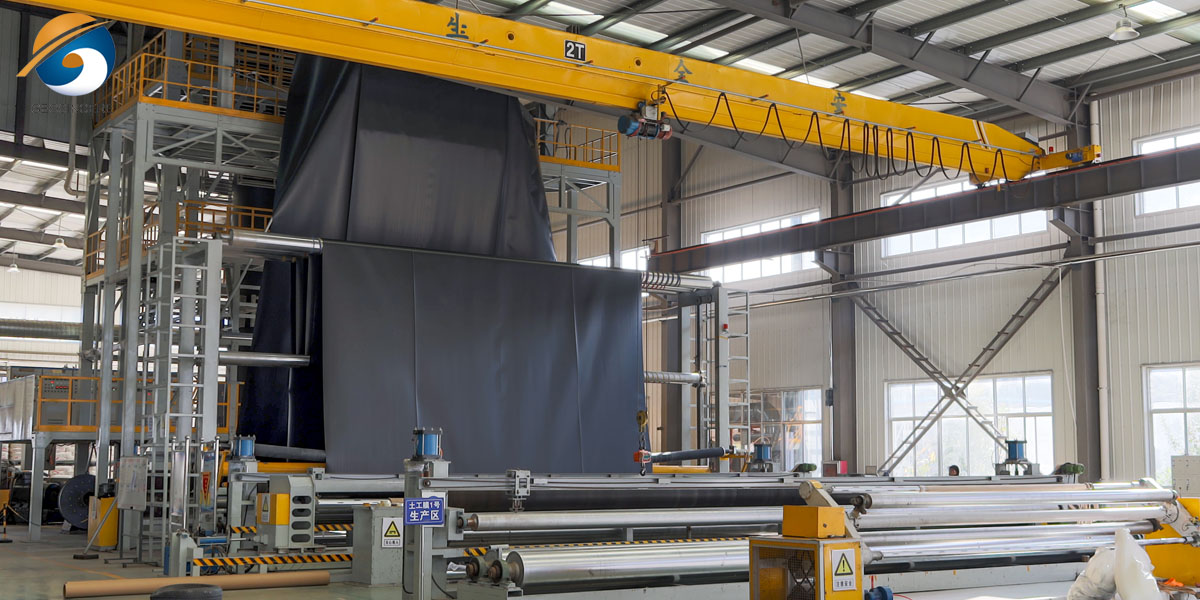
We better kick off from a clear definition. An HDPE pond liner is a sheet made of highDensity polyethylene resin, mixed with carbon black (to make it resistant to the sun's rays) and stabilisers, after that it is extruded into a continuous flexible membrane. In relation to density — around 0.94 to 0.96 g/cm 3 a — it has a semirigid touch in comparison to rubber liners, yet that rigidity is exactly what gives it very high resistance to punctures and high stability of dimensions.
You may consider it as the “protective helmet” of the liner industry. It hardly stretches (only 200-300% elongation at break, contrast with 400%+ for EPDM), however, it makes up for a lack of stretchiness by toughness. A properly installed HDPE liner will remain intact even when subjected to penetration by a stone, root, or even a light foot traffic. That is the reason why HDPE is found in landfills, mines, and chemical containment – places where supply problems are totally unacceptable.
This is why people are so confused when buying. PVC is cheaper. EPDM gives you more flexibility. Reinforced polyethylene (RPE) is lighter. Then what makes HDPE the worldwide water storage standard in huge quantities?
The key is in long-term performance:
HDPE liners can last from 20 to 50 years depending on the installation and whether or not it has been covered. PVC corrodes more quickly, particularly when it is exposed to sunlight. EPDM is a good performer that will be around for a very long time but it is more likely to get punctured and costs at least twice as much per square foot.
HDPE is able to withstand acids, alkalis, salts, and many hydrocarbons. This is very important for fish ponds that are going to be exposed to fertiliser runoff, also chemical basins.
The operating range for HDPE is between –70°C and +110°C. PVC can soften and deform (you can see that in 40°C summers) but EPDM remains in a stable state and yet its tensile strength is low.
A high density and thickness (usually 20–80 mil) are the features that make HDPE clearly better than flexible liners used in environments where the ground is either rocky or uneven.
Although HDPE is not the cheapest per square metre, it has the advantage of longevity and low maintenance making it often the most economical option over a 20-year period.
That said, HDPE is not a universal cure-all. It is stiffer, making it harder to install on complex, highly contoured terrains without extensive seaming. It also requires heat welding – a skill that is not as forgiving as solvent welding PVC or taping RPE. So the choice depends on your project’s scale, soil conditions, and budget.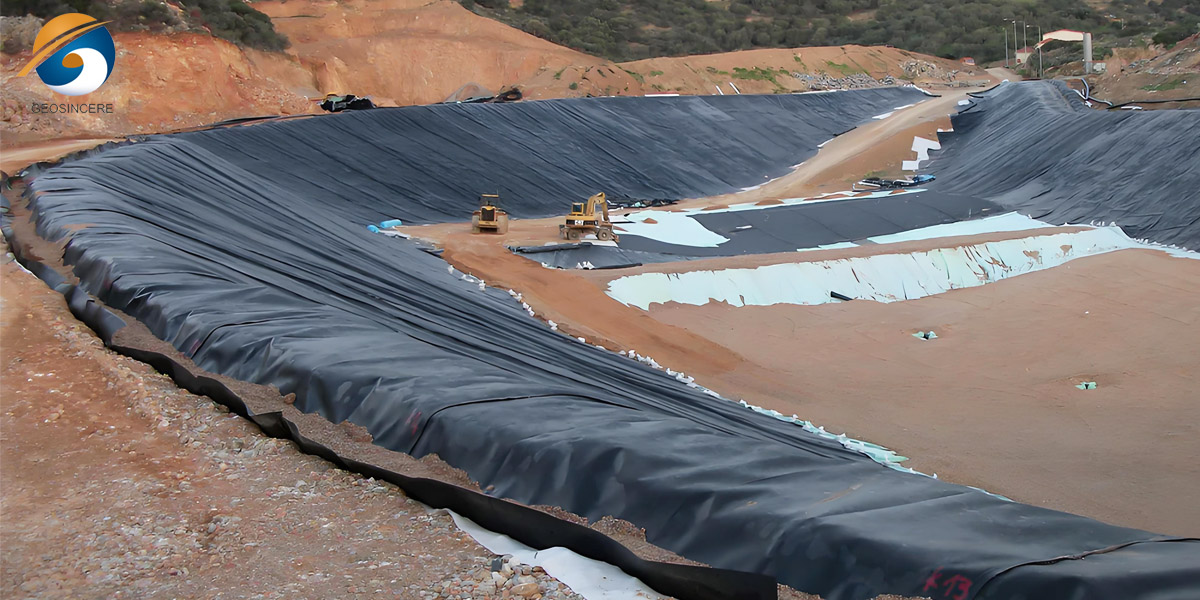
When shopping for HDPE pond liners, you will see thicknesses from 20 mil (0.5 mm) up to 80 mil (2.0 mm) or even thicker. Many people assume “thicker is better” and immediately lean towards 60 or 80 mil for everything. That can be a costly mistake.
Here is a reality check from actual projects I have followed:
Ideal for decorative ponds, small koi ponds, and seasonal irrigation reservoirs where the liner is covered by water or soil within a few months. It handles hydrostatic pressure up to about 3-4 metres of water. Its light weight makes installation easy and reduces shipping costs.
The sweet spot for most fish ponds, agricultural storage, and canal lining. It offers a good balance of durability and flexibility, and it can handle moderate rock exposure if the subgrade is reasonably prepared.
Necessary for landfill cells, hazardous waste, and very rocky terrain – or when regulations mandate a minimum thickness. For a typical farm pond with a well-prepared, sand-cushioned base, 60 mil is often overkill and adds unnecessary expense.
The key is to match thickness to actual site conditions – not to fear. I have seen 60 mil liners fail because they were too stiff to conform to the subgrade, creating air pockets that later ruptured. I have also seen 30 mil liners last 15 years in a sheltered, silt covered irrigation pond. So do your homework: assess the sharpness of your soil, the depth of water, the likelihood of equipment traffic, and the UV exposure before you specify a thickness.
An HDPE liner is only as good as its installation. A top quality 60 mil sheet installed poorly will leak; a modest 20 mil sheet installed meticulously can outperform it. Here are the most overlooked installation factors:
Eighty percent of installation success happens before the liner ever leaves the roll. The subgrade must be smooth, compacted, and free of any object that could puncture or strain the membrane. Stones larger than 2 cm should be removed or covered with a geotextile cushion. Many contractors skimp on this step, thinking “the liner is tough enough” – and they pay for it later with unexpected leaks.
HDPE is joined by thermal fusion – hot wedge or extrusion welding. Unlike PVC, which uses solvents, HDPE welding requires clean, dry surfaces and precise temperature control. A well made seam is as strong as the parent material; a poor seam is a guaranteed failure point. Always insist on trial seams tested daily using peel and shear tests. Do not accept “eyeballed” welds.
The edges of the liner must be secured in anchor trenches (typically 30–50 cm deep) or fixed with concrete collars. Wind uplift is a serious issue during installation – even a light breeze can catch a large sheet and shift it out of position. Use sandbags or earth anchors temporarily, and backfill anchor trenches promptly.
After the liner is placed, backfilling with soil or gravel must be done carefully. Dumping heavy material directly onto the liner can cause punctures. Use light equipment, spread a protective layer of sand first, and compact in thin lifts.
Let us clear up a few persistent myths:
Actually, HDPE remains flexible down to –70°C. Its modulus increases at low temperatures, but it does not become brittle like PVC. Properly formulated HDPE has excellent low temperature impact resistance.
No. The quality of the resin, the dispersion of carbon black, and the type of antioxidants vary widely. Cheap liners may skimp on UV stabilisers, leading to premature degradation. Always ask for the product’s technical data sheet and verify the carbon black content (ideally 2–3%) and antioxidant package.
NSF/ANSI Standard 61 certified HDPE liners are approved for contact with drinking water. They contain no leachable plasticisers or heavy metals. Many commercial fish farms have used HDPE for decades without adverse effects on stock.
While thickness does increase puncture resistance, the relationship is not linear. A liner laid on a poorly prepared base will fail regardless of thickness. Conversely, a thinner liner on a well cushioned base can perform admirably. Do not use thickness as a substitute for proper subgrade work.
One of the biggest selling points of HDPE pond liners is their low maintenance requirements. Once covered with water or soil, the liner is protected from UV and physical damage. Annual inspections should focus on:
Check for erosion or animal burrows that could undermine the anchor trench.
A sudden drop may indicate a leak – often at a seam or penetration (e.g., inlet/outlet pipes).
Roots can penetrate liners over time, especially aggressive species like bamboo or willow. Keep trees and deep rooted plants at least 3 metres away from the pond perimeter.
If a repair is needed, HDPE patches can be welded over punctures or tears – a straightforward job for a trained technician. Unlike EPDM, which requires specialised adhesives, HDPE repairs are permanent and as strong as the original.
Let us do some rough arithmetic. Suppose you are lining a 1 hectare (10,000 m²) farm pond. A 40 mil HDPE liner might cost about $2.50–$4.00 per m² installed, depending on region and site conditions. A PVC liner of similar thickness might be $1.80–$2.80 per m², and EPDM could be $5.00–$8.00 per m².
At first glance, PVC seems cheaper. But PVC has a shorter UV life (often 10–15 years) and is more susceptible to puncture, root penetration, and chemical degradation. Over 25 years, you might replace a PVC liner once – wiping out any initial savings. HDPE, with a 25 year service life and minimal repairs, offers a lower total cost of ownership. The choice is even clearer for large projects: the labour cost for installation is similar regardless of material, so the material premium for HDPE is often outweighed by its longevity and reliability.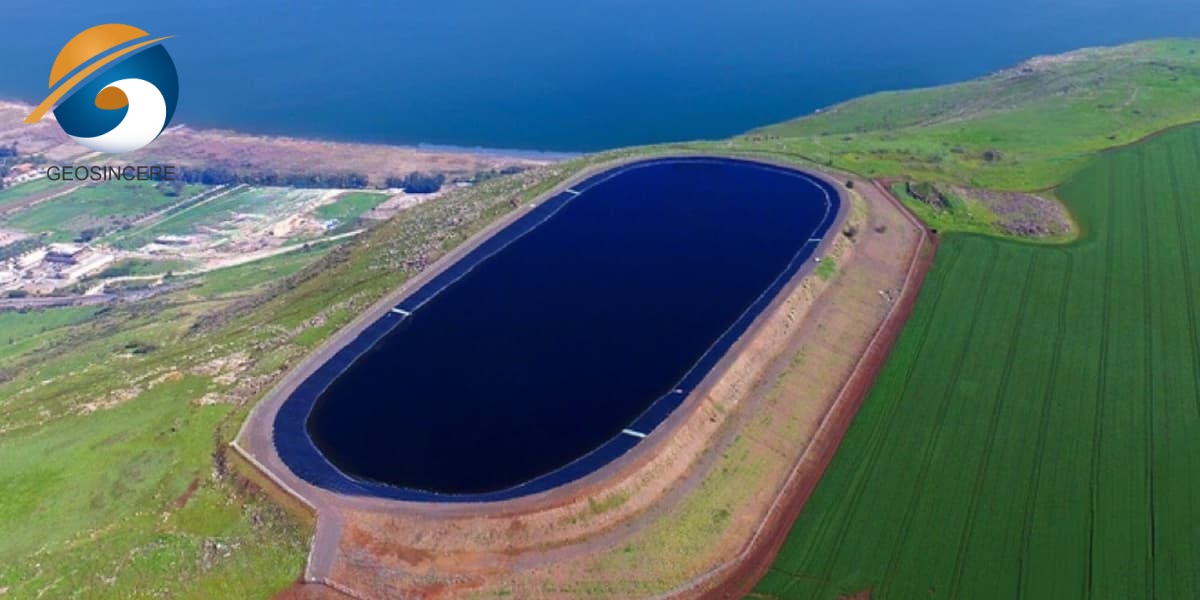
Choosing an HDPE pond liner is not about picking the most expensive option or the one with the thickest spec sheet. It is about matching the material to your project’s specific demands: water depth, soil type, climate, budget, and intended use. The best liner is the one that stays intact for decades without demanding your attention every season.
From my observation, the happiest pond owners are those who invested in a quality HDPE liner from a reputable manufacturer, spent the extra time preparing their subgrade, and hired experienced installers who understand thermal welding. They rarely think about their liner again – and that is exactly how it should be.
If you are still unsure, ask your supplier for references from similar projects in your region. Visit a few installations. Talk to the people who live with those liners every day. Their practical experience will tell you more than any brochure ever could.
Ultimately, an Shandong Geosino New Material Co., Ltd. (GEOSINCERE Geosynthetics) HDPE pond liner is not just a plastic sheet – it is a long term partnership between you and your water resource. Choose wisely, install carefully, and it will reward you with years of reliable service.
