Due to the nature of their job, procurement engineers often find themselves caught in a difficult position while deciding on geomembrane liner for large containment area construction projects. Thin liners save money initially but may not resist extreme conditions and break down prematurely, on the contrary thicker liners are less likely to break down but are more expensive and increase the total project cost. The GEOSINCERE Geosynthetics geomembrane HDPE 2mm is literally a trade-off between the 2 extremes, and it is justified that way.
In terms of 2mm or 80 mils, this thickness is considered by many in the industry as the ideal thickness in terms of performance to cost for heavy-duty containment liners. It grants the mechanical properties such as strength and resistance to puncture necessary in extreme environments such as mining tailings, landfills, and reservoir linings while at the same time preserving the adequate flexibility for installation on non-even surfaces. It is thick enough to last chemically and physically for a long time yet is not that thick so as to be expensive or hard to weld.
This book is dedicated to procurement people who also wonder why HDPE Geomembrane 2mm Thick is the standard material in so many infrastructure projects and who want to follow a strategic procurement approach.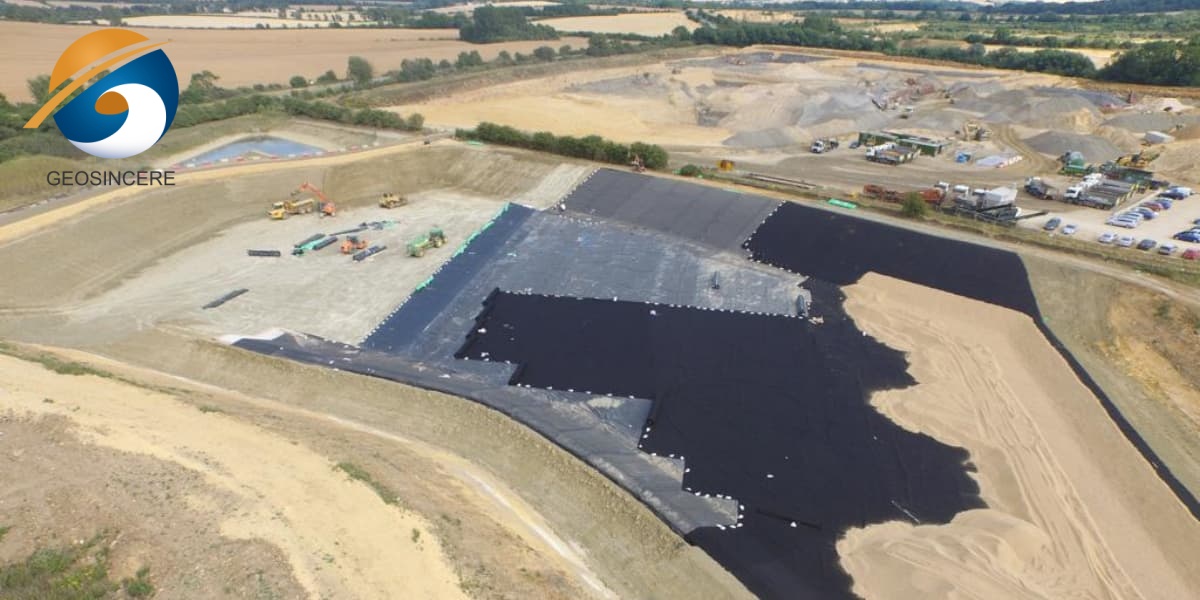
2mm HDPE geomembrane is a dense polyethylene sheet that functions as an impermeable synthetic-physical barrier and has been produced by using extrusion process on high-density polyethylene resin as the raw material. It is a synthetic material and usually, 97.5% of it is made up of polyethylene, and 2.5% combined carbon black with a set of antioxidant packages that are usually kept as trade secrets. With this, the geomembrane gets its typical black color and its UV stabilization attribute which is an absolute must for outdoor use.
Which one is used - blown film or calendered extrusion, the production of the sheets has a highly controlled thickness. A nominal 2mm means that the liner falls within the tolerance range of about ±0.2mm thus providing a consistent barrier performance for the whole roll. Standard roll widths range from 2 meters up to 8 meters, and some manufacturers are offering widths as wide as 10 meters to minimize field seams. Roll lengths are normally 50 to 100 meters, but for large projects, rolls of custom lengths can be ordered.
The finishes on the surface vary and include smooth, single-sided textured, and double-sided textured. Smooth liners are generally used for applications with a flat bottom where friction is not a factor. Textured surfaces offer higher interface friction angles for slope stability which is a must for embankments, dam faces, and pond sidewalls steeper than 3H:1V.
The decision of going with 2mm thickness is not random. It encompasses a few key performance requirements and balances them.
In any containment application, the liner must be able to resist being punctured by sharp stones on the subgrade, also it will have to survive construction activities and mechanical stresses from the materials put on top. The value of puncture resistance for 2mm HDPE geomembrane comes to be around 640 Newtons which is more than twice the value of a 1.0mm liner. With this kind of resistance, it will not only work for a subgrade that is not perfectly prepared but also in situations when there are heavy loads.
2mm HDPE geomembrane has a tensile yield strength of nearly 29 kN/m (kilonewtons per meter) when measured in the machine direction. With this strength, the liner will be able to withstand pulling forces from hydrostatic pressure and soil settlement without suffering tearing or deformation. The elongation at break is more than 450% and even can go up to 700% giving the material the capacity to stretch and conform to the ground without failure.
2mm HDPE geomembrane resists a broad spectrum of chemicals across a pH range of 1 to 14. This makes it suitable for acidic mine drainage, alkaline process water, hydrocarbon-contaminated liquids, and aggressive landfill leachate. The material’s permeability coefficient is less than 1.0×10⁻¹³ cm/s – effectively impermeable.
With carbon black content of 2-3%, 2mm HDPE geomembrane retains at least 65% of its oxidative induction time after 1,600 hours of UV exposure. Operating temperatures range from -50°C to +80°C, making it suitable for projects from arctic to desert climates.
This is a critical property that distinguishes high-quality HDPE from lesser materials. 2mm HDPE geomembrane meeting GRI-GM13 standards passes the notched constant tensile load test at 300 hours minimum – with premium grades exceeding 1,000 hours. This ensures the liner will not develop stress cracks under long-term load, a failure mode that has plagued inferior geomembranes in the past.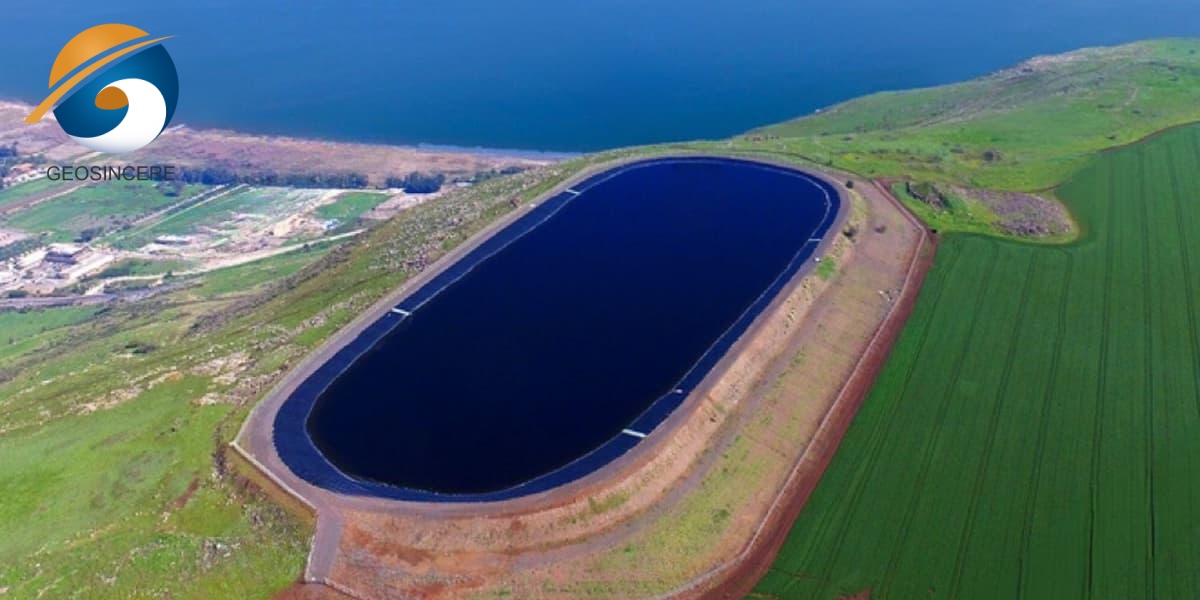
The 2mm thickness is specified across a remarkably wide range of containment applications.
In mining operations, 2mm HDPE geomembrane is the standard liner for heap leach pads, tailings storage facilities, and process water ponds. A field study on a 2mm HDPE geomembrane installed at a gold mining tailings pond in Brazil confirmed its long-term performance after 12 years of service. In a Mongolian coal mine project, a 2.0mm textured liner prevented leaks in a tailings pond, reducing remediation costs by an estimated $500,000.
Municipal solid waste landfills routinely specify 2mm HDPE geomembrane for base liners and caps. The thickness provides the puncture resistance needed to withstand the weight of compacted waste and the chemical resistance to contain aggressive leachate. A landfill project in New Zealand used 2mm HDPE sheet as the primary containment barrier. Another project in Jordan installed 2mm textured geomembrane on steep slopes of a 45-metre-deep quarry landfill.
For potable water reservoirs, irrigation ponds, and dam facings, 2mm HDPE geomembrane provides reliable, long-term waterproofing. The material’s low permeability ensures minimal water loss, while its flexibility accommodates foundation settlement without cracking. A South American farmland irrigation channel project laid 2mm geomembrane along an 800-metre channel; after two years of water delivery, no leakage or damage was reported.
Commercial fish and shrimp farms use 2mm HDPE geomembrane to line production ponds. The liner prevents water seepage, maintains stable water chemistry, and provides a clean, easy-to-sanitise growing surface. The 2mm thickness offers the puncture resistance needed to withstand net dragging and foot traffic during harvest operations.
When specifying 2mm HDPE geomembrane for a critical project, you cannot rely on supplier claims alone. The material must meet recognised international standards, and you must verify compliance through independent testing.
It defines minimum requirements for thickness, density, tensile properties, tear resistance, puncture resistance, stress crack resistance, and UV stability. Any 2mm HDPE geomembrane intended for landfill, mining, or water containment should meet or exceed GM13 specifications.
Key ASTM standards include D5199 for thickness measurement, D1505 for density, D6693 for tensile properties, D4833 for puncture resistance, and D1004 for tear resistance.
ISO 9001 for quality management and ISO 14001 for environmental management – indicates that the manufacturer operates with robust quality control systems. For European projects, CE marking is mandatory.
Demand test reports from accredited independent laboratories – not just in-house certificates. Reputable suppliers will provide reports from SGS, Bureau Veritas, or similar entities for each production batch. If a supplier offers only self-certified data, treat that as a red flag.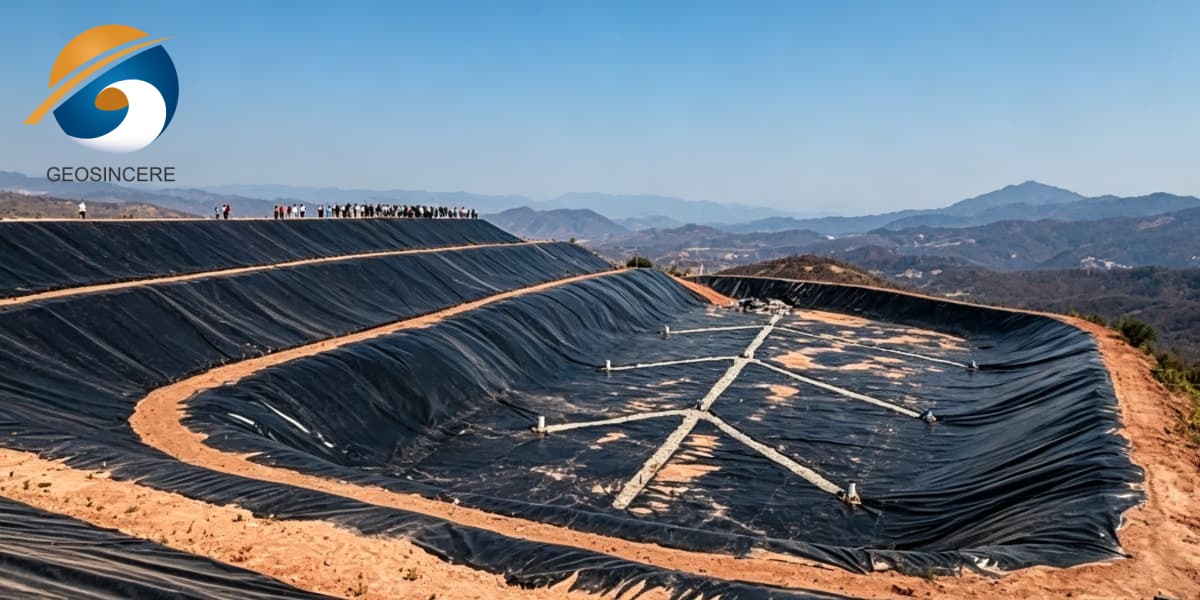
The global HDPE geomembrane market is dominated by Chinese manufacturers, who account for the majority of production capacity. This concentration offers cost advantages but requires careful supplier vetting.
A serious supplier should have multiple extrusion lines and demonstrable production capacity. Ask about annual output, number of production lines, and maximum roll width capability. Suppliers offering wider rolls – up to 9.5 or 10 metres – can significantly reduce the number of field seams required, lowering installation costs and leak risk.
How does the supplier test each production batch? Do they retain samples for traceability? Is there a dedicated quality assurance team independent of production? Request a copy of their quality manual.
Before placing a full order, ask for a 10-metre sample of the exact specification you intend to buy. Have it tested in your own lab or send it to an independent facility for verification. This is not excessive – it is basic due diligence.
Factories near major ports – particularly Qingdao in Shandong province – can ship containers more efficiently with lower inland freight costs. Delivery time from order to FOB port should be clearly stated. Ask about container loading methods to minimise waste and damage.
Request contact details for previous clients who have purchased 2mm HDPE geomembrane for similar applications. A reputable supplier should be willing to provide references.
Procurement decisions based solely on initial price can be costly mistakes. The true value of 2mm HDPE geomembrane emerges when you evaluate total cost of ownership.
2mm HDPE geomembrane typically costs more per square metre than 0.75mm or 1.0mm alternatives. However, the incremental cost is modest compared to the additional service life and reduced replacement frequency. In high-stress applications, 2mm reduces replacement frequency by approximately 40% compared to thinner liners.
Wider rolls and fewer seams translate directly into lower labour costs. Larger roll sizes can reduce installation labour by approximately 25% compared to using multiple narrower rolls. The 2mm thickness also welds efficiently – the material allows rapid and uniform heat conduction during thermal welding, ensuring firm bonds between sheets.
Under normal use conditions, 2mm HDPE geomembrane can achieve a service life exceeding 40 years. Some studies estimate potential service lives of 50 to 100 years for properly formulated and installed HDPE geomembranes. Field studies have confirmed that 2mm HDPE geomembranes demonstrate good performance against weathering without significant changes in behaviour after 15 years of exposure.
For a 50,000-square-metre dam project, specifying 2mm instead of 0.75mm may increase initial material cost but can deliver an estimated $300,000 in savings over 20 years through reduced maintenance and replacement. When you factor in the cost of downtime during replacement – lost production, environmental liability, and regulatory penalties – the thicker liner becomes even more compelling.
Even the highest-quality 2mm HDPE geomembrane will fail if installed improperly. Procurement engineers should ensure that installation specifications address these critical factors.
The subgrade must be cleared of stones larger than 20 mm, roots, and debris. It should be compacted to at least 95% standard Proctor density. A non-woven geotextile protection layer – minimum 500 g/m² – should be placed over the prepared subgrade to cushion the liner against punctures.
2mm HDPE geomembrane panels are joined using thermal welding – either hot wedge or extrusion welding. The 2mm thickness allows rapid and uniform heat conduction during welding, producing bonds with mechanical strength equivalent to the parent material. Overlaps should be at least 10-15 cm. All field seams must be tested using vacuum, spark, or air pressure methods.
The liner must be securely anchored at the perimeter using anchor trenches – typically 60 cm wide and 60 cm deep – or mechanical fasteners. Gas vents should be installed at the top of slopes to relieve pressure buildup beneath the liner.
Engage third-party inspection services for large projects. Verify that the installed liner meets the specified thickness and that all seams pass non-destructive testing. Document every step of the installation for future reference and warranty claims.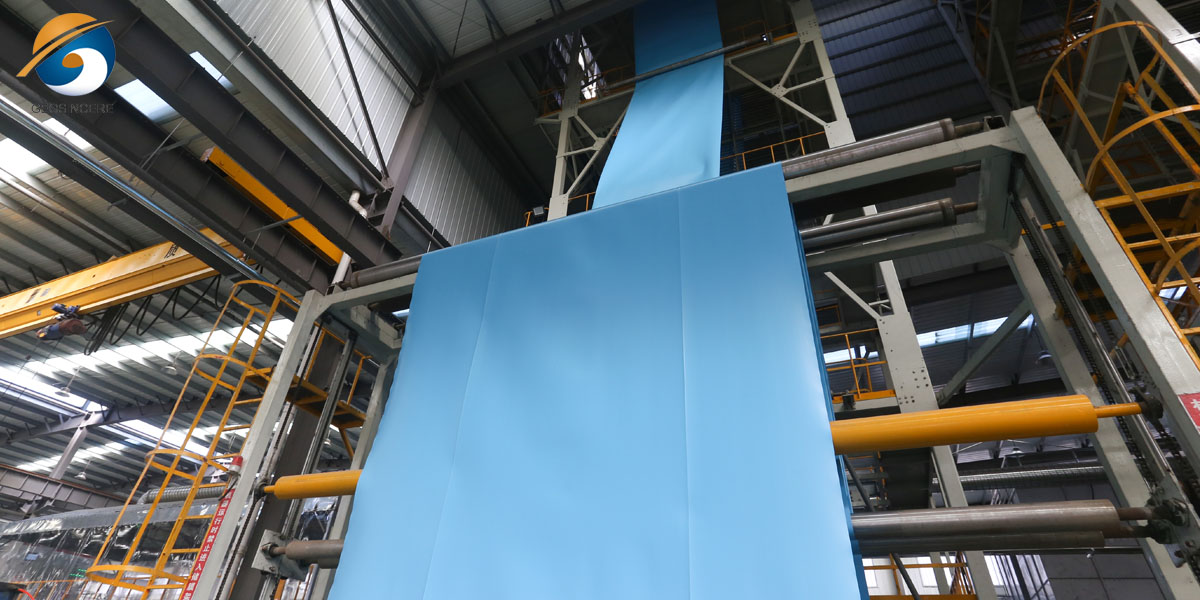
When you next specify 2mm HDPE geomembrane for a containment project, keep these principles in mind:
- Specify GRI-GM13 compliance and demand third-party test reports.
- Choose thickness based on application – 2mm is the standard for mining, landfills, reservoirs, and industrial ponds.
- Select smooth for flat areas, textured for slopes steeper than 3H:1V.
- Verify supplier production capacity, quality control, and logistics capability.
- Request sample rolls for independent testing before placing full orders.
- Evaluate on total cost of ownership, not just initial price.
- Include detailed installation specifications in tender documents.
Shandong Geosino New Material Co., Ltd. (GEOSINCERE Geosynthetics) 2mm HDPE geomembrane is not the cheapest option on day one. But for projects that demand reliability, durability, and decades of service, it is often the most cost-effective choice over the full project lifecycle. That is the kind of procurement decision that demonstrates technical competence and commercial wisdom.
