When you first open a HDPE liner supplier’s catalogue, you are greeted with a dizzying array of thicknesses: 20 mil, 30 mil, 40 mil, 60 mil, 80 mil, and even 120 mil. Each number comes with its own set of tensile strengths, puncture resistances, and price tags. For a project manager or a property owner, the temptation is almost always to go thicker—because thicker feels safer, more durable, and more “professional.” Yet, after years of observing hundreds of small to medium-scale containment projects, I have come to believe that the 20 mil HDPE liner is one of the most misunderstood and undervalued options on the market. It is not the strongest, nor the longest lasting, but it occupies a sweet spot that no other thickness can replicate—a sweet spot defined by practicality, adaptability, and cost conscious engineering.
This article is not a rehash of technical specification tables. Instead, I want to walk you through the real-world reasoning behind choosing a GEOSINCERE Geosynthetics geomembrana 20 mils, the hidden advantages that only become apparent during installation and maintenance, and the specific scenarios where this “thin” membrane actually outperforms its heavier cousins.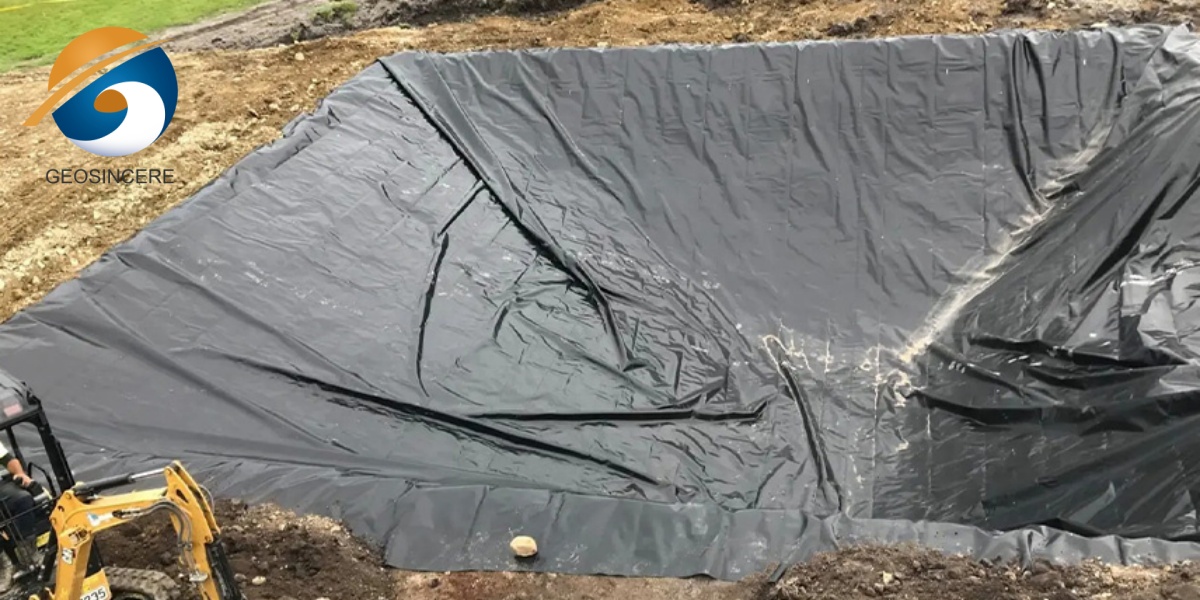
Let us start with a confession: I have seen more than one pond project fail because the owner insisted on a 60 mil liner for a simple decorative garden pond.
The liner was delivered in heavy, stiff rolls that required a crane to position. Once laid over the excavated basin, the material refused to conform to the gentle curves and small irregularities of the soil. The installation crew had to cut and patch more often than planned, creating dozens of field seams that became potential leak paths. Within two years, several seams delaminated under the constant hydrostatic pressure, and the pond had to be drained and relined—this time with a 20 mil product that fitted the contours like a glove.
The lesson here is not that thicker liners are bad; it is that thickness is only one variable in a complex equation. A 20 mil HDPE liner, at approximately 0.5 mm, offers a unique combination of flexibility and strength that allows it to drape over moderately irregular subgrades without creating air pockets or stress concentrations. Its low bending stiffness means it can wrap around small rocks (up to about 2 inches in diameter) without significant point loading, provided the subgrade is reasonably prepared. In contrast, a 40 mil or 60 mil sheet behaves more like a rigid panel—it bridges over depressions and leaves unsupported spans that can rupture when the overlying water or soil settles.
One of the most overlooked advantages of the 20 mil liner is its lightness. A typical roll of 20 mil HDPE, measuring 20 feet wide by 200 feet long, weighs roughly 800 to 900 pounds (about 360 to 410 kg). That is manageable with a small forklift or even a team of four workers using manual rollers. For a 30 mil roll of the same dimensions, the weight jumps to over 1,200 pounds, necessitating heavier equipment, wider access roads, and often a larger crew. This difference translates directly into installation time and cost—two factors that are rarely captured in the material price per square foot.
Consider a remote agricultural site with limited road access. A 20 mil liner can be transported on a standard flatbed trailer, unloaded by hand, and unrolled along the prepared slope without the need for cranes or excavators. The deployment speed is significantly higher because the material is easier to manoeuvre, and the number of field splices is reduced simply because the crew can align panels more accurately without fighting the material’s stiffness. In my experience, installing a 20 mil liner over a half-acre pond typically takes one-third less labour time than installing a 40 mil liner of the same area—and labour often accounts for more than half the total project budget.
In arid regions, farmers often construct small, temporary reservoirs to capture spring runoff for summer irrigation. These reservoirs are only filled for four to five months each year, and they are drained and left dry during the off-season. A 20 mil HDPE liner is ideal here because it provides sufficient impermeability (typical permeability coefficient of 10¹² cm/s) to hold water for the entire growing season, yet its lighter weight allows the farmer to remove the liner for inspection or replacement every few years. Thicker liners would be overkill—they would add unnecessary capital cost and make removal a heavy, expensive chore.
Homeowners and landscape designers love 20 mil liners for ornamental ponds because the material can be folded and shaped to create irregular, naturalistic shorelines. Its high elongation at break (usually above 700%) means it can stretch around boulders and planters without tearing, while its black colour (due to carbon black and UV stabilisers) provides an attractive dark background that enhances the visibility of fish and aquatic plants. Moreover, the moderate thickness reduces the risk of “tenting”—a phenomenon where a thick liner lifts off the subgrade due to entrapped air, creating unsightly bulges under the water surface.
Many industrial facilities use 20 mil HDPE as a secondary liner beneath above ground storage tanks for mild chemicals, fertilisers, or wastewater. While hazardous waste regulations often mandate 60 mil or thicker for primary liners, secondary containment (the “safety net”) can often be 20 mil because it is not subject to direct mechanical loads—its only job is to channel any leaks to a collection sump. The 20 mil thickness is more than sufficient to resist the chemical attack from most agrochemicals and weak acids, and its lower cost encourages facility managers to replace it on a regular schedule, which is a far better practice than keeping an old, degraded thick liner in place for decades.
In highway construction and stormwater management, temporary or permanent swales are often lined with HDPE to prevent erosion during heavy rainfall. Here, the liner is not required to hold static water, but rather to convey fast-flowing runoff without scouring the soil. A 20 mil liner, properly anchored at the edges, provides a smooth, low-friction surface that can handle flow velocities of up to 8–10 m/s without significant wear, thanks to its abrasion resistance (which is inherently high for HDPE). Its lighter weight also makes it easier to install along long, winding alignments where heavy equipment cannot access easily.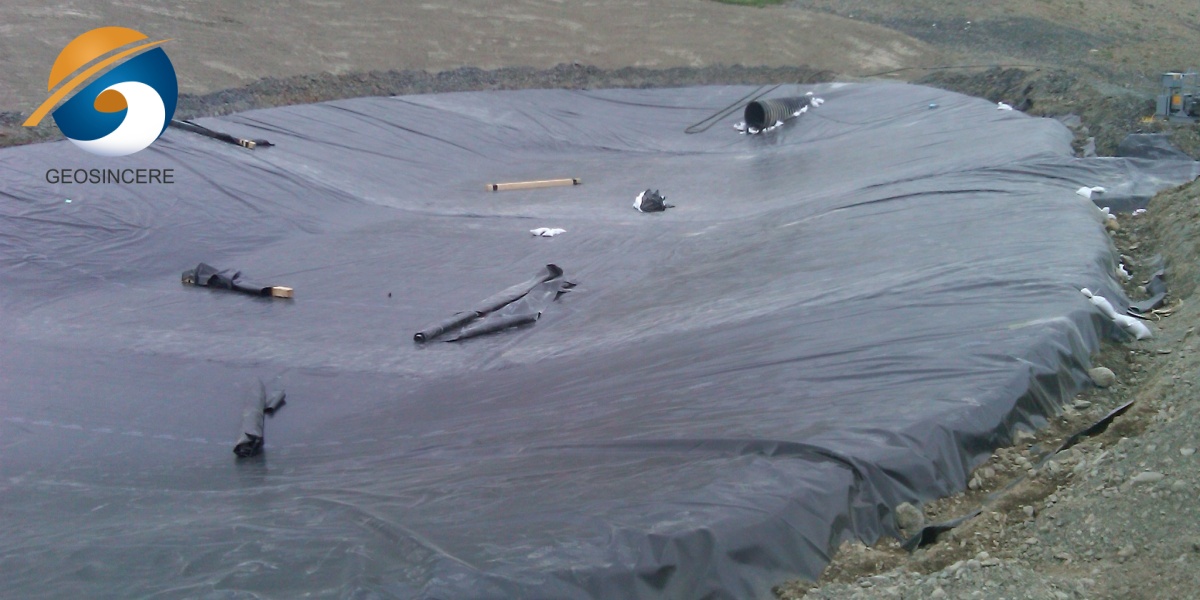
Being honest about limitations is just as important as highlighting strengths. A 20 mil liner is not suitable for:
Where regulatory agencies require a minimum of 60 mil (1.5 mm) to ensure long term integrity under heavy overburden and aggressive leachates.
Unless a geotextile cushion is placed underneath. Even with a cushion, the puncture resistance of 20 mil (typically 200–300 N) is lower than that of 40 mil (400+ N), so any point load from a protruding rock can be a risk.
The material is tough, but repeated point loads from hooves or tyres can cause micro tears that propagate over time.
While 20 mil HDPE contains 2–3% carbon black, its UV stability is proportional to thickness—the thinner the sheet, the faster the antioxidants deplete. For exposed applications, a 30 mil or 40 mil liner would provide a greater safety margin.
Having seen many installations, I can confidently say that the success of a 20 mil liner hinges on subgrade preparation and seaming discipline. Because it is thin, it transmits subgrade irregularities to the surface more readily than a thick liner. That means any sharp root, stone, or debris must be removed, and the base should be compacted to at least 90% relative density. A common mistake is to assume that “because it’s thin, it will stretch over everything”—it will stretch, but it will also deform permanently, creating thin spots that are prone to leakage.
For field seaming, thermal welding (either hot wedge or extrusion) works excellently with 20 mil sheets. The lower thermal mass means the material heats up and cools down quickly, allowing faster weld speeds. However, this also means the welder must be more attentive to temperature fluctuations—overheating can easily burn through a 0.5 mm sheet, while underheating results in a weak bond. I always recommend performing peel and shear tests on trial seams at the start of each workday, and keeping a digital thermometer to monitor the wedge temperature continuously.
Edge anchoring is another critical point. Because the 20 mil liner is light, wind uplift can be a serious issue during installation. Anchoring trenches (typically 18 inches deep) and sandbag weighting are mandatory on windy days. Once backfilled with soil or covered with water, the liner stays in place perfectly—its own weight is not the issue; it is the temporary condition that requires care.
Let us do a rough arithmetic exercise. Suppose you are lining a 2 acre pond (roughly 87,000 square feet). A 20 mil liner might cost about $0.45–$0.60 per square foot, while a 40 mil liner costs $0.80–$1.10 per square foot. The material cost difference is about $0.35 per square foot, amounting to roughly $30,000 extra for the thicker option. If your project budget is $100,000, that 30% increase is significant. Now factor in the additional shipping weight (higher freight cost), the need for a larger crew or crane (higher labour), and the longer installation time (higher overheads). The actual total cost for the 40 mil option could easily be 40–50% higher than the 20 mil option.
For a seasonal irrigation pond or a koi pond, the answer is almost always no. The expected service life of a 20 mil liner, when covered by at least 6 inches of soil or submerged under water (which blocks UV), exceeds 20 years. For many light-duty projects, 20 years is already beyond the planning horizon. Paying double for 40 years of service is simply an inefficient allocation of resources.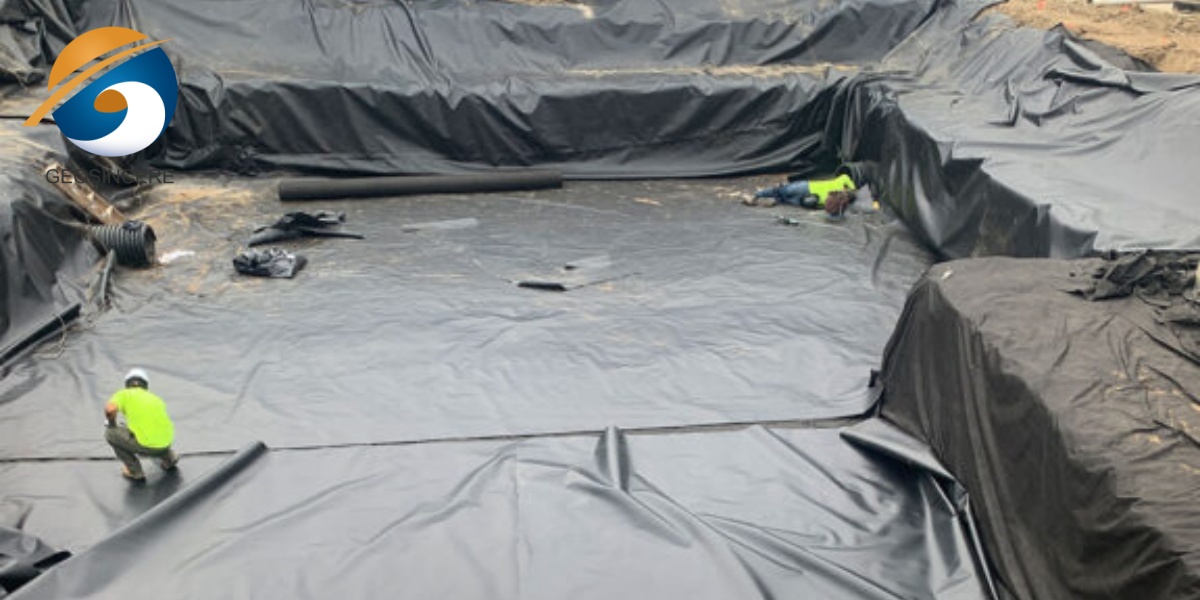
From a sustainability standpoint, the 20 mil liner also has a smaller environmental footprint. It uses less polyethylene resin per square metre, which reduces the embodied energy and carbon emissions associated with production. Moreover, its lighter weight means lower fuel consumption during transportation. And because it is easier to remove and replace, it encourages more frequent renewal cycles—which, counter-intuitively, can be beneficial because older HDPE liners eventually become brittle and crack, leading to soil contamination. Replacing a 20 mil liner every 15–20 years is a more responsible practice than leaving a 60 mil liner in place for 40 years, during which its anti-oxidants deplete and its properties degrade.
Over the years, I have come to appreciate that selecting a geomembrane is as much an art as it is a science. The engineering manuals give you the formulas for puncture resistance and tensile strength, but they do not tell you how the liner feels when you drag it across a dew-covered field at dawn, or how the weld quality changes when the afternoon sun heats the black surface to 60 °C. The 20 mil liner has a “sweet handling” quality—it is pliable enough to fold around corners, yet firm enough to hold its shape during welding. It does not fight you the way a 60 mil liner does, nor does it wrinkle like a 10 mil liner (which is often too flimsy for anything other than short-term covers).
That hands-on experience is why I recommend 20 mil HDPE for a broad range of non-critical, light-duty, and temporary containment projects. It is the liner that lets you get the job done well without breaking the bank or the backs of your crew. It is not the hero that withstands a bulldozer, but it is the quiet workhorse that faithfully holds water, protects the soil, and gives you peace of mind—at a price that leaves room in your budget for other important items like a proper geotextile cushion, quality anchor trenches, and skilled welders.
In the end, the choice of a 20 mil HDPE liner boils down to a honest assessment of your project’s real requirements. If your application involves low mechanical stress, moderate chemical exposure, limited UV exposure (or a protective cover), and a need for cost-efficient installation, then this thickness is not just acceptable—it is optimal. The industry often pushes thicker products because they command higher margins, but as an informed buyer, you have the power to push back and ask:
The answer, in more cases than you might expect, is the latter. Shandong Geosino New Material Co., Ltd. (GEOSINCERE Geosynthetics) 20 mil HDPE liner deserves a place in every contractor’s arsenal and every specifier’s toolkit—not as a cheap alternative, but as a smart, purposeful choice that respects both engineering principles and financial realities. When you learn to appreciate its nuances, you will find that this modest half-millimetre sheet is one of the most versatile and dependable geomembranes available today.
