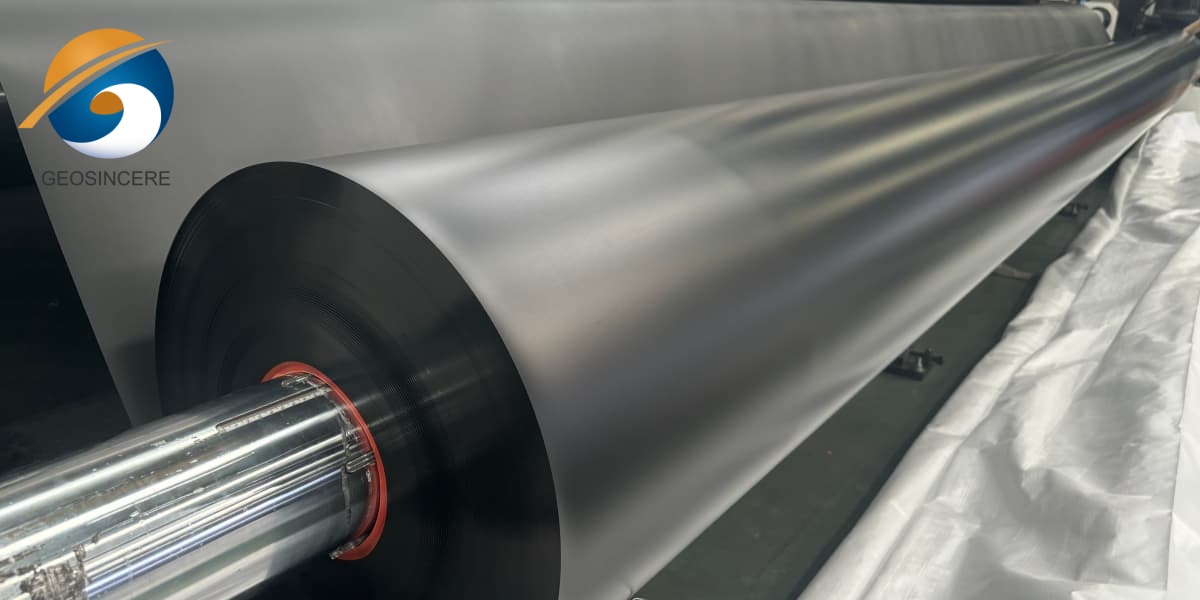
Water conservation, environmental protection, and industrial containment have become increasingly important challenges worldwide. As industries expand and environmental regulations become stricter, reliable waterproofing and containment materials are required to prevent leakage, reduce pollution risks, and improve resource management. Among various synthetic liner solutions, Geomembrana 30 mils has become a widely used option for projects that require effective seepage control, flexibility, and cost efficiency.
A 30 Mil Geomembrane refers to a geomembrane liner with a thickness of approximately 30 mils (0.75 mm). It is commonly manufactured from high-density polyethylene (HDPE), linear low-density polyethylene (LLDPE), or other polymer materials. Due to its balance between performance and affordability, this thickness is frequently selected for agricultural ponds, aquaculture facilities, secondary containment systems, decorative water features, and light-to-medium duty environmental applications.
Unlike traditional waterproofing materials such as compacted clay or concrete coatings, geomembranes provide a continuous impermeable barrier with predictable performance. The extremely low permeability of polyethylene-based liners allows them to significantly reduce water loss and prevent contaminants from migrating into surrounding soil.
According to global water management studies, agriculture accounts for approximately 70% of freshwater withdrawals worldwide, making efficient water storage solutions increasingly important. In this context, 30 mil HDPE liner play a valuable role in improving water conservation efficiency by reducing seepage from reservoirs and irrigation ponds.
This article provides a complete overview of GEOSINCERE Geosynthetics geomembrana 30 mils, including its characteristics, manufacturing process, advantages, applications, installation requirements, and future development trends.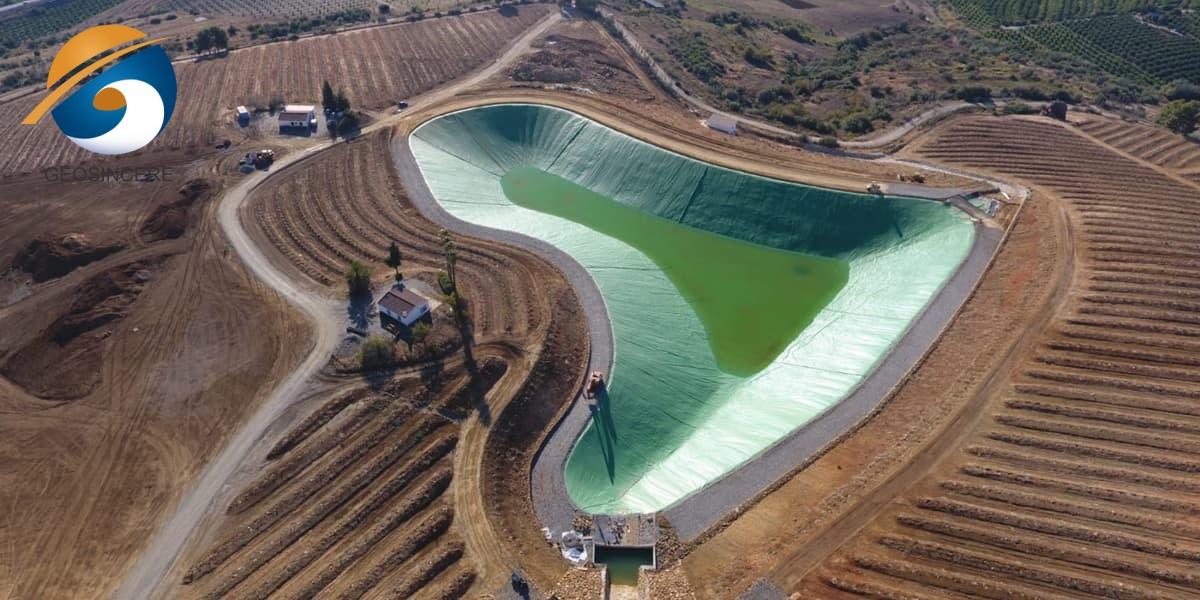
A 30 Mil Geomembrane is a synthetic waterproof liner designed to control fluid migration in engineering and environmental applications.
The term “mil” is a unit of thickness measurement:
1 mil = 0.001 inch
30 mil = approximately 0.76 mm
Although it is thinner than heavy-duty geomembranes used in mining or landfill applications, a 30 mil liner provides excellent performance for projects where moderate mechanical protection and reliable waterproofing are required.
HDPE (High-Density Polyethylene)
HDPE is one of the most commonly used materials because it offers:
- Excellent chemical resistance
- Strong UV resistance
- Low permeability
- Long service life
LLDPE (Linear Low-Density Polyethylene)
LLDPE provides:
- Higher flexibility
- Better elongation
- Improved adaptability to uneven surfaces
PVC (Polyvinyl Chloride)
PVC liners are often selected for smaller applications requiring flexibility and easy installation.
The production quality of geomembranes directly affects their long-term performance.
Professional manufacturers typically use extrusion technology, where polymer resin is melted and formed into continuous sheets.
The manufacturing process includes:
Raw Material Preparation
High-quality polyethylene resin is mixed with additives such as:
- Carbon black
- Antioxidants
- UV stabilizers
- Processing aids
Carbon black content is especially important because it improves resistance against sunlight degradation. Industry standards such as GRI-GM13 commonly require approximately 2–3% carbon black content for HDPE geomembranes used in outdoor applications.
Sheet Extrusion
The melted polymer passes through extrusion equipment to create uniform sheets.
Important production controls include:
- Thickness measurement
- Surface inspection
- Width control
- Mechanical testing
Quality Testing
Manufacturers normally test:
- Tensile strength
- Elongation
- Tear resistance
- Puncture resistance
- Carbon black dispersion
Consistent quality control ensures each roll performs according to engineering requirements.
The primary purpose of a 30 Mil Geomembrane is preventing water and liquid seepage.
Compared with natural soil barriers, geomembranes provide significantly lower permeability. This makes them effective for:
- Water storage ponds
- Irrigation reservoirs
- Aquaculture systems
- Secondary containment areas
By reducing seepage, agricultural operations can maintain stable water levels and reduce the need for additional water supply.
One of the biggest advantages of 30 mil thickness is its balance between performance and cost.
Compared with thicker liners such as:
- 60 mil (1.5 mm)
- 80 mil (2.0 mm)
30 mil geomembranes require:
- Less raw material
- Lower transportation costs
- Easier handling
For projects without extreme mechanical stress, this thickness can provide sufficient protection while controlling construction budgets.
Because 30 mil geomembrane is relatively lightweight, installation is easier compared with thicker alternatives.
Advantages include:
- Easier transportation
- Faster deployment
- Reduced labor requirements
- Better adaptability to irregular surfaces
This makes it suitable for agricultural and commercial projects where installation efficiency is important.
Polyethylene-based geomembranes provide strong resistance against many environmental conditions, including:
- Mild acids
- Alkalis
- Saline water
- Agricultural chemicals
This property allows them to perform reliably in various outdoor environments.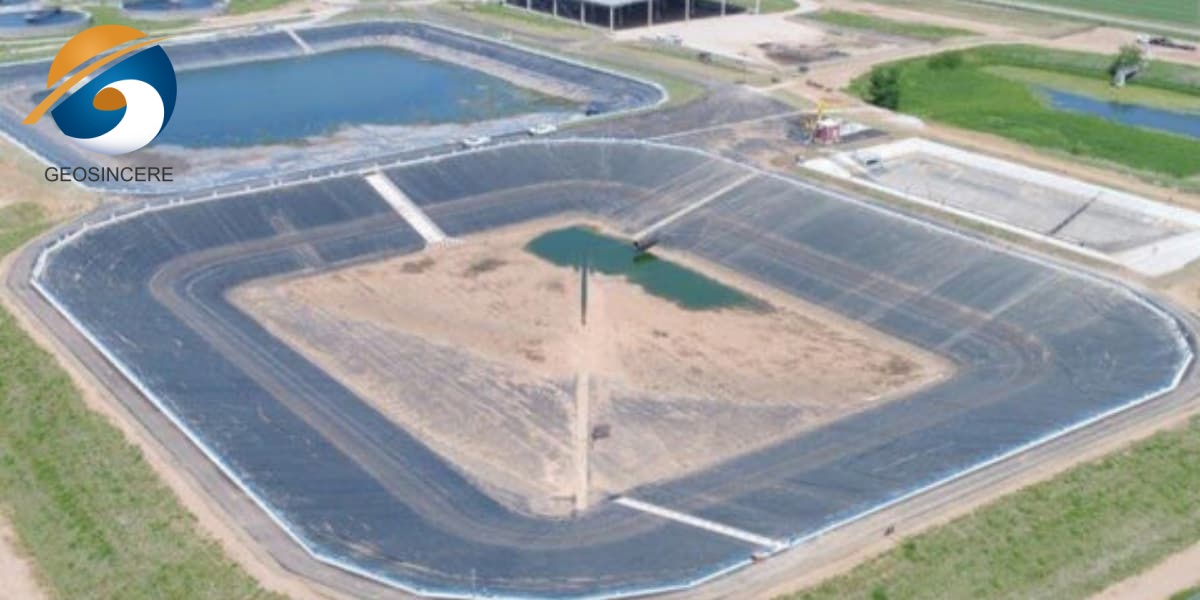
Agriculture is one of the largest application areas for 30 Mil Geomembrane.
Farmers use geomembrane liners for:
- Irrigation reservoirs
- Rainwater collection ponds
- Water storage systems
Benefits include:
- Reduced water loss
- Improved irrigation efficiency
- Lower maintenance requirements
With increasing global concerns about water scarcity, lined agricultural ponds are becoming more common in regions with limited rainfall.
Aquaculture requires stable water conditions to support fish and shrimp farming.
30 Mil Geomembrane helps provide:
- Leak prevention
- Easier pond cleaning
- Better water control
- Reduced soil contamination
A lined pond also allows farmers to manage water quality more effectively.
Industrial facilities often require containment systems to prevent accidental spills.
30 Mil Geomembrane can be used for:
- Chemical storage areas
- Fuel containment zones
- Equipment protection areas
It provides an additional barrier to protect surrounding soil and groundwater.
For smaller-scale applications, 30 mil liners are commonly used in:
- Garden ponds
- Artificial lakes
- Landscape water features
Their flexibility and easy installation make them suitable for customized designs.
Although 30 mil geomembrane is not designed for extremely heavy-duty applications, it provides sufficient mechanical performance for moderate environments.
Important properties include:
- Tensile strength
- Tear resistance
- Puncture resistance
- Elongation capability
Proper installation is essential to maximize performance.
Outdoor geomembranes are exposed to:
- Sunlight
- Temperature changes
- Rain
- Wind
High-quality HDPE formulations with proper additives can maintain performance under long-term outdoor exposure.
The service life of geomembranes depends on:
- Material quality
- Installation conditions
- Environmental exposure
- Maintenance
Well-manufactured HDPE geomembranes can often provide service lives exceeding 30 years under suitable conditions.
Before installation, the foundation should be prepared carefully.
Recommended steps include:
- Removing sharp rocks
- Eliminating roots and debris
- Leveling the surface
- Compacting soil
Poor foundation preparation is one of the main causes of liner damage.
In areas with rocky soil conditions, a geotextile layer can be installed beneath the liner.
Benefits include:
- Additional puncture protection
- Cushioning effect
- Improved durability
Non-woven geotextiles are commonly selected for this purpose.
Large geomembrane sheets are usually connected through thermal welding.
Proper welding ensures:
- Waterproof seams
- Structural continuity
- Reduced leakage risks
Professional installation teams normally perform seam testing after welding.
Although versatile, 30 Mil Geomembrane may not be suitable for extremely demanding environments such as:
- Mining heap leach pads
- Large landfill liners
- Heavy chemical containment systems
These applications usually require thicker liners, often ranging from:
- 60 mil
- 80 mil
- 100 mil
Because of its moderate thickness, additional protection may be necessary during transportation, installation, and equipment operation. Deploying geotextile underlays, avoiding sharp subgrade debris, and using specialized unrolling equipment can effectively prevent unexpected punctures, tears, or surface abrasions. Adhering to strict, proper construction procedures is essential to ensure long-term containment integrity and optimal field performance.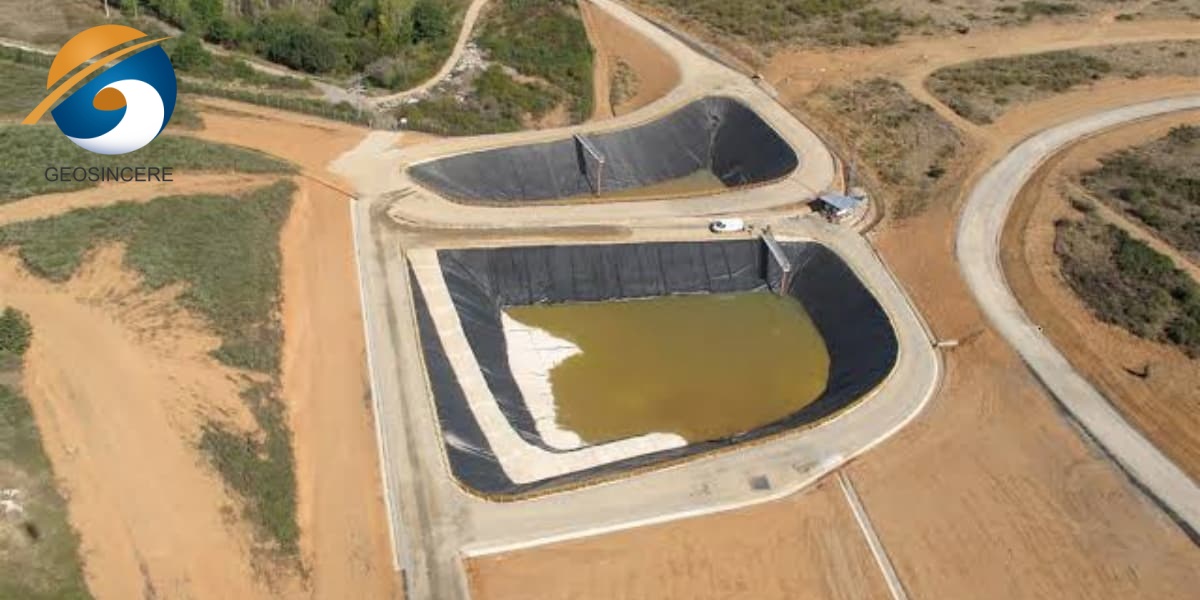
30 Mil Advantages:
- Lower cost
- Easier installation
- Suitable for moderate applications
60 Mil Advantages:
- Higher puncture resistance
- Better durability
- Suitable for heavier loads
Selection depends on:
- Project environment
- Soil conditions
- Expected mechanical stress
- Required service life
Engineers should evaluate project requirements before selecting liner thickness.
As global water resources become increasingly valuable, demand for efficient storage solutions continues to grow.
Agricultural regions are expected to increase adoption of geomembrane-lined reservoirs to improve water efficiency.
Future developments may focus on:
- Higher flexibility
- Better aging resistance
- Improved environmental performance
- Longer service life
Manufacturers continue researching advanced polymer formulations to improve liner performance.
Shandong Geosino New Material Co., Ltd. (GEOSINCERE Geosynthetics) 30 Mil Geomembrane provides an effective balance between waterproof performance, durability, and cost efficiency. While it may not replace thicker liners in extreme industrial applications, it remains an excellent choice for agricultural ponds, aquaculture systems, water storage projects, and secondary containment applications.
With its low permeability, chemical resistance, flexibility, and relatively easy installation, geomembrana 30 mils helps industries and agricultural operators reduce water loss, protect the environment, and improve long-term project performance.
As global demand for sustainable water management and environmental protection continues to increase, 30 Mil Geomembrane will remain an important material solution for modern infrastructure and resource conservation projects.