Geomembrana LDPE is widely used in waterproofing and containment projects due to its excellent flexibility, chemical resistance, and cost-effective performance. Compared with traditional liners, LDPE geomembranes provide better adaptability for uneven surfaces and complex engineering environments. They are commonly applied in fish ponds, landfills, reservoirs, mining, and agricultural irrigation systems to prevent leakage and improve environmental protection efficiency.
Geomembrane, especially types like geomembrana LDPE, are familiar terms if water containment, waste management, or agricultural projects are your areas of work. "Geomembrana" translates to "geomembrane" in English and LDPE is an abbreviation for low-density polyethylene. When put together, a LDPE geomembrane indicates a flexible and non-permeable liner produced from low-density polyethylene resin. This material is amongst the most commonly used in Latin America, Europe, Africa, and Asia, for all sorts of uses, ranging from fish farming ponds to industrial wastewater lagoons.
In this article, GEOSINCERE Geosynthetics will explain step by step what LDPE geomembrane is, how it is manufactured, its physical and chemical properties, where it is applied, how to install it correctly, and how it compares with other geomembrane materials. The content is written for engineers, contractors, and procurement professionals who need clear, practical information without marketing exaggeration.
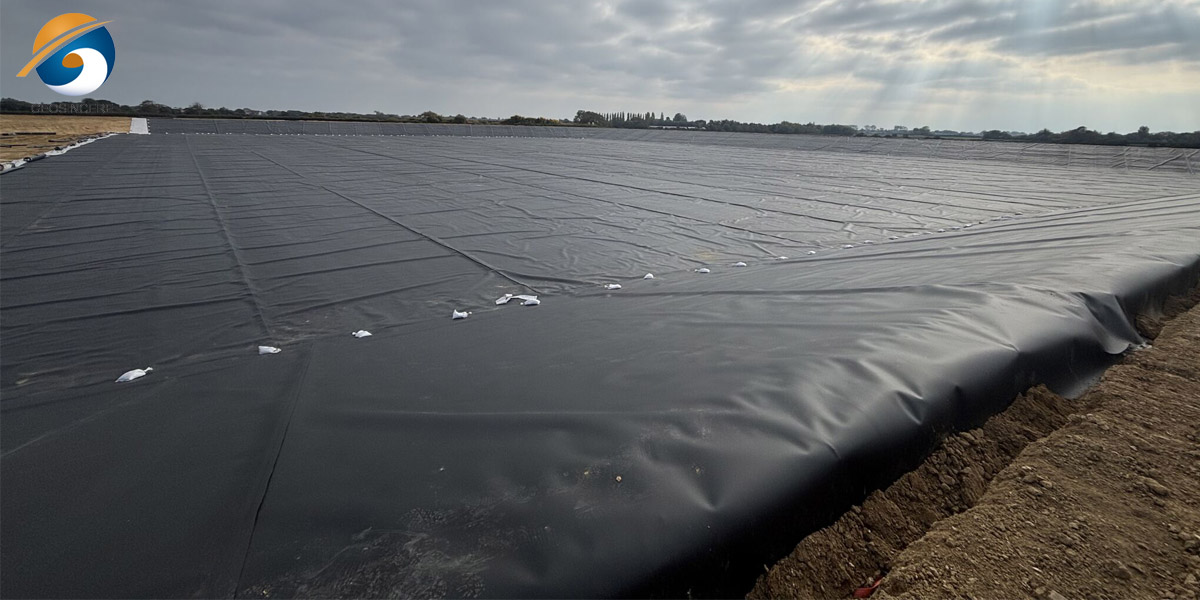
1. What is a Geomembrana LDPE?
An LDPE geomembrana is a polymer sheet that is engineered from low-density polyethylene through an extrusion technique. LDPE is a type of thermoplastic with a density level that floats around 0.910 g/cm³ to 0.925 g/cm³. In comparison with other types of polyethylene (LLDPE and HDPE), LDPE is the lightest and the most flexible one.
- Thickness range: Common thickness ranges from 0.2 mm to 2.5 mm (8 mil to 100 mil).
- Roll widths: Manufactures sometimes can make geomembranes up to 10 meters wide.
- Roll lengths: Typical roll lengths vary from 50 m up to 200 m.
- Color: Apart from black (which is blackened with carbon added for UV protection), geomembranes can be found in white, green, and even other custom colors. This is generally done for specific applications.
If you ask the main purpose of an LDPE geomembrane, it is basically that it acts as an impermeable barrier that stops any liquid (water, chemicals, wastewater, or leachate) from moving out of the containment area and into the soil or groundwater around. It can also be used to stop any external water from getting into a protected area.
2. Geomembrana LDPE Production
The construction of an LDPE geomembrane is a good explanation of its physical properties. The making process comprises a few significant phases:
Step 1 – Resin Blending
Virgin LDPE resin is blended with additives in exact amounts. Usually, the additives consist of:
Carbon black (2–3% by weight) – is responsible for UV resistance and minimizing damage from sunlight.
Antioxidants – help the product to resist thermal and oxidative aging.
Processing aids – make the extrusion process more uniform and also improve the finish of the surface.
Step 2 – Extrusion
There are two main ways of doing extrusion:
- Cast film extrusion: The melted LDPE is pushed through a flat die onto very cold rollers, and this action creates a sheet with a very uniform thickness and a smooth surface.
- Blown film extrusion: In this method, molten LDPE is pushed out through a circular die to create a bubble. The bubble is then deflated, cut, and rolled up. Usually, the blown film method results in better mechanical properties in both directions.
Step 3 – Cooling and Winding
The extrusion sheet is cooled down very quickly (quenched) to freeze the polymer structure. Then, it is cut to the final width and rolled up into big rolls, which are then packaged and sent out.
Step 4 – Quality Control
Samples from each production batch are tested for:
- Thickness (ASTM D5199)
- Tensile properties (ASTM D6693)
- Elongation at break
- Tear resistance (ASTM D1004)
- Puncture resistance (ASTM D4833)
- Carbon black content (ASTM D4218)
Only rolls that meet the required specifications are released for sale.
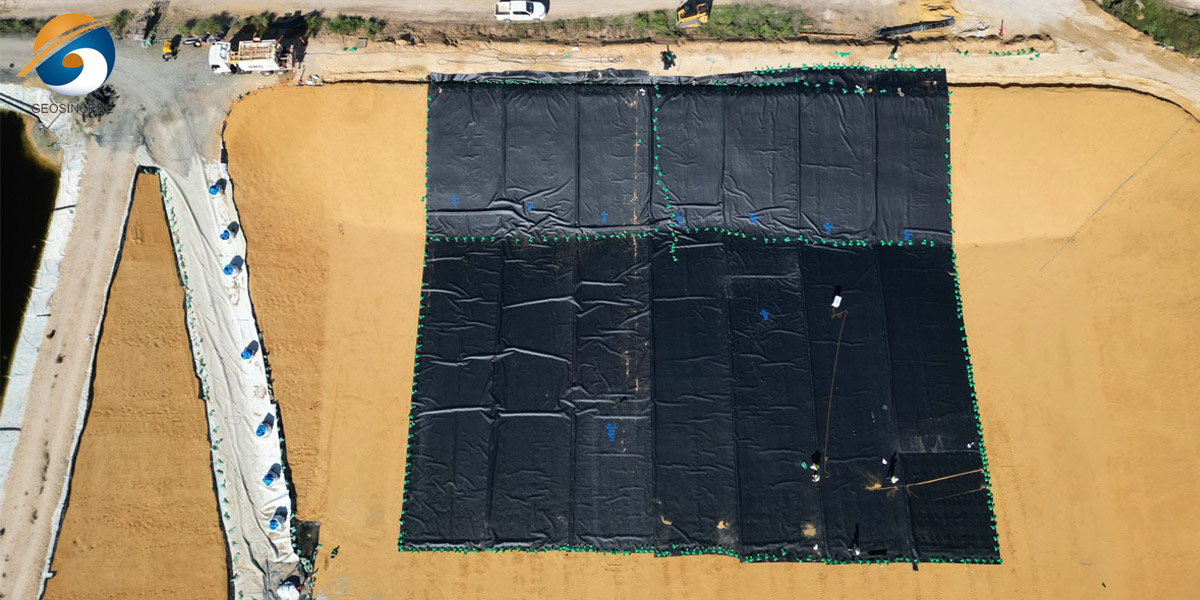
3. Key Properties of Geomembrana LDPE
Among its many advantages, low-density polyethylene (LDPE) geomembrane has the ability to combine various properties, which makes it an ideal choice for many containment applications.
3.1 Excellent Flexibility
LDPE is the most flexible polyethylene geomembrane material. The elongation at break is normally over 500%, sometimes even reaching 800-1000%. It means the liner can be stretched to a great extent before it finally breaks, so it will be able to fit the contours of a very uneven subgrade, cover a few soil cracks, and settle even if there is some differential settlement.
3.2 Very Low Permeability
The permeability coefficient of LDPE geomembrane is usually reported as being less than 1 × 10⁻¹² cm/s. It is generally treated as an impermeable barrier. It prevents the passage of water, leachate, and most other penetrants.
3.3 Good Chemical Resistance
LDPE withstands exposure to quite a few chemicals, for example:
- Dilute acids and alkalis (pH range approximately 1 to 14)
- Salt solutions
- Most inorganic chemicals
- A lot of organic compounds, including alcohols and some hydrocarbons
However, LDPE is less resistant to highly concentrated oxidizing acids, aromatic hydrocarbons, and some solvents compared to HDPE.
3.4 UV Resistance
LDPE geomembranes can be formulated to give good resistance to UV radiation if proper dosages of carbon black (minimum 2%) and UV stabilizers are used. A typical exposed LDPE liner could serve for 10-20 years depending on the actual UV intensity. For a longer life, exposed HDPE or LLDPE with higher UV stability are the materials of choice.
3.5 Low-Temperature Performance
LDPE can keep on bending and moving at temperatures as low as -50°C without cracking. It does not become extremely rigid at freezing temperatures which makes it a good option for cold climates and winter installations.
3.6 Cost-Effectiveness
Among the different types of polyethylene geomembranes, LDPE has the lowest unit price for the most part. The combination of cheap raw materials and simple installation (thanks to its lightweight and flexibility) makes LDPE an economic solution for many projects.
4. Common Applications of Geomembrana LDPE
Lowe-density polyethylene (LDPE) geomembranes have been around for many years and are found in a wide range of civil/environmental/agricultural/industrial projects. Here are the most frequent applications:
4.1 Agriculture and Aquaculture
Fish and shrimp ponds: LDPE liners eliminate water loss, reduce disease risk, and contribute to effective pond management.
Irrigation canals: These liners can keep water loss through seepage at a minimum of 95%, which is very beneficial, especially in desert regions.
Farm reservoirs and water storage ponds: A cost-effective solution for water storage plays a major role during dry seasons.
4.2 Water Conservation
Small to medium-sized reservoirs: Suitable for drinking water, livestock, or crop irrigation.
Stormwater retention basins: LDPE acts as a barrier preventing infiltration and controlling runoff.
Evaporation ponds: Primarily used for salt production or brine disposal.
4.3 Wastewater and Environmental
Municipal sewage lagoons: LDPE prevents the escape of wastewater into the groundwater.
Industrial effluent ponds: To contain effluent from factories, food production, and textile mills.
Leachate collection ponds: For landfills to temporarily hold the leachate before treatment.
Sludge drying beds: LDPE supplies a hygienic, impermeable surface.
4.4 Mining and Industrial
Heap leach pads (non-aggressive solutions): For leaching copper, gold, or uranium with moderate chemical strength.
Tailings storage facilities: Confine finely ground mine wastes.
Process water ponds: For recycling water in mineral processing operations.
Secondary containment: Beneath fuel tanks or chemical storage areas.
4.5 Decorative and Recreational
Golf course lakes and water hazards
Ornamental garden ponds
Water features and fountains
Swimming pool liners (non-chlorinated or low-chemical environments)
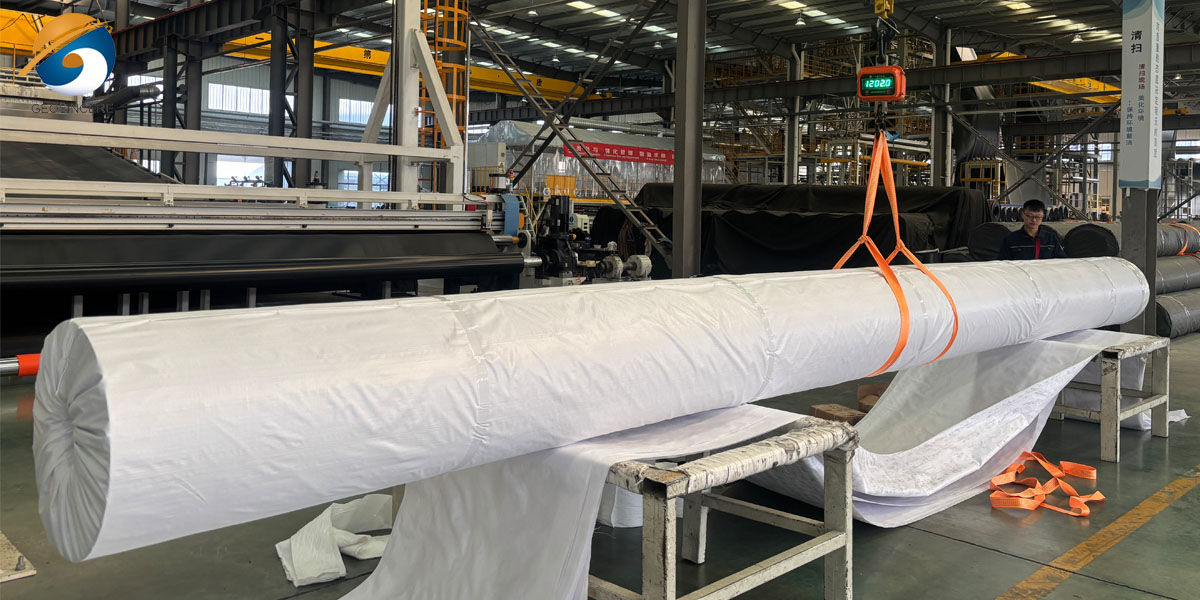
5. Installation Best Practices for Geomembrana LDPE
Proper installation is essential for long-term performance. Even a high-quality LDPE liner will fail if installed incorrectly.
5.1 Subgrade Preparation
Clear the area of all vegetation, rocks larger than 20 mm, roots, and debris.
Fill holes and depressions with compacted fine soil.
Compact the subgrade to at least 90–95% Standard Proctor density.
For rocky or rough subgrades, place a nonwoven geotextile cushion (minimum 6 oz/yd²) before unrolling the LDPE.
5.2 Unrolling and Positioning
Unroll the LDPE geomembrane in the direction of the longest dimension to minimize field seams.
Allow the material to relax and lie flat on the subgrade. Do not stretch or pull excessively.
Overlap adjacent panels by 100–150 mm for thermal welding.
5.3 Seaming Methods
Two main welding methods are used for LDPE:
5.3.1 Dual-track hot wedge welding (primary method)
A heated wedge is inserted between overlapping panels, melting the inner surfaces.
Pressure rollers immediately fuse the molten surfaces.
The machine produces two parallel weld tracks with an air channel between them.
This air channel allows 100% non-destructive testing.
5.3.2 Extrusion welding (for repairs, corners, and details)
A handheld extrusion welder melts LDPE welding rod and deposits it over the prepared seam.
Used where the hot wedge machine cannot operate (pipe boots, T-joints, patches).
Before starting production welding, perform trial seams under field conditions. Test the trial seams for peel strength (≥90% of parent material strength) and adjust welding parameters as needed.
5.4 Quality Control Testing
- Air channel testing: Pressurize the air channel to 30 psi (200 kPa) and monitor pressure drop for 5 minutes. A drop of less than 2–3 psi indicates a good seam.
- Destructive testing: Cut sample strips from the trial seams and from random field seams. Test for peel strength and shear strength.
- Visual inspection: Look for blisters, wrinkles, burn marks, or unbonded areas.
- Pinhole detection (critical applications): Use spark testing or vacuum box testing to locate tiny holes.
5.5 Anchoring and Covering
At the perimeter, excavate an anchor trench (minimum 300 mm wide × 300 mm deep). Place the edge of the LDPE sheet into the trench and backfill with compacted soil.
For sloped applications, install anchor trenches at both the top and bottom of the slope.
For buried applications, cover the LDPE liner with at least 300 mm of protective soil within 7 days of installation to prevent UV damage.
6. LDPE vs. Other Geomembrana Materials
Choosing the right geomembrane requires comparing LDPE with alternatives such as LLDPE, HDPE, and PVC.
|
Property
|
LDPE
|
LLDPE
|
HDPE
|
PVC
|
|
Density (g/cm³)
|
0.910–0.925
|
0.926–0.940
|
0.941–0.960
|
1.2–1.4
|
|
Flexibility
|
Excellent
|
Good
|
Poor
|
Excellent
|
|
Elongation at break
|
500–1000%
|
800–1000%
|
700–800%
|
300–500%
|
|
Tensile strength
|
Low–moderate
|
Moderate
|
High
|
Moderate
|
|
Puncture resistance
|
Moderate
|
Good
|
Excellent
|
Moderate
|
|
Creep resistance
|
Low
|
Moderate
|
Excellent
|
Moderate
|
|
Chemical resistance
|
Good (pH 1–14)
|
Good–Excellent
|
Excellent
|
Good (pH 2–12)
|
|
UV resistance (exposed)
|
Good (10–20 yrs)
|
Very good
|
Excellent
|
Good (with stabilizers)
|
|
Service life (buried)
|
30–50 years
|
50+ years
|
50–100 years
|
20–30 years
|
|
Material cost per m²
|
Lowest
|
Low–moderate
|
Moderate–high
|
Moderate
|
|
Shop prefabrication
|
Possible
|
Yes
|
No
|
Yes
|
6.1 When to choose LDPE:
Your budget is limited and the project is not highly critical.
The subgrade is uneven or difficult to prepare perfectly.
You need a flexible liner that can accommodate settlement.
The contained liquid is not highly aggressive (no strong oxidizing acids or aromatic solvents).
The required service life is 15–30 years.
When to consider HDPE or LLDPE instead:
The liner will be exposed to strong acids, hydrocarbons, or aggressive chemicals.
You need a service life exceeding 30 years.
High puncture resistance is required (sharp rocks, heavy equipment traffic).
The application is a hazardous waste landfill or critical mining facility.
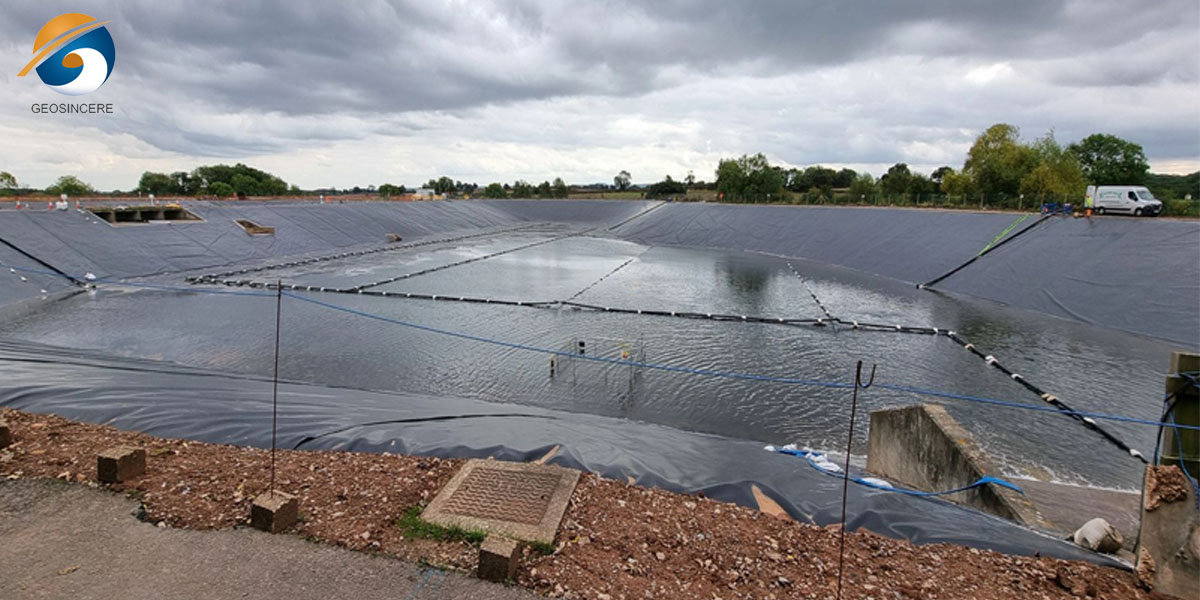
Summary: Why Consider a Geomembrana LDPE for Your Project?
A geomembrana LDPE offers a practical balance of flexibility, chemical resistance, UV stability, and low cost. It is an excellent choice for water containment, aquaculture, agricultural reservoirs, municipal wastewater lagoons, and many industrial applications where the chemical exposure is moderate.
Flexible and conformable – adapts to uneven ground.
Impermeable – stops water loss and groundwater contamination.
Easy to install – light weight, simple seaming, forgiving material.
Economical – lower material cost than HDPE or reinforced PVC.
When properly specified, installed, and tested, an Shandong Geosino New Material Co., Ltd. (GEOSINCERE Geosynthetics) LDPE geomembrane will provide reliable containment for 20 to 30 years or more.
