Geomembrane for landfill plays a vital role in modern waste management by providing an effective barrier against leachate and harmful gases. Its excellent impermeability and durability help protect soil and groundwater from contamination, making it an essential solution for safe and sustainable landfill containment.
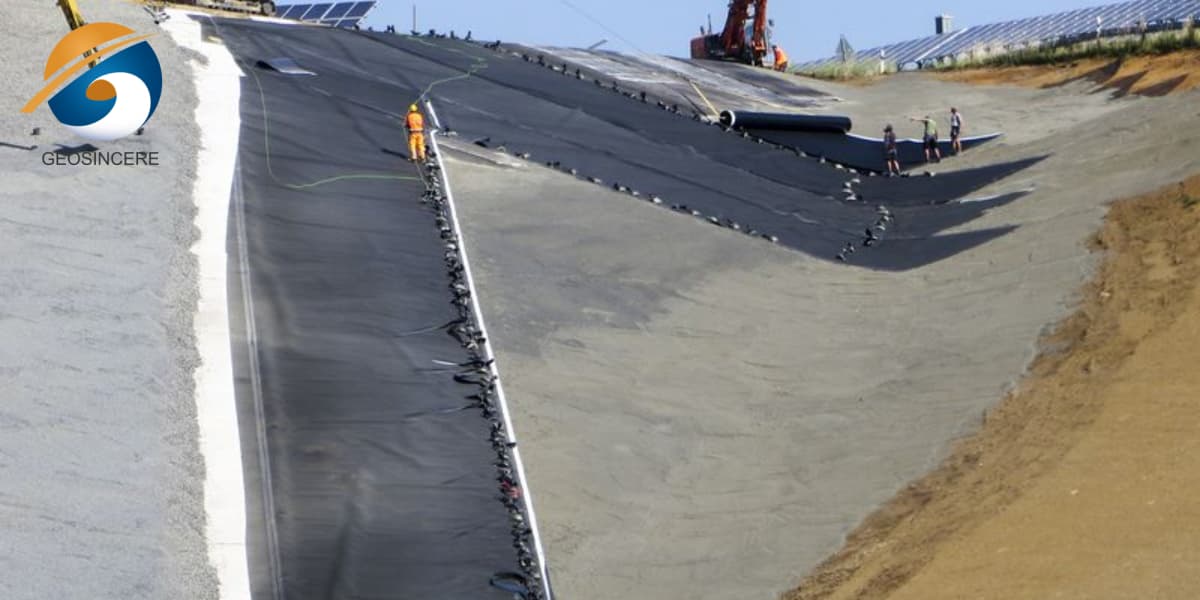
Modern waste management has moved from the practice of dumping wastes in open places to highly controlled engineering methods which are capable of preserving human health and the environment for hundreds of years. Geomembrane, which is a synthetic membrane liner, is the central component of these engineered landfills. It acts as a barrier, and its main task is to stop the movement of fluids. Here is a detailed analysis of how hdpe landfill liner is utilized in landfills. It looks into the technological aspects of various types of geomembrane for landfill (HDPE, LLDPE, PVC, etc.), their essential physical and mechanical characteristics, the layout and erection of lining systems, quality control standards, factors affecting performance over time, and new developments. Civil engineers, environmental scientists, regulators, and waste management professionals who want to make sure that containment is safe and environmentally friendly through the understanding of the different roles of the GEOSINCERE Geosynthetics geomembrane will benefit from this article.
1. Introduction
Municipal solid waste (MSW) production worldwide is only going to grow, and by 2050, it is forecasted to be 3.4 billion tons per year. Besides MSW, industrial hazardous wastes, mining residues, and polluted dredged materials also require safe disposal. When landfill waste comes in contact with water, leachate forms, which is a highly toxic liquid containing a mixture of organic and inorganic compounds, heavy metals, and pathogens. The gradual uncontrolled migration of leachate can cause pollution of groundwater, surface water, and soil for decades or even centuries.
Nowadays, sanitary landfills use composite liner systems, where a geomembrane is laid over compacted clay liner (CCL) or geosynthetic clay liner (GCL) to reduce this problem. The geomembrane acts as a main water barrier having extremely low permeability (about 10⁻¹² to 10⁻¹⁴ cm/s), which is much better than compacted clay. A landfill without a geomembrane would be a source of great concern for long-term liability. Hence, picking, planning, installing, and keeping track of the geomembrane are probably the most essential technical points in landfill engineering.
2. Material Science of Geomembrane for Landfill
It is a fact that not all geomembranes are of the same quality. Chemical, thermal, and mechanical characteristics of the landfill determine the polymer to be used. HDPE (high-density polyethylene) is the leading material by a large margin, but other materials are available for particular cases.
2.1 High-Density Polyethylene (HDPE)
More than 80% of the world's landfill geomembrane applications are made from HDPE. Its excellent combination of features has made it so popular:
- Chemical resistance: Leachate is a highly complex mixture of strong organic solvents, acids, bases, and salts and HDPE is almost totally resistant to these chemicals.
- Low permeability: It is a protective barrier against both water and gases (such as methane and carbon dioxide).
- Great tensile strength: Mechanical stresses, for example, placing cover soils, and waste settling are easily handled by the MDPE.
- Resistance to UV and ozone: Degradation of HDPE by sunlight during exposure is effectively prevented by carbon-black stabilization of HDPE.
- Service temperature range is very wide: Effective from -40°C to 80°C.
Still, the HDPE is Characterized by a relatively stiff structure that limits its capability to become highly conformable to uneven subgrades. Besides, it also has a very high coefficient of thermal expansion/contraction, which leads to a necessitation of very careful seam management in extremes of temperature changes.
3. Key Physical and Mechanical Properties for Landfill Design
To specify a geomembrane for landfill use, engineers rely on a suite of standardized test methods (ASTM, ISO, GRI). Critical properties include:
|
Property
|
Test Method (ASTM)
|
Typical HDPE Value (1.5 mm)
|
Significance
|
|
Thickness
|
D5199
|
1.5 mm (60 mil)
|
Determines barrier effectiveness and puncture resistance.
|
|
Density
|
D1505
|
>0.94 g/cm³
|
Polyethylene identification.
|
|
Tensile Properties
|
D6693 (Type IV)
|
Yield strength ~22 kN/m
|
Resistance to installation and load-induced stresses.
|
|
Elongation at Break
|
D6693
|
>700%
|
Ability to stretch without tearing.
|
|
Tear Resistance
|
D1004
|
>65 N
|
Resistance to initiation of a tear from a defect.
|
|
Puncture Resistance
|
D4833
|
>300 N
|
Resistance to penetration from stones or debris.
|
|
Carbon Black Content
|
D1603
|
2.0-3.0%
|
UV stabilization, dispersion quality.
|
|
Oxidative Induction Time (OIT)
|
D3895
|
>100 min
|
Long-term antioxidant package; indicator of service life.
|
4. Design of a Composite Geomembrane for Landfill System
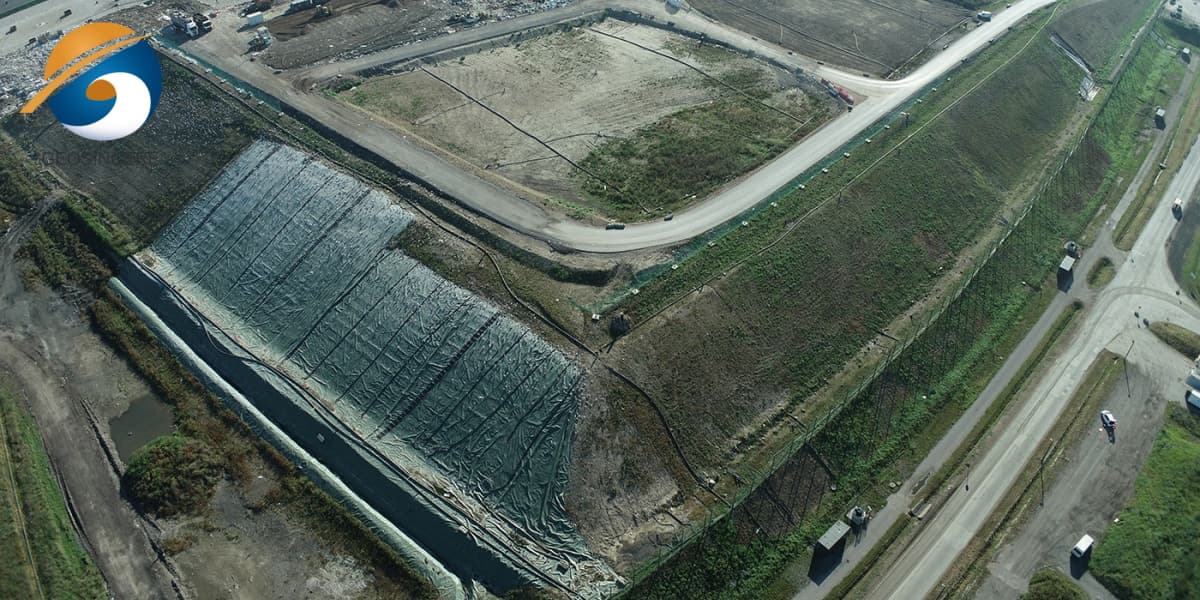
A geomembrane never acts alone. It is part of a multi-layered composite liner system designed for redundancy and performance.
4.1 Typical Bottom Liner System (from bottom up):
- Subgrade: Native, compacted soil (minimum 95% standard Proctor) providing a stable foundation.- Leachate Collection and Removal System (LCRS) Blanket: Geocomposite or gravel layer (30 cm min.) that drains leachate to sumps.- Protective Layer (Sand or Geotextile): Prevents puncture of the geomembrane from the LCRS gravel.- Geomembrane Liner (1.5-2.5 mm HDPE): The primary hydraulic barrier.- Geosynthetic Clay Liner (GCL) or Compacted Clay Liner (CCL): A secondary barrier (hydraulic or chemical). GCL (bentonite sandwiched between geotextiles) is common due to lower permeability and easier installation.
4.2 Secondary Subgrade: Underlying soil.
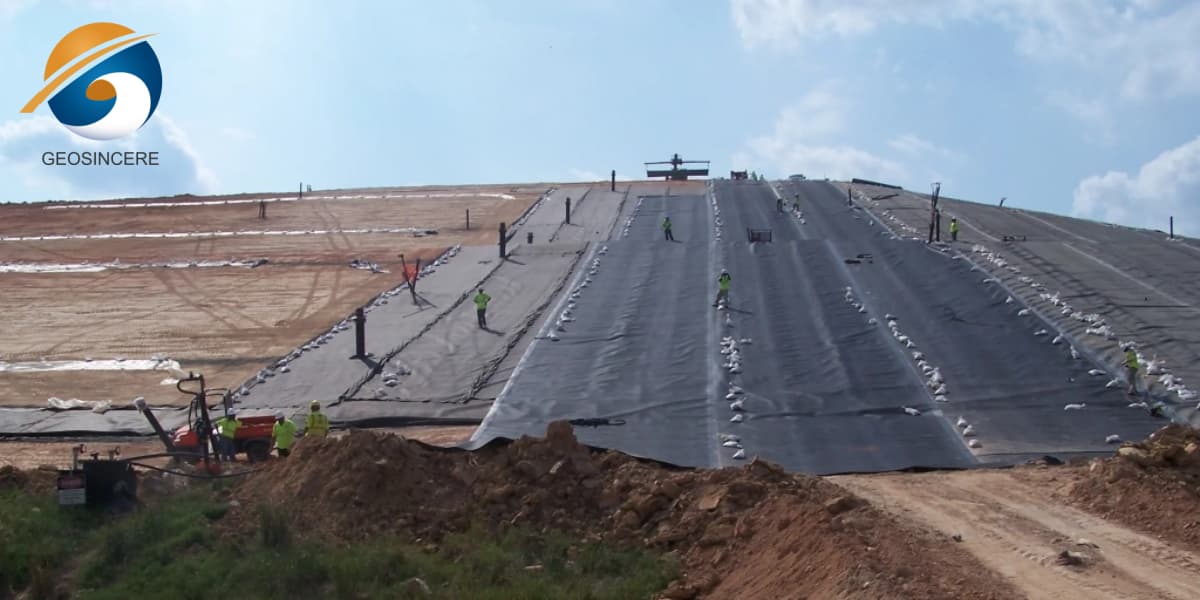
Final Cap (Closure) System (from top down):- Vegetative Soil Layer: For erosion control and evapotranspiration.- Drainage Layer (Geocomposite or sand): Removes percolating rainwater.- Geomembrane Cap (LLDPE or HDPE, 1.0-1.5 mm): Prevents infiltration of precipitation into the closed waste.- Gas Collection Layer (gravel or geonet): Collects methane for recovery or flaring.
4.3 Waste Body.
The bottom liner geomembrane prevents leachate from exiting the waste; the cap geomembrane prevents external water from entering. Both are essential for "dry tomb" landfill design philosophy.
5. Geomembrane for Landfill Installation: Seaming & Construction Quality Assurance
The best geomembrane material is useless if not properly seamed. Field seams are the weakest link.
5.1 For HDPE geomembranes, two primary seaming methods are used:
5.1.1 Thermal Fusion (Dual-Track Wedge Welding):
The most common method for long field seams. A heated wedge melts the two geomembrane surfaces, and pressure rollers fuse them. This produces a continuous, double-track weld with an unwelded air channel between tracks.
5.1.2 Extrusion Welding:
Used for detail work (patches, pipe boots, repairs). A bead of molten polyethylene is extruded over the overlapped edges.
5.2 Construction Quality Assurance (CQA) is mandatory. It includes:
- Destructive Testing: Seam samples are cut and tested for peel and shear strength (ASTM D6392).- Non-Destructive Testing: Air Channel/Pressure Test: For dual-track welds, air is injected into the intermediate channel; a stable pressure for 5 minutes indicates a continuous weld.- Vacuum Box Test: For patches and extrusion welds, a soap solution is applied, and a vacuum box reveals leaks as bubbles.- Spark Test: For geomembranes installed over a conductive layer, a high-voltage spark identifies holes.- Daily documentation: All seams, repairs, panel numbers, and test results are recorded. Modern sites use GIS-based mapping of every weld.- A common rule: One leak per acre per 100 years is the design target for a well-constructed geomembrane liner with proper QA/QC.
6. Geomembrane for Landfill Long-Term Performance: Aging, Durability, and Failure Modes
The expected service life of a landfill geomembrane is often cited as "100 years or more." This is based on extrapolated data from accelerated aging tests (Arrhenius modeling). However, real-world performance depends on:
6.1 Degradation Mechanisms:
6.1.1 Antioxidant Depletion: Plastic geomembranes contain antioxidants (AO) to prevent thermal oxidation. Once AO is consumed, the polymer may begin to oxidize, becoming brittle. Bench-scale tests (OIT) monitor depletion.6.1.2 Environmental Stress Cracking (ESC): The dread of HDPE geomembranes. ESC occurs when tensile stress (e.g., from slope settlement) combines with a surfactant chemical (e.g., certain leachate components). Notch-sensitive.6.1.3 Puncture and Static Fatigue: Overlying gravel or underlying rocks can puncture the geomembrane, especially under 30 meters of waste (equivalent to ~500 kPa pressure).6.1.4 Chemical Degradation: While HDPE is resistant, extreme pH (<2 or >12) or certain aggressive solvents (e.g., specific aromatic hydrocarbons) can cause swelling or extraction of components.
6.2 Failure Modes:
6.2.1 Leaks: The most common. Even a pin-hole leak can allow significant contaminant transport if the underlying GCL is hydrated.6.2.2 Geomembrane wrinkles: Caused by thermal expansion. Wrinkles create bridges that are not in contact with the underlying GCL, creating preferential pathways.6.2.3 Slope instability: Low interface friction between geomembrane and geotextile/clay can lead to liner sliding.
6.3 Mitigation Strategies Include
Using textured geomembranes (increased friction), thicker materials for high-stress zones, careful subgrade preparation (remove stones >12 mm), and deployment techniques that minimize wrinkles (e.g., deployment in cooler morning hours).
7. Geomembrane for Landfill Regulatory Framework and Standards
Geomembrane use in landfills is not optional in developed nations; it is a legal mandate.
7.1 USA:
EPA Subtitle D (40 CFR 258) for MSW landfills requires a composite liner consisting of a geomembrane (at least 30 mil originally, now typically 60 mil) over a 60 cm thick compacted clay liner with max permeability 1x10⁻⁷ cm/s, OR a GCL equivalent. Subtitle C for hazardous waste mandates 90 mil minimum.
7.2 European Union:
Landfill Directive 1999/31/EC requires similar composite liners, with specific requirements in member state regulations (e.g., German Deponieverordnung).
7.3 Global:
Organizations like the Geosynthetic Institute (GSI), ISO (e.g., ISO 10318), and ASTM International provide consensus standards for testing and specification.
8. Geomembrane for Landfill Case Study: Leachate Leak Detection and Repair
Consider a 20-hectare municipal landfill in a humid climate. After five years of operation, monitoring wells downgradient show elevated chloride and BOD, indicating a leak. Electrical Leak Location Method (ELLM, also called dipole survey) is performed on the exposed geomembrane prior to waste placement. However, this site was tested post-waste using a Subsurface Geoelectric method between the two geomembranes (in a double-liner system). They identify a 2 cm tear at a pipe penetration.- Lesson: The tear occurred due to improper boot fabrication. Remediation required excavating 2000 cubic meters of waste, locating the defect, applying an extrusion weld patch over a 1 m² area (reinforced with a patch sheet), re-testing with vacuum, and re-burying.
9. Geomembrane for Landfill Innovations and Future Trends
The field of geomembranes is not static. Emerging technologies include:
9.1 Conductive Geomembranes:
A thin co-extruded layer of conductive polyolefin allows for spark testing after installation, even before placing the next material layer. This provides 100% coverage leak detection.
9.2 Bituminous Geomembranes (Re-emerging):
New formulations provide extreme flexibility and self-healing properties against small punctures.
9.3 Bio-based and Recycled Polymers:
Research into polylactic acid (PLA) geomembranes for temporary caps and using post-consumer HDPE (PCR) is underway.
9.4 Geomembrane with Integrated Sensors:
Optical fibers woven into the geomembrane can detect strain, temperature, and even chemical changes, allowing real-time structural health monitoring.
9.5 AI and Drone Inspection:
Machine learning algorithms on high-resolution drone imagery can automatically identify wrinkles, damage, or improper seams during installation.
10. Conclusion
The geomembrane for landfill applications is far more than a plastic sheet; it is a technologically sophisticated, engineered barrier whose proper selection, design, installation, and maintenance determine the environmental safety of modern waste disposal. Polyethylene geomembranes, especially HDPE, have demonstrated robust performance for decades, offering extremely low permeability, chemical resistance, and mechanical strength when properly manufactured and installed.However, the long lifespan (hundreds of years) of landfill waste means that no geomembrane is a permanent solution—it is a long-term containment tool that must be designed with redundancy (composite liners, leak detection layers, and robust caps). The future lies in better quality assurance (conductive geomembranes), smarter monitoring (sensors), and continued improvement in material science. For any engineer or regulator involved in waste management, a deep respect for the capabilities and limitations of the geomembrane is not optional—it is the cornerstone of environmental stewardship. Without the geomembrane, the modern sanitary landfill would revert to a poison pit; with it, we have a fighting chance to protect groundwater for generations to come.
Choosing a Good geomembrane Supplier :
Shandong Geosino New Material Co., Ltd. (GEOSINCERE Geosynthetics) is the professional geomembrane and geosynthetics manufacturer and wholesaler located in Shandong Province, China. We are an professional manufacturer, exporter and wholesaler for such geosynthetic products as HDPE Pool Liner, geotextiles, geogrids, geocells, geomembrane (geomembranes), drainage boards, etc.GEOSINCERE has been keeping on investing in technological innovation, manufacturing facilities improvement and turnkey engineering abilities. We have invested 10 million dollars into our manufacturing factory which is equipped with state-of-the-art automatic production lines to manufacture high quality geomembrane and other geosynthetics with optimized processes. Our extensive lines of geosynthetics products are well known for their ensured quality, high performance, excellent durability and best cost effectiveness.GEOSINCERE brand geomembrane and other geosynthetics products and solutions can meet your requirements by our solid technologies, innovative engineering solutions and excellent customer services. GEOSINCERE always tries our best to solve the most complex civil, mining and environmental challenges with our innovative and high performance geosynthetic products. Quality assurance, factory price and fast delivery time are our competitive advantages.
