A 30 mil HDPE liner is a reliable and cost-effective geomembrane solution designed for light to medium-duty containment applications. This guide explores its key features, performance benefits, installation considerations, and ideal use cases, helping engineers and project owners choose the right liner for safe and efficient containment.
In the world of geosynthetics, few materials have achieved the level of trust and technical specification as the High-Density Polyethylene (HDPE) liner. Used extensively in mining, aquaculture, waste management, and water conservation, HDPE liners are the gold standard for liquid barrier systems. Among the various thicknesses available—ranging from 20 mil to 120 mil—the 30 mil HDPE liner occupies a unique and highly valuable niche. At 0.75 millimeters thick (approximately 0.030 inches), the 30 mil geomembrane liner represents the "heavy-duty entry point." It bridges the gap between temporary agricultural films and the massive, extrathick liners used in hazardous waste landfills.
This article provides a comprehensive technical deep dive into the 30 mil HDPE liner. GEOSINCERE Geosynthetics will explore its manufacturing process, material properties, key advantages over other thicknesses, installation methodologies, quality control testing, and the specific industries that rely on this particular gauge for environmental protection and operational efficiency.
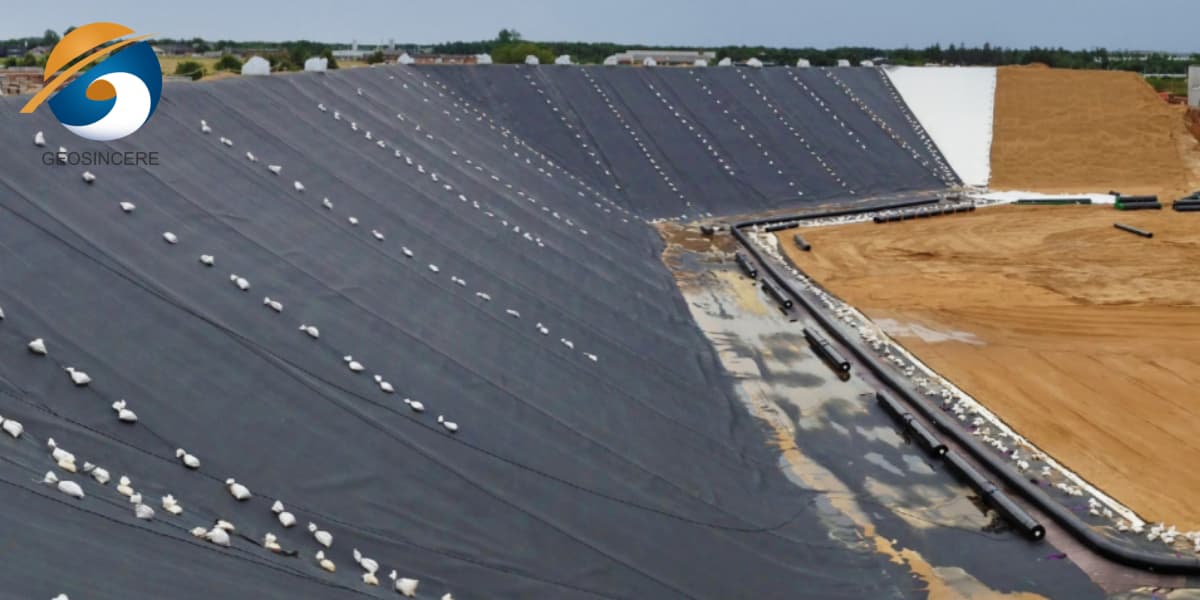
1. What is a 30 Mil HDPE Liner? (Material Science)
To understand the utility of the 30 mil liner, one must first understand the base material: HDPE. High-Density Polyethylene is a thermoplastic polymer produced from petroleum. Its molecular structure is characterized by a linear chain with minimal branching, which allows the polymer chains to pack tightly together. This tight packing results in high density (greater than 0.94 g/cm³), high tensile strength, and exceptional chemical resistance.
1.1 The "Mil" Measurement
The term "mil" is a unit of measurement used in the United States and some other imperial-system countries to denote thickness. One mil equals one-thousandth of an inch (0.001 inches). Therefore, a 30 mil HDPE liner is 0.030 inches thick. In metric terms, this translates to approximately 0.75 millimeters (specifically 0.762 mm). For context:
A standard heavy-duty trash bag is roughly 1.5 to 2.0 mils thick.
A typical pond liner for decorative use is 10 to 20 mils.
A 30 mil liner is thicker than three heavy-duty trash bags stacked together.
1.2 Manufacturing Process: Smooth vs. Textured
The 30 mil HDPE liner is typically manufactured via the flat-die extrusion or blown-film extrusion process. After extrusion, the material can be produced in two primary surface finishes:
1.2.1 Smooth 30 mil HDPE
Features a uniform, frictionless surface. Ideal for applications where the liner is laid over a smooth subgrade or when maximum flow of liquid across the surface is required (e.g., channels or decant ponds).
1.2.2 Textured 30 mil HDPE
One or both sides of the liner are treated to create a rough, matte finish. Texturing increases the coefficient of friction. This is critical for slope stability; a smooth liner on a steep slope might slide downhill under the weight of soil or water, whereas a textured 30 mil liner grips the subgrade.
2. The 30 Mil HDPE Liner Critical Technical Specifications
The performance of a 30 mil HDPE liner is dictated by standards set by the Geosynthetic Research Institute (GRI) and the American Society for Testing and Materials (ASTM). For a 30 mil liner to be fit for purpose, it must meet the following typical benchmarks:
- Density: ≥ 0.94 g/cm³ (ASTM D1505)
- Tensile Properties (ASTM D6693 Type IV):
- Yield Strength: ≥ 21 kN/m (approx. 120 lbs/inch width)
- Break Strength: ≥ 38 kN/m (approx. 215 lbs/inch width)
- Elongation at Yield: ≥ 12%
- Elongation at Break: ≥ 700%
- Tear Resistance (ASTM D1004): ≥ 93 N (approx. 21 lbs-force)
- Puncture Resistance (ASTM D4833): ≥ 320 N (approx. 72 lbs-force)
- Carbon Black Content: 2.0 – 3.0% (for UV stabilization) (ASTM D1603)
- Oxidative Induction Time (OIT) (ASTM D3895): ≥ 100 minutes (Standard OIT) or ≥ 400 minutes (HP-OIT).
2.1 Why 30 Mil Specifically?
The jump from 20 mil to 30 mil is not linear in performance; it is exponential. A 30 mil liner offers approximately 50% more resistance to puncture from underlying sharp rocks or debris compared to a 20 mil liner. It also provides a significantly lower permeability rate. While HDPE is already a low-permeability material (typically 1x10^-12 cm/s), the increased thickness of the 30 mil variant provides a longer diffusion path for any potential volatile organic compounds (VOCs) or chemicals.
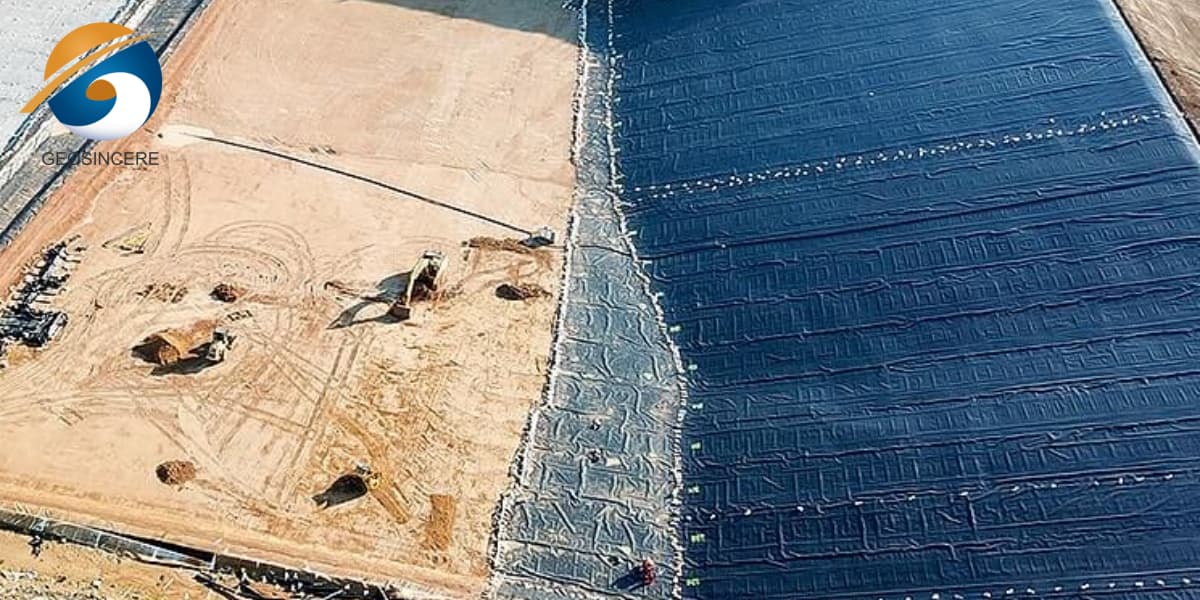
3. 30 Mil vs. 40 Mil vs. 20 Mil – Where Does It Fit?
Choosing the correct thickness is a cost-benefit analysis. Here is how the 30 mil liner compares to its siblings:
3.1 30 Mil vs. 20 Mil HDPE
3.1.1 Advantage of 30 Mil
The 20 mil liner is suitable for decorative ponds or temporary containment. However, it is vulnerable to damage during installation (foot traffic, minor welding errors) and rodent damage. The 30 mil is substantially more robust.
3.1.2 Application
Use 30 mil for permanent structures or where there is any risk of subgrade stone protrusion. Do not use 20 mil for a landfill leachate pond.
3.2 30 Mil vs. 40 Mil HDPE
3.2.1 Advantage of 30 Mil
Cost and handling. A 40 mil liner (1.0 mm) is heavy. A 30 mil roll is easier to maneuver by installation crews, requires less welding time (due to slightly faster fusion speeds), and costs roughly 25% less per square foot than 40 mil.
3.2.2 Disadvantage
40 mil offers greater long-term durability against extreme mechanical stress (e.g., heavy equipment driving over the liner with significant soil cover).
3.2.3 Verdict
If your subgrade is perfectly prepared (no sharp objects) and the hydraulic head (water pressure) is low to moderate, 30 mil is efficient. If heavy rocks will be placed directly on the liner or you are lining a deep, hazardous chemical tank, go with 40 mil or higher.
3.3 The "Sweet Spot"
For the vast majority of non-hazardous industrial applications—such as agricultural irrigation reservoirs, fire protection ponds, and evaporation ponds for brine—the 30 mil HDPE liner is considered the "Goldilocks" thickness: not too thick (saving money and labor), not too thin (avoiding catastrophic failure).
4. Critical Applications of 30 Mil HDPE Liner
Given its balance of strength and flexibility, the 30 mil liner is the workhorse of the containment industry.
4.1 Aquaculture (Fish and Shrimp Farming)
In shrimp farming, water quality is paramount. Concrete tanks are expensive and prone to cracking; soil ponds lose water through percolation. A 30 mil HDPE liner provides a sterile, inert barrier. It prevents the loss of valuable saline water, stops bacteria from the soil from contaminating the stock, and allows for easy harvest (the liner allows the pond to be cleaned and dried completely between cycles). The 30 mil thickness resists the claws of crustaceans and the beaks of predator birds.
4.2 Mining: Heap Leach Pads and Tailings
While primary heap leach pads for gold and copper often use 60 mil or 80 mil liners due to aggressive chemicals and long-term liability, 30 mil HDPE liners are extensively used for:
- Interlift liners: Between layers of ore on a heap leach pad to divert solution flow.
- Solution channels: Lining the ditches that carry pregnant leach solution (PLS) to the processing plant.
Temporary tailings storage facilities.
4.3 Agriculture and Viticulture
Water scarcity is a global issue. Farmers are moving away from unlined earthen reservoirs, which can lose 40% of water to seepage. A 30 mil HDPE liner reduces seepage to nearly zero. It also prevents root intrusion from surrounding trees, which would otherwise crack a concrete lining.
4.4 Fire Protection Reservoirs
Remote industrial sites (like sawmills or rural power plants) require guaranteed water for fire suppression. A 30 mil liner ensures that the reservoir holds its volume year-round without relying on high groundwater tables.
4.5 Secondary Containment (Berms and Drip Pans)
Under oil tanks or chemical totes, regulations (like the EPA's SPCC rule in the US) require secondary containment. A 30 mil HDPE liner is often used to line the earthen berms surrounding tank farms. It is thick enough to resist UV degradation for decades but flexible enough to conform to the berm's shape.
5. Installation Methodology – Welding 30 Mil HDPE Liner
The performance of a 30 mil HDPE liner is only as good as its seams. Unlike PVC liners which are glued, HDPE is thermally welded.
5.1 The two primary methods are:
5.1.1 Fusion (Extrusion) Welding
A bead of molten HDPE plastic is extruded over the overlapped edges of two sheets. This is used for patches, repairs, or complex intersections. For 30 mil, the extrusion welder runs at a moderate speed.
5.1.2 Dual-Track Hot Wedge Welding (Most Common)
This is the preferred method for long, straight seams. A heated metal wedge slides between the two overlapping sheets of 30 mil liner, melting the inner surfaces. Pressure rollers immediately behind the wedge fuse the two sheets together. The result is a seam that is actually stronger than the parent material.
- Parameter for 30 mil
Wedge temperature typically 400°C–450°C (752°F–842°F), travel speed 2–3 meters per minute.
5.2 Critical Pre-Installation Steps
5.2.1 Subgrade Preparation
The soil under a 30 mil liner must be smooth, compacted, and free of debris. Any rock larger than a pea must be removed. Often, a geotextile cushion (non-woven fabric) is placed between the soil and the 30 mil liner to protect against punctures.
5.2.2 Panel Layout
Panels are laid out to minimize field seams. Factory seams (made in the factory) are usually stronger than field seams.
5.2.3 Ballasting
Because 30 mil is relatively light, wind can catch it like a sail. Sandbags or temporary anchor trenches are required to hold the liner down before backfilling with water or soil.
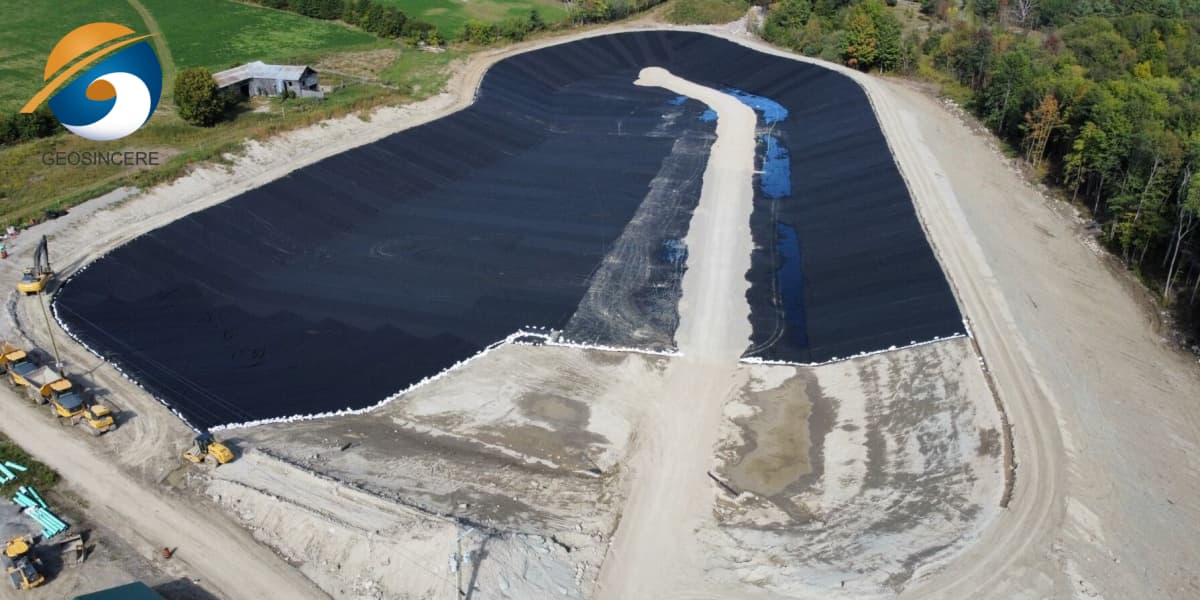
6. 30 Mil HDPE Liner Quality Assurance (QA) and Testing
For a 30 mil HDPE liner, destructive and non-destructive testing is mandatory.
6.1 Non-Destructive Testing (NDT)
- Vacuum Box Test: A soapy solution is sprayed on the seam. A vacuum box creates suction over the seam. If bubbles form, there is a leak.
- Spark Testing: Used if a conductive layer is embedded below the liner (not standard for all 30 mil). A high-voltage wand detects holes.
- Air Pressure Testing: For dual-track seams, the channel between the two welded tracks is sealed at both ends and filled with air. The pressure is monitored; if it drops, the seam has a leak.
6.2 Destructive Testing (Seam Peel and Shear)
Every 500 linear feet of seam, a sample is cut out (1 foot wide). The sample is pulled in a tensile machine.
- Peel Test: Measures the force required to pull the two sheets apart. For 30 mil, the average peel strength must be high, and the failure must be "stretchy" (elongation of the parent material) rather than a clean "adhesive" peel.
- Shear Test: Measures the force required to slide the top sheet over the bottom sheet.
7. 30 Mil HDPE Liner Longevity and Environmental Resistance
One of the most compelling reasons to choose a 30 mil HDPE liner is its lifespan. When properly installed and covered (or exposed), HDPE resists:
7.1 UV Radiation
The carbon black stabilizer prevents polymer degradation. A 30 mil liner can last 20-30 years exposed to direct sunlight. If buried under soil or water (which blocks UV), it can last over 100 years.
7.2 Chemical Attack
HDPE is resistant to acids, bases, alcohols, and salts. It is vulnerable only to strong oxidizing acids (like concentrated nitric acid) and certain hydrocarbons at high temperatures.
7.3 Biological Attack
Fungi, bacteria, and roots cannot digest HDPE. It is biologically inert.
7.4 Cracking
Modern HDPE resins are formulated with high resistance to Environmental Stress Cracking Resistance (ESCR). The 30 mil thickness provides enough material mass to withstand freeze-thaw cycles without becoming brittle.
8. 30 Mil HDPE Liner Limitations and Considerations
Despite its strengths, the 30 mil HDPE liner is not a universal solution.
8.1 Thermal Expansion
HDPE has a high coefficient of thermal expansion (roughly 10x that of steel). On a hot day, a 30 mil liner can expand significantly, causing wrinkles (tenting). These wrinkles must be cut and re-welded flat, or they will concentrate stress.
8.2 Installation Skill
HDPE welding requires certified technicians. A poorly welded 30 mil liner will fail at the seam, not in the field.
8.3 Slope Limitations
On slopes steeper than 3:1 (horizontal:vertical), a smooth 30 mil liner may be unstable. You must either texture the liner, decrease the slope angle, or increase thickness to 40 mil.
8.4 Puncture from Heavy Traffic
While 30 mil resists walking and light wheelbarrow traffic, allowing a loaded bulldozer to drive directly on a 30 mil liner (without 12 inches of soil cover) will destroy it.
9. 30 Mil HDPE Liner Procurement and Cost Analysis
As of the current market, the cost of a 30 mil HDPE liner varies based on resin prices (which follow oil prices), total square footage, and texturing requirements.
9.1 Raw Material
Virgin resin is more expensive than reprocessed (recycled) resin. For potable water, virgin resin is mandatory. For non-critical evaporation ponds, reprocessed 30 mil liners are cost-effective, though slightly weaker.
9.2 Freight
30 mil liner is heavy. A standard roll (20 ft x 200 ft) weighs approximately 400-500 lbs. Shipping costs are a significant factor.
9.3 Estimated Installed Cost
Typically, a 30 mil smooth liner installed (including subgrade prep, panels, welding, and testing) ranges from $0.75 to $1.50 per square foot, depending on location. The 30 mil textured version adds roughly 20-30% to the material cost.
10. 30 Mil HDPE Liner Case Study – Agricultural Reservoir in California
- The Scenario: A 500-acre almond farm in the Central Valley relied on groundwater. Due to drought restrictions, they built a 100-acre-foot storage reservoir to capture winter storm runoff.
- The Solution: They specified a 30 mil smooth HDPE liner for the floor and a 30 mil textured HDPE liner for the 3:1 interior slopes.
- The Result: The reservoir holds water with zero measurable seepage. After 8 years, inspection revealed no root intrusion, no UV degradation, and only minor surface scratches from cleaning equipment. The 30 mil thickness provided the safety margin needed for a permanent structure without the expense of a 40 mil liner.
- Lesson: The 30 mil liner paid for itself in water savings within three growing seasons.
Conclusion
The 30 mil HDPE liner is a testament to engineering balance. It is not the thickest liner on the market, nor is it the cheapest. It is, however, the most efficient choice for a vast range of containment challenges. It offers the robust chemical resistance and tensile strength of HDPE at a thickness that is still manageable for fabrication and installation.
From the bottom of a shrimp pond in Southeast Asia to the slopes of a fire reservoir in the Rocky Mountains, the 30 mil HDPE liner provides a reliable, durable, and cost-effective barrier against water loss and soil contamination. By understanding its properties—respecting its thermal expansion, ensuring proper subgrade preparation, and verifying seams with rigorous testing—engineers and owners can expect a service life measured in decades, not years. As environmental regulations tighten and water becomes more precious, the role of the 30 mil HDPE liner as the guardian of our liquid assets will only grow more critical.
Choosing a Good HDPE Liner Supplier :
Shandong Geosino New Material Co., Ltd. (GEOSINCERE Geosynthetics) is the professional Geosynthetic clay liners and geosynthetics manufacturer and wholesaler located in Shandong Province, China. We are an professional manufacturer, exporter and wholesaler for such geosynthetic products as HDPE Pool Liner, geotextiles, geogrids, geocells, geosynthetic clay liners (geosynthetic clay linerss), drainage boards, etc.
GEOSINCERE Geosynthetics brand Geosynthetic clay liners and other geosynthetics products and solutions can meet your requirements by our solid technologies, innovative engineering solutions and excellent customer services. GEOSINCERE Geosynthetics always tries our best to solve the most complex civil, mining and environmental challenges with our innovative and high performance geosynthetic products. Quality assurance, factory price and fast delivery time are our competitive advantages.
