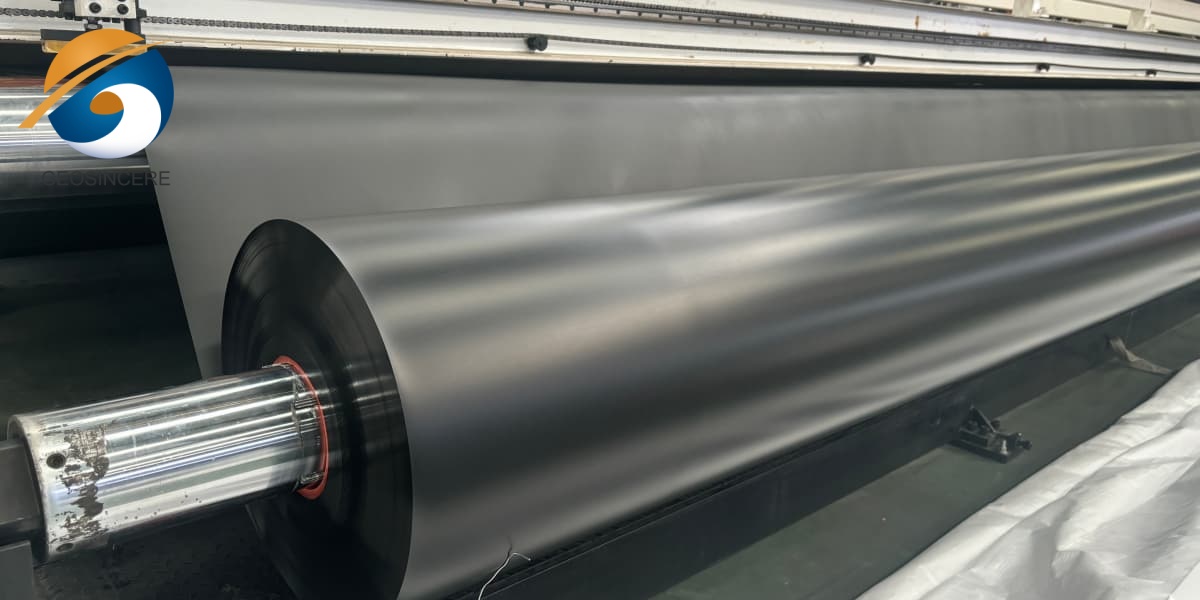
As a senior foreign trade operations specialist at Shandong Geosino New Material Co., Ltd. (GEOSINCERE Geosynthetics), I regularly support engineers, procurement managers, and contractors who specify and purchase HDPE geomembrane for landfills, mining facilities, reservoirs, industrial containment, and water-management projects. Selecting the right geomembrane is not simply a matter of price or thickness. It requires matching material properties to site conditions, regulatory requirements, chemical exposure, and long-term performance expectations. This guide provides practical, data-based guidance drawn from industry standards and field practice.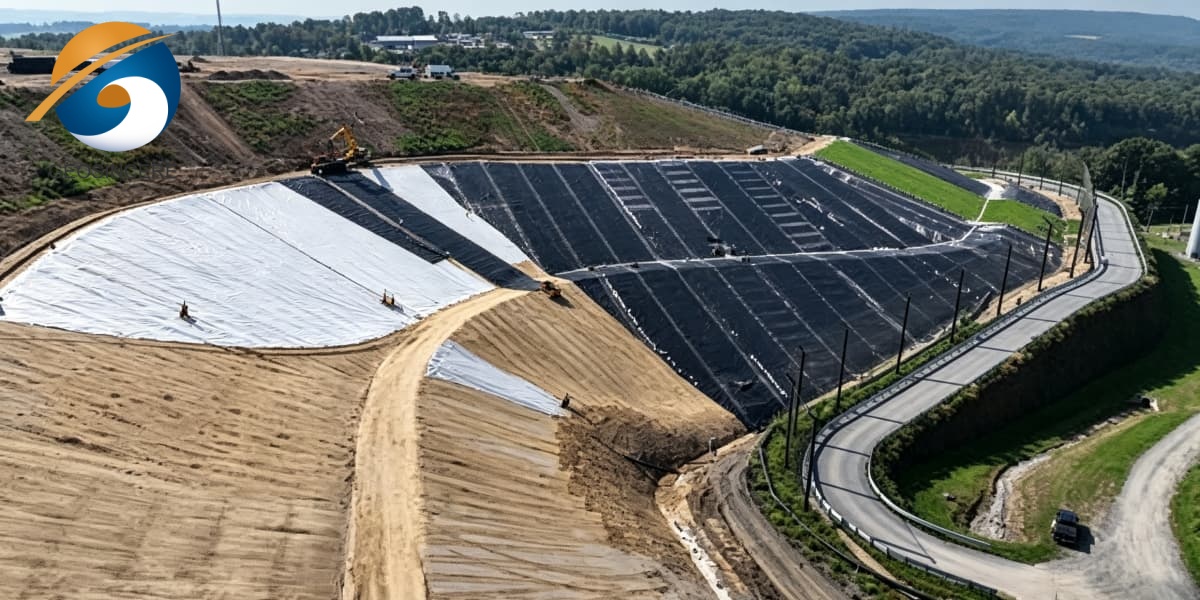
High-density polyethylene (HDPE) geomembranes are impermeable polymeric sheets formulated with a density of 0.940 g/cm³ or higher. They serve as primary barriers against fluid migration in containment applications. According to recent market analyses, the global geomembranes market is projected to grow from approximately USD 3.39 billion in 2026 to USD 5.20 billion by 2031 at a CAGR of 7.5 percent. HDPE accounts for the largest share of this market (often reported in the 42–52 percent range depending on the study year), driven by its chemical resistance, mechanical strength, and proven durability.
Mining applications frequently show the highest growth rates among end uses, while waste management remains the largest single segment. Asia-Pacific consistently leads regional demand. These figures reflect tightening environmental regulations, expansion of critical-mineral projects, and increased investment in water conservation infrastructure.
The dominant reference specification is GRI-GM13, issued by the Geosynthetic Institute. It defines minimum average roll values (MARV) for both smooth and textured HDPE geomembranes in thicknesses from 0.75 mm (30 mil) to 3.0 mm (120 mil). Core requirements include:
- Density ≥ 0.940 g/cm³ (ASTM D1505/D792)
- Tensile properties (ASTM D6693 Type IV): yield and break strengths that scale with thickness; elongation at break ≥ 700 percent; yield elongation ≥ 12 percent
- Tear resistance (ASTM D1004) and puncture resistance (ASTM D4833) increasing with thickness
- Stress-crack resistance (NCTL, ASTM D5397) ≥ 500 hours
- Carbon black content 2.0–3.0 percent with proper dispersion (ASTM D4218/D5596)
- Standard Oxidative Induction Time (OIT) ≥ 100 minutes (ASTM D3895); high-pressure OIT ≥ 400 minutes is commonly specified for demanding applications
- Oven aging and UV resistance retention criteria after accelerated exposure
Always request lot-specific mill test reports confirming these values. Compliance with GRI-GM13 (or equivalent national standards) is the baseline for most engineered projects.
Thickness is the single most important design decision after polymer type. Typical recommendations based on application risk are:
Light-duty agricultural ponds, temporary containment, secondary liners
Irrigation reservoirs, aquaculture, canal lining, municipal wastewater lagoons
The industry workhorse for municipal landfills (often meeting RCRA Subtitle D requirements), process-water ponds, and moderate mining applications
Primary liners for many landfills, heap-leach pads, tailings storage facilities, and higher-load or chemically aggressive sites
Hazardous-waste containment, extreme chemical exposure, or deep facilities with high mechanical stress
Thicker sheets improve puncture resistance and long-term durability but increase material cost, roll weight, and welding equipment requirements. Over-specifying thickness without corresponding benefit raises project cost unnecessarily; under-specifying increases leak risk.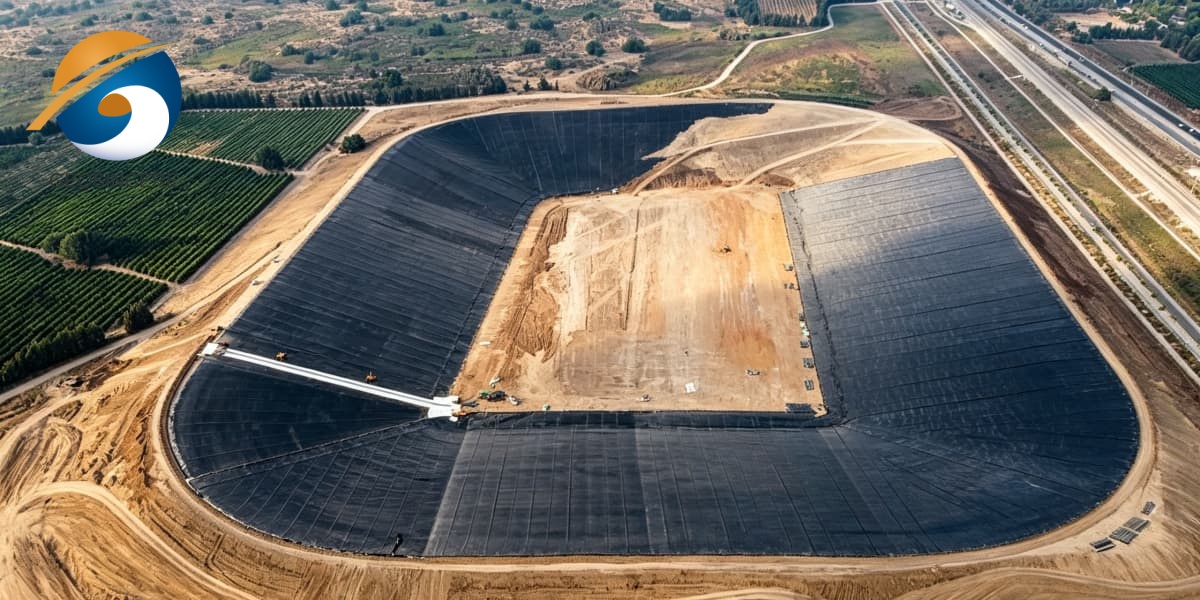
Smooth HDPE is preferred for flat areas, base liners, and applications where maximum weld strength and chemical resistance are priorities. Textured (single- or double-sided) surfaces increase interface friction and are typically required on slopes steeper than approximately 3H:1V or where stability analysis shows inadequate shear resistance with smooth sheet. Texturing slightly reduces some mechanical property values relative to smooth sheet of the same nominal thickness, so the specification must account for this.
HDPE exhibits excellent resistance to a wide range of acids, alkalis, salts, and many organic compounds commonly encountered in mining and landfill leachate. Compatibility should still be verified for project-specific fluids, especially at elevated temperatures or with unusual solvents. Carbon black (2–3 percent) provides the primary UV protection; properly stabilized HDPE can achieve multi-decade service lives when covered or submerged. Exposed liners require careful evaluation of antioxidant packages and may benefit from higher OIT formulations.
When evaluating suppliers, prioritize the following:
- Consistent production of 100 percent virgin resin (no recycled content unless specifically approved).
- Documented manufacturing quality control with testing frequencies aligned to GRI-GM13.
- Ability to supply wide rolls (commonly 6–8 m; some manufacturers offer wider) to reduce field seams.
- Traceability from resin lot through finished roll, supported by third-party or accredited laboratory reports.
- Technical support for welding parameters, CQA procedures, and installation guidance.
- Proven export logistics and packaging suitable for long-distance transport without damage.
Red flags include reluctance to provide lot-specific test data, inconsistent thickness tolerance beyond standard limits, or lack of independent certification.
Material selection is only half the equation. Field performance depends heavily on installation quality. Key points for contractors and engineers include:
- Subgrade preparation free of sharp stones, roots, and abrupt changes in grade.
- Use of geotextile protection layers (typically 300–800 g/m² non-woven) where puncture risk exists.
- Hot-wedge dual-track welding as the primary seaming method, with extrusion welding for repairs and details.
- Non-destructive testing (air-channel pressure tests, vacuum-box, spark testing) of all seams plus destructive peel and shear testing at prescribed frequencies.
- Independent Construction Quality Assurance (CQA) oversight is strongly recommended on critical projects.
- Proper management of wrinkles, thermal expansion, and anchor trenches.
Studies of electrical leak-location surveys on large mining and containment projects have shown that rigorous CQA significantly reduces defect density compared with projects lacking formal quality programs.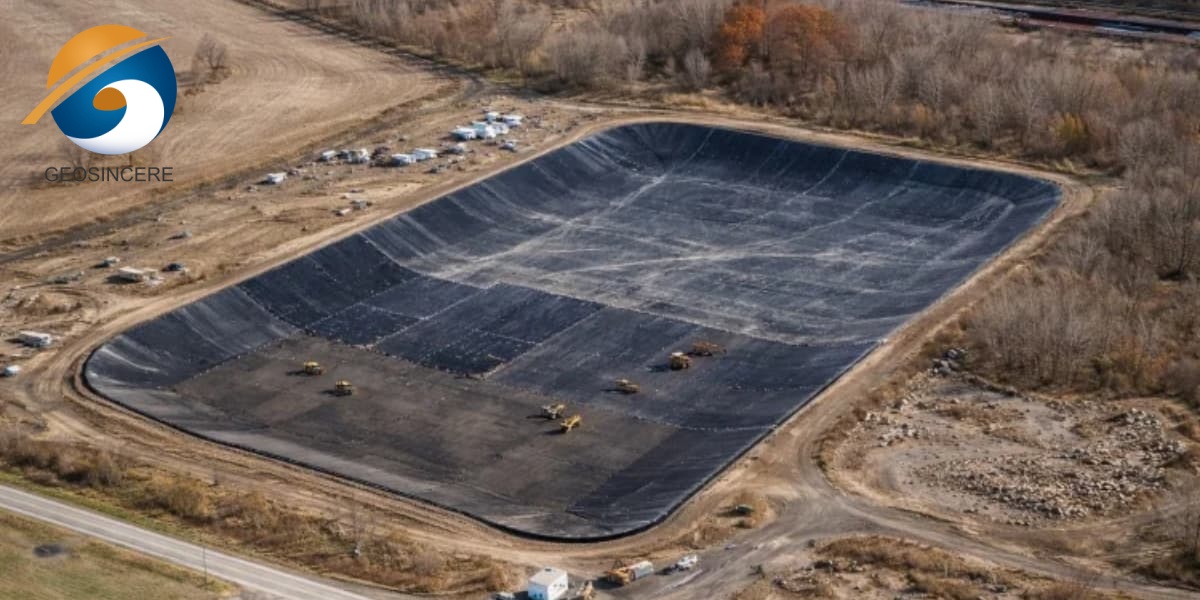
Material cost typically represents a modest fraction of total installed cost. Pricing varies with thickness, resin grade, additive package, order volume, and logistics. Wider rolls and optimized panel layouts can reduce installation labor and seam-related risk. When comparing bids, evaluate total installed cost and long-term risk rather than unit material price alone.
Request samples for laboratory verification when project scale or risk justifies it. Confirm lead times, packaging (rolls protected against UV and mechanical damage during transit), and warranty terms. A typical manufacturer warranty for GRI-GM13 compliant HDPE is measured in decades under proper installation and use conditions, though actual service life depends on site-specific factors.
Specifying only “HDPE” without referencing GRI-GM13 or equivalent property tables.
Selecting thickness solely on cost without engineering analysis of puncture, chemical, and mechanical loads.
Ignoring slope stability and interface friction, leading to textured-liner omission on critical slopes.
Accepting material without lot-specific test reports.
Underestimating the importance of experienced installation crews and independent CQA.
Failing to plan for thermal expansion, wind uplift, and construction traffic protection during installation.
A structured selection process reduces risk:
Define the application, design life, chemical environment, and regulatory framework.
Determine required thickness and surface texture based on loads, slopes, and puncture risk.
Specify full compliance with GRI-GM13 (or project-specific enhancements such as higher OIT).
Evaluate suppliers on quality systems, production capacity, roll dimensions, and documentation.
Require mill certificates and, where appropriate, third-party verification.
Develop or approve detailed installation and CQA specifications before material arrives on site.
Coordinate material delivery with construction sequencing to minimize on-site storage exposure.
At Shandong Geosino New Material Co., Ltd. (GEOSINCERE Geosynthetics) we manufacture HDPE geomembranes across the standard thickness range, in both smooth and textured finishes, with widths typically up to 7–8 m. Our materials are produced to meet or exceed GRI-GM13 requirements, and we support international projects with technical data, test reports, and coordination for export packaging and logistics.
Selecting an HDPE geomembrane is an engineering decision with long-term environmental and financial consequences. By grounding the choice in recognized standards, project-specific analysis, and verified supplier quality, engineers and contractors can achieve reliable containment performance for decades. When in doubt, consult both the material manufacturer and an experienced geosynthetics specialist early in the design process.