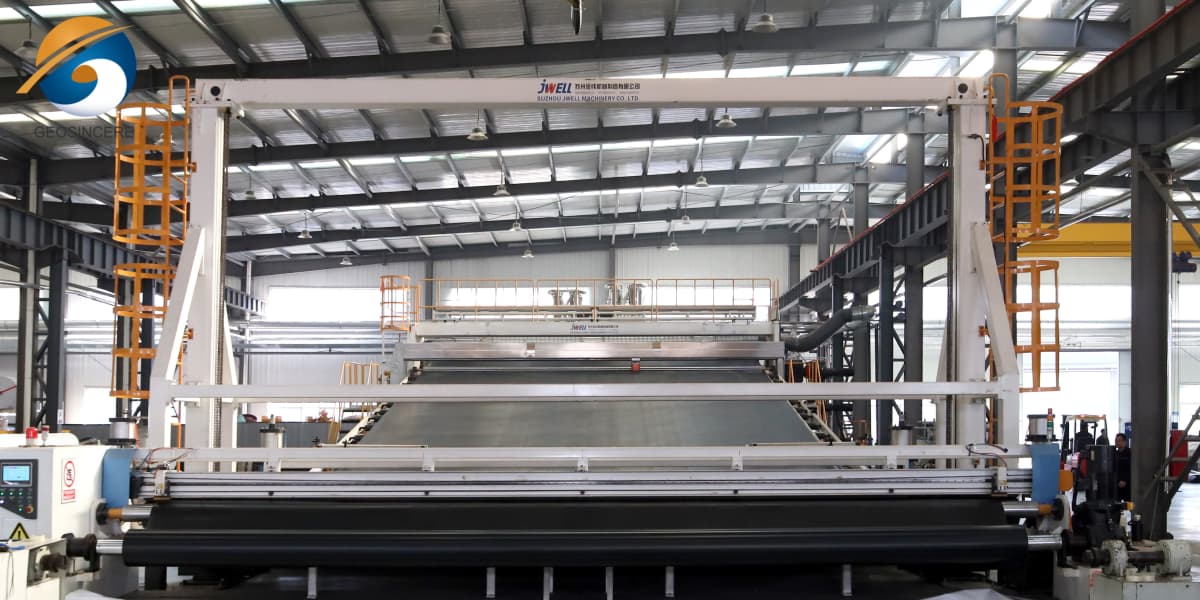
HDPE ditch liner is a durable geomembrane lining solution used to control water seepage and protect soil structures in irrigation ditches, drainage channels, canals, stormwater systems, wastewater channels, and other water conveyance applications.
Compared with traditional concrete or compacted soil lining, GEOSINCERE Geosynthetics HDPE liner provides a continuous low-permeability barrier while offering strong chemical resistance, flexibility, and resistance to weathering. It can also be welded into large continuous sheets, reducing the number of potential leakage paths.
However, not every geomembrane is suitable for every ditch project. Factors such as channel geometry, slope stability, water flow, subgrade conditions, UV exposure, installation method, and required service life should be considered before selecting the liner.
This article reviews seven HDPE geomembrane suppliers that are worth considering for ditch lining and related water containment projects.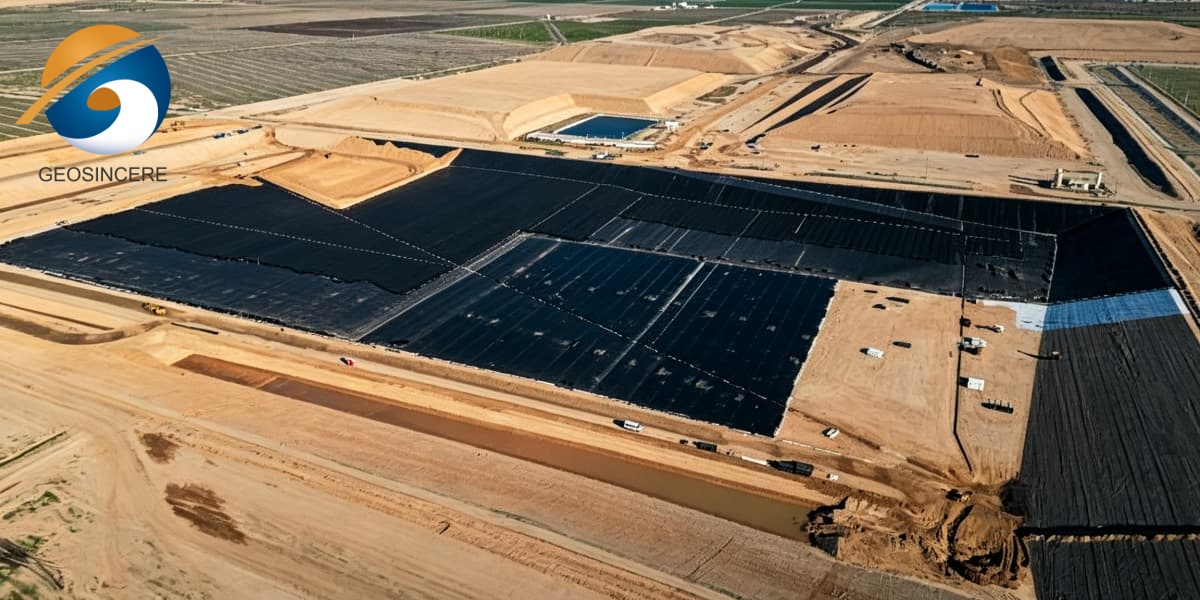
An HDPE ditch liner is a geomembrane manufactured from high-density polyethylene and installed along the bottom and sides of a ditch or channel.
Its primary purpose is to create an impermeable barrier between the conveyed water and the surrounding soil.
HDPE ditch liners are commonly used in:
- Irrigation ditches
- Agricultural canals
- Drainage channels
- Stormwater channels
- Wastewater channels
- Mining water channels
- Reservoir inlet and outlet channels
- Industrial water conveyance systems
Depending on the project, the geomembrane can be installed directly over a prepared subgrade or combined with geotextiles and other geosynthetic materials for additional protection.
For channels with steep slopes, textured HDPE geomembrane can also be considered because its textured surface can provide greater interface friction than a smooth liner.
A ditch liner needs to provide more than simple waterproofing. It must withstand installation, water flow, environmental exposure, and the movement of the underlying soil.
Important properties include:
|
Property |
Why It Matters |
|
Thickness |
Influences durability and puncture resistance |
|
Tensile Strength |
Helps withstand installation and service stresses |
|
Puncture Resistance |
Protects against stones and subgrade irregularities |
|
Tear Resistance |
Reduces risk of damage during deployment |
|
UV Resistance |
Important for exposed channels |
|
Chemical Resistance |
Useful for wastewater and industrial applications |
|
Seam Strength |
Critical for long-term watertight performance |
|
Surface Friction |
Important on sloped channels |
GRI and ASTM specifications are commonly referenced when evaluating HDPE geomembranes. The exact requirements should always follow the project specification.
For a simple irrigation ditch, a smooth liner may be sufficient. For steep or engineered channels, textured geomembrane or a reinforced lining system may be more appropriate.
Solmax is one of the established global manufacturers of geosynthetic containment products. Its HDPE geomembranes are used in water containment, mining, environmental protection, and civil engineering applications.
For ditch and canal projects, Solmax offers geomembranes in different thicknesses and surface configurations, allowing engineers to select smooth or textured products depending on site conditions.
- HDPE geomembrane
- Smooth and textured surfaces
- Multiple thickness options
- Suitable for water containment
- Designed for demanding environmental conditions
- Strong global project experience
- Wide range of geosynthetic products
- Suitable for large infrastructure projects
- Strong technical support
Solmax is particularly suitable for large canal, irrigation, mining, and industrial water projects where a complete geosynthetic solution is required.
AGRU America manufactures HDPE and LLDPE geomembranes using flat-die extrusion technology. Its Smooth Liner is specifically designed for fluid containment and can be used in water containment and civil engineering applications.
AGRU also offers specialized textured products designed for projects where interface friction and slope stability are important.
- HDPE and LLDPE options
- Smooth and textured products
- Consistent thickness control
- Chemical resistance
- High-friction liner options
- Advanced manufacturing technology
- Good thickness consistency
- Suitable for sloped channels
- Broad lining system portfolio
AGRU is a strong choice when a ditch project involves steep slopes or requires more specialized liner surface characteristics.
NAUE is a European geosynthetics manufacturer known for its Carbofol geomembrane systems.
Although NAUE is particularly well known for landfill and environmental containment, its polyethylene geomembranes can also be considered for water management and civil engineering applications.
- HDPE geomembranes
- Smooth and structured surfaces
- High chemical resistance
- UV and weathering resistance
- Geosynthetic system compatibility
- Strong European engineering experience
- High-quality technical documentation
- Suitable for demanding civil projects
- Can be integrated with geotextile and drainage systems
NAUE can be considered for projects where the ditch is part of a larger engineered containment or environmental protection system.
Atarfil specializes in high-performance thermoplastic geomembranes for environmental, mining, water, and civil engineering applications.
Its HDPE geomembranes are available in different thicknesses and surface configurations and can be used for water containment and channel lining.
- HDPE geomembrane
- Smooth and textured options
- Good chemical resistance
- UV stabilization
- Thermal welding compatibility
- Strong international experience
- Suitable for water containment
- Multiple product configurations
- Good technical support
Atarfil is worth considering for irrigation, canal, and industrial water projects where reliable geomembrane manufacturing and welding performance are important.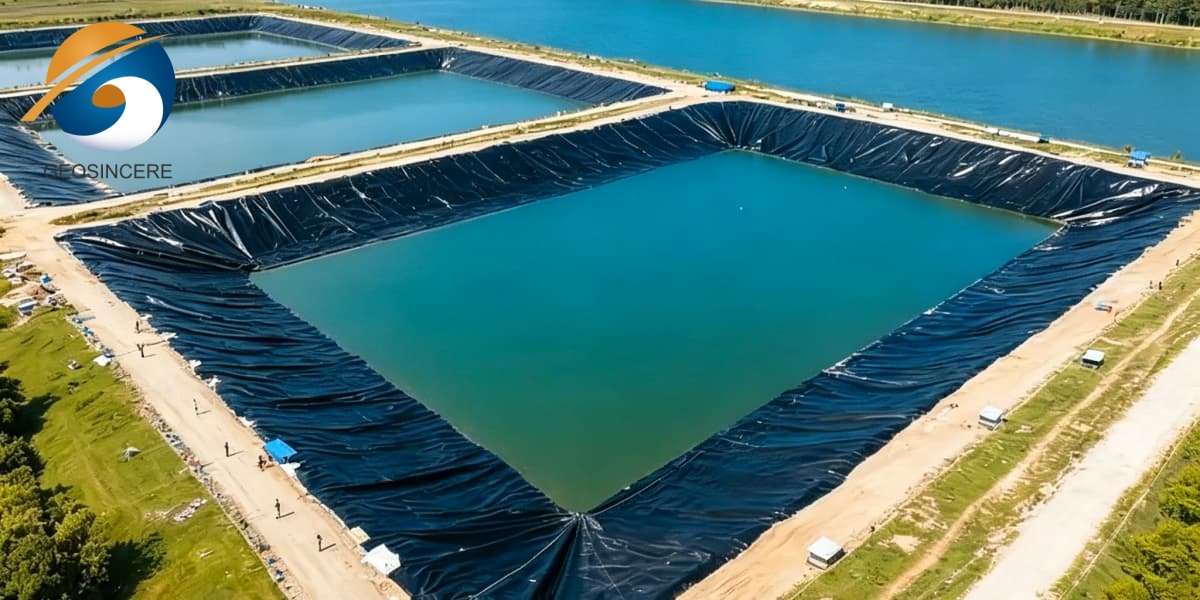
Layfield is a North American manufacturer and installer of geomembrane lining systems. Its products are used in water management, mining, wastewater, landfill, and industrial containment applications.
The company combines geomembrane manufacturing with field installation experience, which can be particularly valuable for large channel lining projects.
- HDPE geomembranes
- Water containment applications
- Custom fabrication
- Field installation capability
- Lining system solutions
- Strong North American experience
- Manufacturing and installation capabilities
- Suitable for large engineered projects
- Broad containment expertise
For contractors looking for both geomembrane materials and installation support, Layfield can be a useful supplier to evaluate.
Shandong Geosino New Material Co., Ltd., under the GEOSINO/Geosincere brand, manufactures HDPE geomembranes for a wide range of containment applications.
Its product range includes smooth and textured HDPE geomembranes in different thicknesses and customized dimensions.
For ditch projects, GEOSINO can supply geomembrane according to channel geometry, installation requirements, roll dimensions, and project specifications.
- HDPE geomembrane
- Smooth and textured surfaces
- Multiple thickness options
- Customized roll sizes
- Factory-direct supply
- Competitive factory-direct sourcing
- Flexible customization
- Broad geosynthetic product range
- Suitable for international projects
GEOSINCERE Geosynthetics can be particularly attractive for contractors and distributors who need HDPE ditch liner together with geotextile, GCL, drainage products, or other geosynthetics.
The Best Project Material Co., Ltd. (BPM Geosynthetics) is a China-based manufacturer specializing in geomembranes and geosynthetic products.
Its HDPE geomembrane range includes smooth and textured liners designed for water containment, mining, wastewater, aquaculture, landfill, and civil engineering applications. BPM Geosynthetics states that its geomembranes are manufactured using polyethylene resin with carbon black, antioxidants, anti-aging, and UV-resistance components.
- HDPE geomembrane
- Smooth and textured options
- Multiple thicknesses
- Custom dimensions
- ASTM and ISO-related testing
- Thermal welding compatibility
- Factory-direct manufacturing
- Wide range of geosynthetic products
- Customization available
- Suitable for international supply
- One-stop sourcing capability
BPM Geosynthetics's broader product portfolio makes it suitable for projects where ditch liners need to be combined with protective geotextile, drainage board, GCL, or other geosynthetic materials.
|
Supplier |
Main Material |
Surface Options |
Main Advantage |
|
Solmax |
HDPE |
Smooth / Textured |
Global containment experience |
|
AGRU |
HDPE / LLDPE |
Smooth / Textured |
Advanced manufacturing |
|
NAUE |
HDPE |
Smooth / Structured |
European engineering |
|
Atarfil |
HDPE |
Smooth / Textured |
Water containment experience |
|
Layfield |
HDPE |
Project-dependent |
Material + installation |
|
GEOSINO |
HDPE |
Smooth / Textured |
Factory customization |
|
BPM |
HDPE |
Smooth / Textured |
One-stop sourcing |
This comparison should be treated as a general supplier guide rather than a ranking. The best supplier depends on the ditch design, local standards, project scale, and installation requirements.
The correct liner thickness and surface should be selected according to the project rather than simply choosing the thickest available product.
A shallow agricultural ditch has different requirements from a deep drainage channel or steep industrial canal.
For steep slopes, textured geomembrane may provide better interface friction and help improve liner stability.
High-velocity water can create additional hydraulic and abrasion stresses. The liner system should therefore be designed according to the expected flow conditions.
The subgrade should be smooth and free from sharp stones, roots, debris, and other objects that could damage the geomembrane.
Where the subgrade is rough, a nonwoven geotextile protection layer can be installed beneath the HDPE liner.
Open irrigation and drainage channels can leave the geomembrane exposed to sunlight for many years. UV stabilization and appropriate material formulation should therefore be considered.
The quality of field seams is just as important as the quality of the geomembrane itself.
The supplier should provide suitable welding recommendations, technical guidance, and seam testing requirements for the project.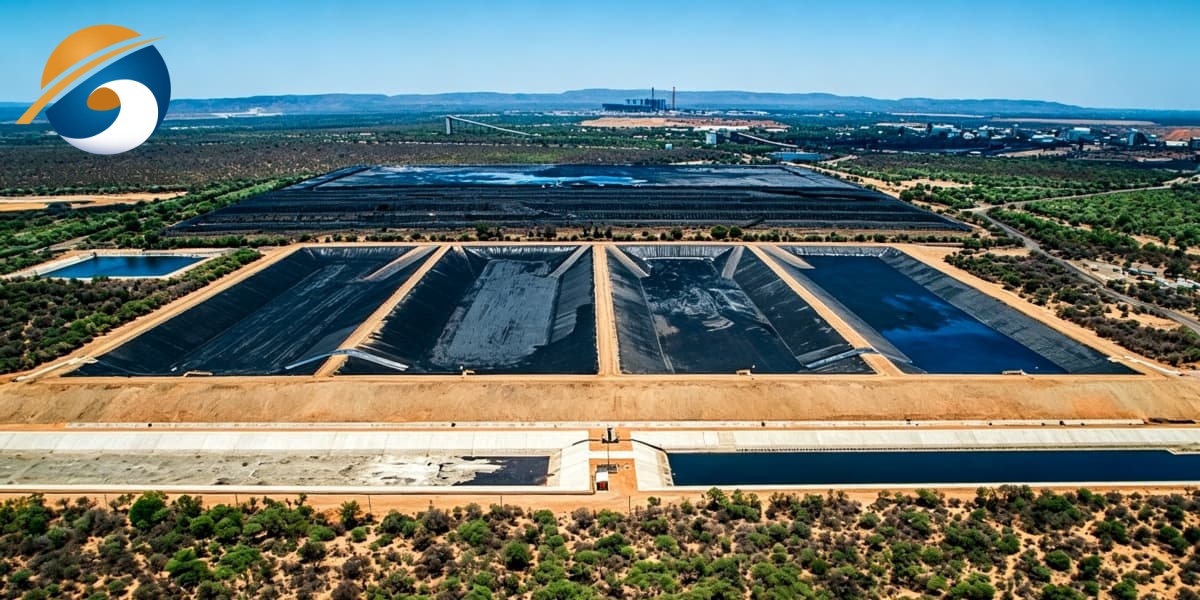
HDPE and concrete represent two different approaches to channel lining.
Concrete provides a rigid structural surface but may crack because of settlement, temperature changes, or ground movement.
HDPE geomembrane is flexible and can accommodate certain ground movements more effectively. It also provides a continuous impermeable barrier when properly welded.
However, HDPE does not replace structural design. In channels requiring significant structural support, the geomembrane may need to work together with soil stabilization, concrete, geotextile, or other engineering components.
Therefore, HDPE ditch liner is best viewed as part of a complete channel lining system, rather than a standalone structural material.
Proper installation is essential for long-term ditch liner performance.
The channel should first be prepared and compacted according to the project design. Sharp objects and protrusions should be removed, and protective geotextile should be installed where required.
Geomembrane panels are then deployed and positioned along the channel. Adjacent panels are thermally welded to form a continuous waterproof barrier.
For sloped ditches, anchoring is also important. The liner should be secured at the top of the channel and at other locations required by the design to prevent sliding or movement.
Finally, field seams should be inspected and tested according to the project's quality control plan.
A reliable ditch lining system, therefore, depends on four factors:
Good geomembrane + proper subgrade + professional welding + effective quality control.
The best HDPE ditch liner supplier depends on the scale and technical requirements of the project.
Solmax is a strong choice for large international containment and water management projects.
AGRU is particularly attractive where consistent geomembrane manufacturing and specialized high-friction liner systems are important. Its product portfolio includes both smooth and textured HDPE/LLDPE liners.
NAUE is worth considering for European engineering projects requiring a broader geosynthetic system.
Atarfil provides extensive thermoplastic geomembrane solutions for water and environmental containment.
Layfield is a useful option for North American projects where both geomembrane products and installation expertise are required.
Shandong Geosino New Material Co., Ltd. (GEOSINCERE Geosynthetics) offers factory-direct HDPE geomembranes with customization options for international contractors and distributors.
BPM Geosynthetics provides HDPE geomembranes together with a broad range of supporting geosynthetic products, making it a practical option for one-stop project sourcing. BPM's published product information confirms smooth and textured HDPE geomembranes and customized project solutions.
Ultimately, the right HDPE ditch liner should be selected based on channel geometry, water conditions, slope stability, subgrade quality, UV exposure, required service life, and project specifications.
For agricultural irrigation channels, drainage ditches, wastewater channels, mining water systems, and industrial canals, a properly designed HDPE geomembrane lining system can provide an effective long-term solution for reducing seepage and protecting surrounding soil.