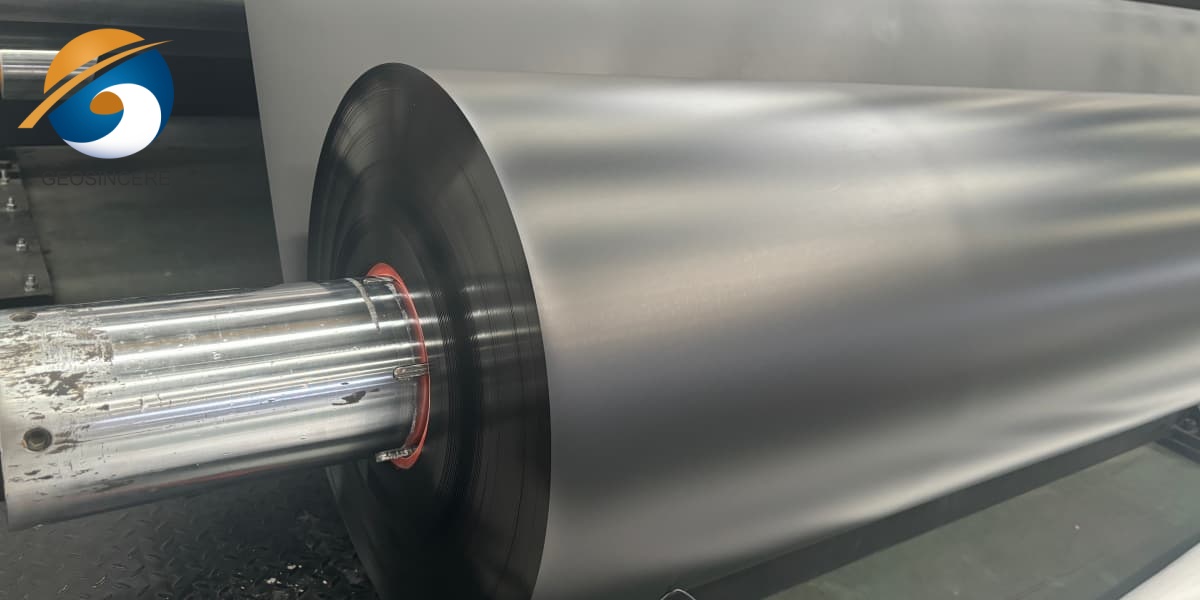
Geomembrane liner landfill is one of the most important components of a modern landfill containment system. It provides a low-permeability barrier between waste, leachate, soil, and groundwater, helping reduce the risk of environmental contamination.
Among different thicknesses, Geomembrane 1mm is often considered for temporary landfill covers, intermediate covers, selected closure systems, and other containment applications where the project specification permits a thinner liner. For primary landfill base liners, thicker geomembranes such as 1.5mm or 2.0mm are more commonly specified because they provide greater resistance to puncture, installation stress, and long-term mechanical loading.
HDPE is one of the most widely used GEOSINCERE Geosynthetics geomembrane materials for landfill applications because of its chemical resistance, durability, UV resistance, and suitability for thermal welding.
This article reviews seven geomembrane suppliers worth considering when sourcing 1mm geomembrane for landfill-related applications.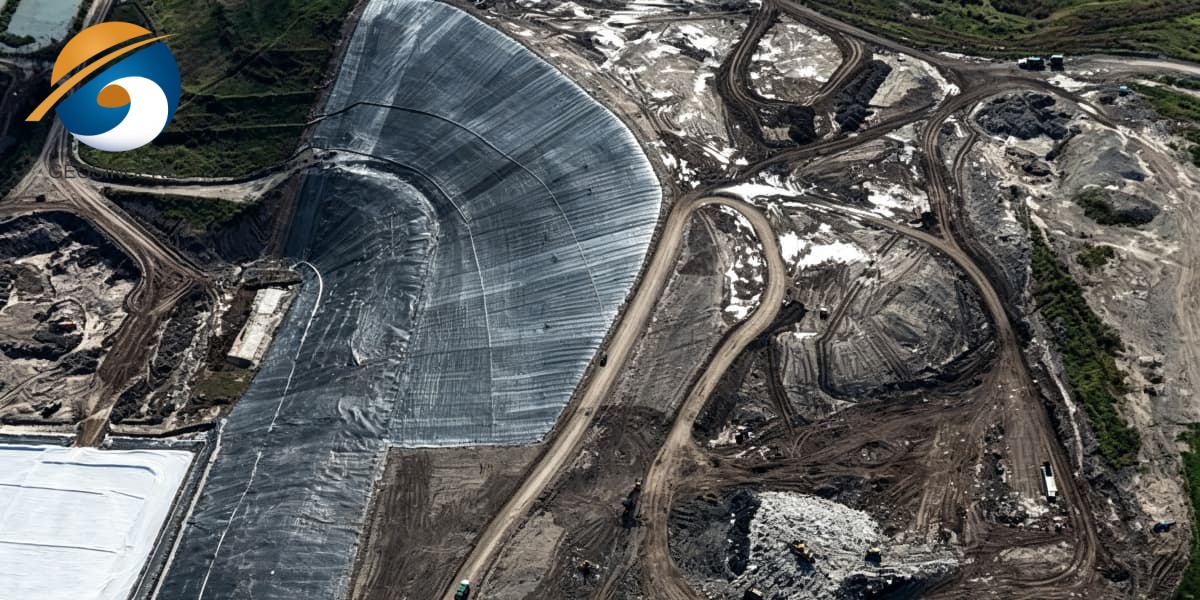
When selecting a 1mm geomembrane, thickness alone should not determine the purchasing decision. Material quality, mechanical properties, welding performance, chemical resistance, and long-term durability are equally important.
For HDPE geomembrane, commonly referenced standards include GRI GM13 and ASTM test methods covering tensile strength, tear resistance, puncture resistance, carbon black, stress-crack resistance, and oxidative stability.
|
Property |
Typical Requirement / Reference |
|
Material |
HDPE |
|
Nominal Thickness |
1.0mm |
|
Density |
≥0.940 g/cm³ |
|
Tensile Properties |
ASTM D6693 |
|
Tear Resistance |
ASTM D1004 |
|
Puncture Resistance |
ASTM D4833 |
|
Carbon Black |
ASTM D4218 |
|
Seam Testing |
ASTM D6392 / GRI GM19 |
The exact values should always be checked against the project specification because requirements can vary according to landfill design, local regulations, and intended application.
The main advantage of a 1mm geomembrane is its balance between containment performance, handling, material consumption, and cost.
Compared with thicker geomembranes, 1mm material is generally easier to transport, deploy, and handle during installation. This can be useful for large temporary or intermediate cover areas.
However, thinner geomembranes also have less material thickness available to resist puncture and mechanical damage. Therefore, site preparation and protective layers become especially important.
Temporary landfill covers
Intermediate landfill covers
Selected closure systems
Secondary containment
Leachate containment areas
Small or specialized landfill projects
A good example is a temporary landfill cap project in Italy where 1.00mm HDPE geomembrane was used over a large area. This demonstrates that 1mm geomembrane can be a practical landfill solution when the engineering design allows it.
For primary landfill base liners, however, project specifications often require thicker geomembranes. Buyers should never substitute 1mm geomembrane for a specified 1.5mm or 2mm liner without engineering approval.
Solmax is a global geosynthetics manufacturer with extensive experience in containment systems. Its GSE HD geomembrane is designed for demanding applications including landfills, mining, wastewater, and other environmental containment projects.
The product line is available in different thicknesses and surface configurations, including smooth and textured geomembranes. Solmax products are designed around widely recognized geomembrane standards such as GRI GM13.
HDPE geomembrane
Smooth and textured surfaces
Multiple thickness options
GRI GM13-based specifications
Suitable for landfill containment
Strong international project experience
Extensive containment product portfolio
Good technical support
Suitable for large-scale landfill projects
AGRU America manufactures HDPE and LLDPE geomembranes for environmental containment. Its Smooth Liner products are available in thin gauges and are used for applications including landfill caps, closures, and containment systems.
AGRU uses flat-die extrusion technology, which allows controlled production of geomembrane sheets with consistent thickness.
HDPE and LLDPE
Smooth geomembrane
Multiple thickness options
GRI GM13 / GM17-based specifications
Suitable for landfill caps and closures
Strong manufacturing technology
HDPE and LLDPE options
Extensive technical documentation
Suitable for engineered containment systems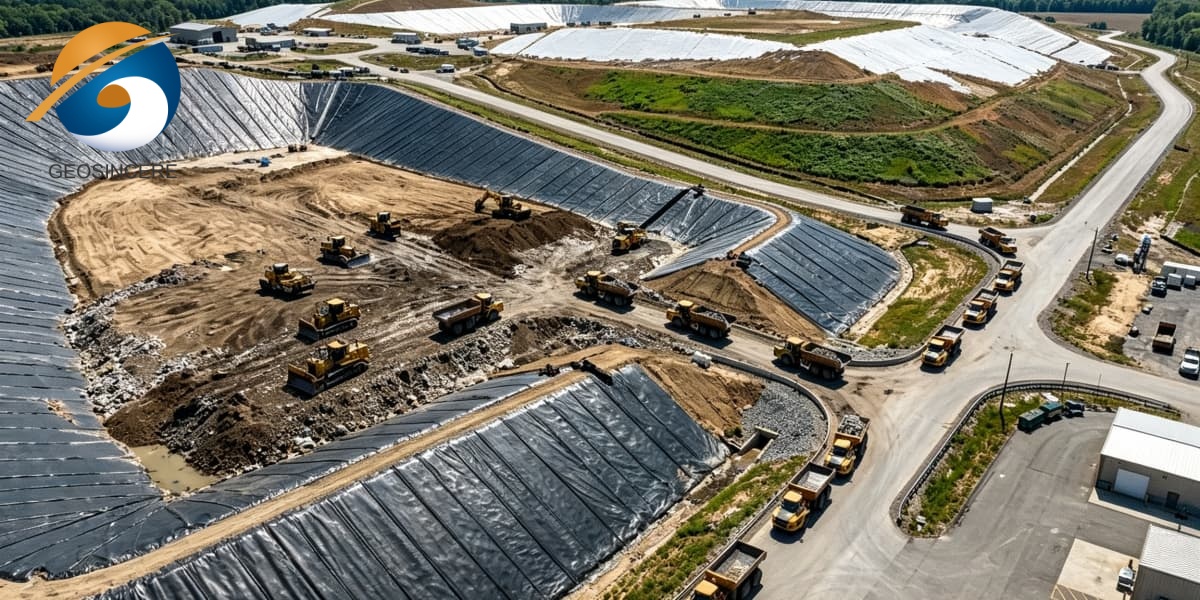
NAUE is a well-known European geosynthetics manufacturer and its Carbofol HDPE geomembrane is specifically used in landfill engineering.
NAUE's landfill systems can combine geomembranes with GCL, geotextiles, drainage layers, and other geosynthetic components to create complete containment systems.
HDPE geomembrane
Smooth and structured surfaces
Landfill liner and closure applications
GRI GM13-compliant product options
Integrated geosynthetic systems
Strong European landfill experience
Complete system approach
Extensive technical expertise
Suitable for demanding engineering projects
For 1mm applications, the project specification should be checked carefully because European landfill base liner systems often require thicker geomembranes.
Atarfil is particularly relevant to this review because it has a documented landfill project using 1.00mm HDPE geomembrane.
In a temporary landfill cover project in Italy, Atarfil supplied approximately 45,000 m² of 1mm HDPE geomembrane. The application required resistance to weathering and outdoor exposure.
HDPE
1.00mm option
Smooth geomembrane
UV and weathering resistance
Thermal welding
Direct 1mm landfill application reference
Strong European market presence
Suitable for temporary landfill covers
Good manufacturing experience
For buyers specifically looking for a proven 1mm landfill application, Atarfil is one of the suppliers worth reviewing.
Layfield is a North American geosynthetics manufacturer and contractor with experience in landfill containment and cover systems.
Its HDPE geomembranes are used in environmental containment, landfill cells, landfill covers, and other applications requiring a durable impermeable barrier.
Layfield has also published a landfill project involving a 40-mil HDPE geomembrane temporary cover, which is approximately equivalent to 1mm.
HDPE
Thin and heavy-duty options
Landfill covers and containment
UV and weathering resistance
Fusion welding
North American landfill experience
Documented thin-gauge landfill application
Strong installation knowledge
Broad containment capabilities
Shandong Geosino New Material Co., Ltd., under the GEOSINCERE Geosynthetics brand, is a China-based manufacturer of geomembranes and other geosynthetics.
Its HDPE geomembrane product range covers different thicknesses, including 1.0mm, and is available in smooth and textured configurations.
GEOSINCERE Geosynthetics supplies geomembranes for landfill, mining, wastewater, aquaculture, pond, and other containment applications.
HDPE geomembrane
1.0mm available
Smooth and textured surfaces
Customized roll sizes
ASTM / GRI-based testing
Factory-direct supply
Flexible customization
Broad geosynthetic product range
Competitive option for international projects
For contractors and distributors purchasing geomembrane together with geotextile, GCL, drainage products, or geogrid, GEOSINCERE can provide a convenient one-stop sourcing solution.
The Best Project Material Co., Ltd. (BPM Geosynthetics) is another China-based manufacturer specializing in geomembrane and geosynthetic products.
BPM supplies HDPE geomembranes in multiple thicknesses and surface configurations for landfill, mining, wastewater, aquaculture, and other containment applications.
The company also offers related products including geotextiles, GCL, geogrids, geocells, and drainage materials.
HDPE geomembrane
Multiple thickness options
Smooth and textured surfaces
ASTM / GRI-based testing
Thermal welding compatibility
Factory-direct manufacturing
Wide product portfolio
Customization available
Export-oriented supply
One-stop geosynthetic sourcing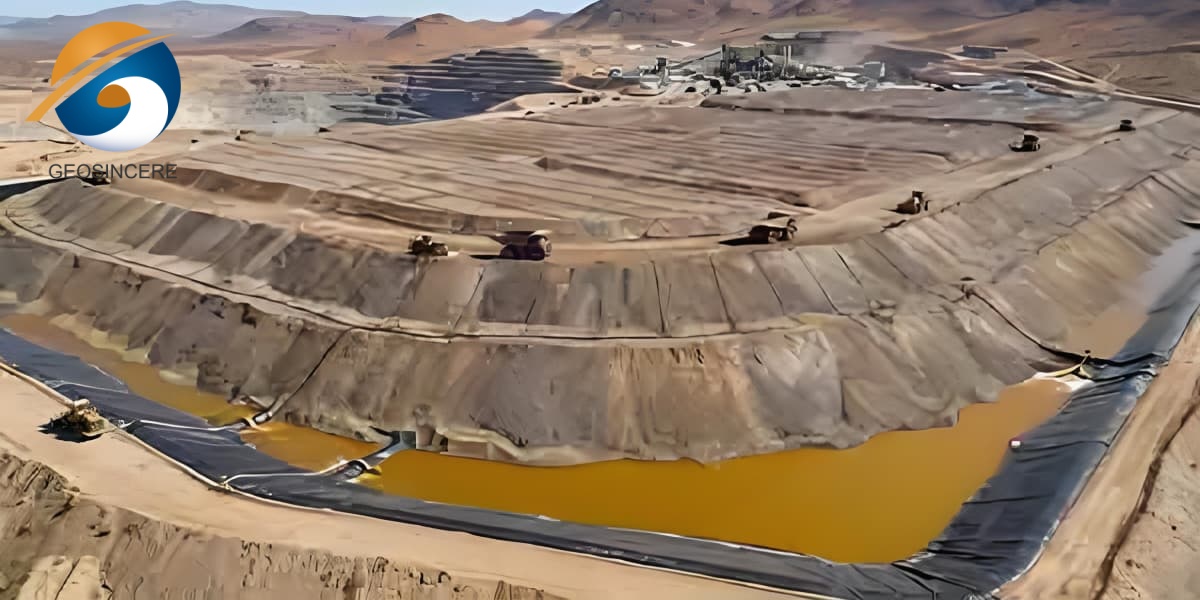
|
Supplier |
Material |
1mm Availability / Relevance |
Main Landfill Application |
|
Solmax |
HDPE |
Product-dependent |
Liner / Cover |
|
AGRU |
HDPE / LLDPE |
Available in thin gauges |
Closure / Containment |
|
NAUE |
HDPE |
Project-dependent |
Liner / Closure |
|
Atarfil |
HDPE |
Documented 1mm project |
Temporary Cover |
|
Layfield |
HDPE |
40-mil application |
Temporary Cover |
|
GEOSINCERE |
HDPE |
1.0mm available |
Containment / Landfill |
|
BPM |
HDPE |
Thin-gauge options |
Landfill / Containment |
The table provides a general purchasing reference rather than an absolute ranking. The final selection should always be based on the project specification, technical submittal, certification, and application conditions.
One of the most common questions from landfill contractors is whether 1mm geomembrane can replace 1.5mm geomembrane.
The answer is not automatically.
A 1mm geomembrane can be attractive where the liner is used as a temporary or intermediate cover and the design does not require the additional mechanical strength of a thicker membrane.
For primary landfill liners, thicker geomembranes are frequently preferred because they provide greater resistance to puncture, construction damage, and long-term stresses.
Therefore:
1mm geomembrane: economical and practical for selected applications.
1.5mm geomembrane: provides a higher mechanical safety margin and is more commonly specified for demanding containment systems.
The correct thickness should always come from the engineering design rather than price considerations alone.
Before purchasing 1mm geomembrane for a landfill project, buyers should confirm several important points.
Clearly identify whether the geomembrane is intended for a base liner, intermediate cover, temporary cap, final closure, or secondary containment.
Confirm whether the project requires GRI GM13, ASTM standards, EN standards, or another local specification.
Ask the manufacturer about resin quality, carbon black content, additives, and formulation. Consistent raw materials are important for long-term performance.
Check whether the geomembrane is compatible with the specified field welding method and whether the supplier can provide welding guidelines.
Request TDS, test reports, certificates, factory inspection records, and quality control documentation before mass production.
Even a high-quality geomembrane can fail if installation is poorly controlled.
Before deployment, the subgrade should be smooth and free from sharp objects that could damage the liner. Where required, geotextile protection should be installed beneath or above the geomembrane.
During installation, panels should be properly aligned and welded using qualified equipment. Field seams should be inspected and tested according to the project's CQA requirements.
This is particularly important for 1mm geomembrane because its thinner structure provides less tolerance for rough handling and installation damage.
A successful landfill liner system therefore depends on material quality + proper design + professional installation + effective quality control.
There is no single “best” 1mm geomembrane for every landfill project. The right product depends on the application, project specification, environmental conditions, installation method, and required service life.
For a documented 1mm landfill application, Atarfil stands out because its published project reference demonstrates the use of 1.00mm HDPE geomembrane for a temporary landfill cover.
For global containment projects, Solmax and AGRU offer extensive product portfolios and international project experience.
For European landfill engineering, NAUE provides strong expertise in integrated landfill liner systems.
For North American applications, Layfield has documented experience with approximately 1mm HDPE geomembrane in temporary landfill cover applications.
For factory-direct international sourcing, GEOSINCERE Geosynthetics and BPM Geosynthetics offer 1mm HDPE geomembrane together with a broader range of supporting geosynthetic materials.
Ultimately, the key is not simply finding the lowest-cost 1mm geomembrane. The most important consideration is whether the product meets the project's technical requirements and is suitable for the intended landfill application.
For primary landfill base liners, always verify the required thickness before purchasing. When the design permits 1mm geomembrane, a properly manufactured HDPE liner can provide an efficient and practical solution for selected landfill containment and cover applications.