Selecting the right geomembrane liner is essential for ensuring long-term performance, durability, and environmental protection in engineering projects. This guide provides key insights into material types, thickness options, and application requirements to help engineers and project managers make informed decisions for water containment, landfill, mining, and construction applications.
Geomembrane liner, often overlooked, have indeed transformed the course of civil engineering and environmental containment. From the humble beginnings of plastic sheeting, they have now become sophisticated, engineered polymeric barriers. Such containment systems are indispensable when it comes to preserving Earth's ecosystems and protecting industrial infrastructures.
With the worsening of climate change, water shortages, and the tightening of environmental laws worldwide, GEOSINCERE Geosynthetics advanced containment solutions with zero leakage tolerance are more in demand than ever. This detailed study focuses on the transformation of geo membrane liner and the way they are determining the future of both infrastructure and ecological conservation.
1. Introduction: The Increasing Relevance of Geomembrane Liner
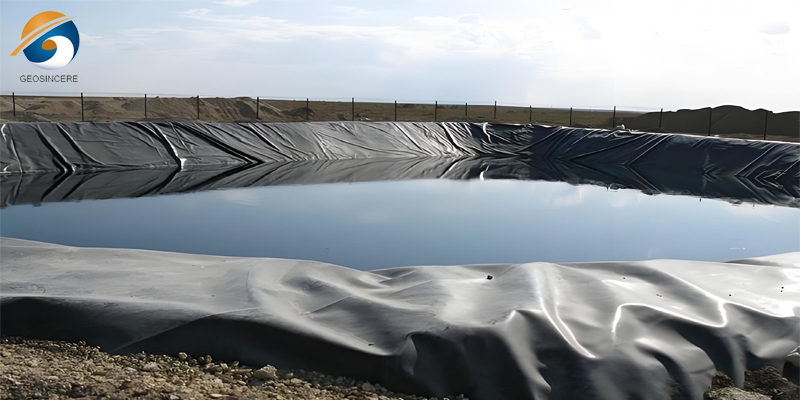
Due to the ever-growing expansion if global infrastructure and escalating environment pressures, the need for reliable materials has been the highlight of these times. One of such crucial materials is Geomembrane Liner. Geomembranes are barriers that are widely used in various fields such as water containment for cities, solid waste landfills, mining, and even agricultural irrigation systems. They effectively serve the purpose of preventing leakage, contamination, and thereby protect the environment from degradation.
Actually, the usage of these liners has gone far beyond mere waterproofing; they are a key part of the infrastructures of large-scale projects. Geomembrane Liner are one of the main focuses of material sciences especially polymer science, engineering of materials, and monitoring by advanced technologies, after all their evolution is a significant.
2. Historical Development of Geomembrane Liner
2.1 The First Steps: The Time of Simple Waterproofing
We need to look back at the history of geomembrane liners maybe to get some idea of where containment technology is going. Synthetic liner materials were first made in the 1950s mainly using low-density polyethylene (LDPE) and polyvinyl chloride (PVC). Those times these materials were nothing short of a revelation but at the same time, they were quite prone to premature degradation if exposed to strong chemicals, extreme temperatures, or sunlight for long periods (UV radiation).
The second half of the 1970s and 1980s witnessed an important technological advancement in polymer materials which is the use of High-Density Polyethylene (HDPE). HDPE is capable of withstanding harsh chemicals, possesses great tensile strength, and has excellent durability. HDPE was widely adopted as the main material for solid waste landfill lining and the containment of hazardous waste since then.
In the recent past, production methods have largely evolved. The change from conventional blown-film and flat-die extrusion to multi-layer co-extrusion technologies has enabled the creation of geomembrane liner
having different functional layers. Properties that modern liners may have include texturing to improve friction on steep slopes, conductive backing for accurate leak detecting capability, and environmentally friendly antioxidant packages that can keep a liner durable for decades even in the face of exposure to thermal and chemical.
Nonetheless, the membranes of the past were not robust enough:
- They deteriorated quickly under exposure to UV light
- Their chemical resistance was quite limited
- Mechanical strength was frequently insufficient for challenging environments
As industries progressed, so did the requirement for more dependable and longer-lasting barrier materials.
2.2 The Emergence of Contemporary Polymers: HDPE, LLDPE, and PVC
The rise of high-performance polymers greatly influenced the direction of geomembrane development. For example, HDPE, LLDPE, and PVC were soon recognized and adopted industry-wide due to their superior physical and chemical properties.
The term "geomembrane liner" no longer refers to a single, monolithic product. Instead, it encompasses a diverse family of specialized polymers, each tailored to specific engineering challenges and site conditions.
2.2.1 High-Density Polyethylene (HDPE)
HDPE is, undoubtedly, the most extensively used geomembrane liner material globally. Its polymer composition and shape give it exceptional resistance to chemical attacks such as acids, bases, and even solvents. Besides this, it is quite sturdy and resistant to stress cracking, characteristics that make it highly suitable for significant industrial facilities, like mining leach pads or waste reservoirs on a large scale.
2.2.2 Linear Low-Density Polyethylene (LLDPE)
If HDPE is seen as stiff, then LLDPE on the contrary is flexible. Modified to have a lower density as well as shorter molecular chains, LLDPE geomembrane liners demonstrate enhanced elongation features. Besides, the efforts to increase flexibility of the liner make it possible for the liner to tightly adjust to the uneven subgrades and at the same time, the ability of the liner to handle differential settlement without the risk of puncturing is an important attribute that has made them excellent for decorative ponds, irrigation canals, and landfill caps.
2.2.3 Polyvinyl Chloride (PVC) & Flexible Polypropylene (fPP)
Both PVC and fPP liners have the distinct advantage of being efficiently prefabricated. They can easily be factory seamed and large pre-welded panels made ready for deployment. This largely cuts down on the field welding time. Therefore, for waterproofing and water conservation projects that are local in nature, they can be highly cost-effective.
2.2.4 Specialty Co-Extruded & Geocomposite Barriers
The boundary between the known and the unknown for material science sees in multi-layer and composite designs. For instance, barrier resins such as Ethylene Vinyl Alcohol (EVOH) are currently being used in between the polyethylene layers to produce specialized geomembrane liners that are capable of effectively blocking highly volatile organic compounds (VOCs) and methane gas, thereby preventing the migration of toxic vapors into urban areas.
Besides the technological advancements, this period also marked the formulation of key engineering standards, such as ASTM, GM13, and GM17, which have henceforth established a uniform set of technical requirements for geomembrane quality.
2.3 The Modern Stage: Composite Liners and Intelligent Monitoring Systems
In recent years, the continuous improvement of engineering safety standards has driven geomembranes into a new phase characterized by high strength, long service life, and integrated monitoring systems.
Key advancements include:
- Geotextile-reinforced geomembranes (composite liners) offering superior puncture resistance and tensile performance
- New membrane types such as EVA, TPO, PP, and CSPE, designed for extreme climates or chemical-intensive environments
- Electric leak detection systems (ELL) enabling real-time monitoring of liner integrity
- Automated welding and inspection technologies improving installation quality and reducing human error
Modern geomembrane systems are no longer simple sheets of plastic—they are engineered environmental protection systems.
3. The Science Behind Geomembrane Liner Performance
3.1 Advances in Material Engineering
The continuous evolution of polymer science has made geomembranes stronger, more flexible, and more durable. Key scientific improvements include:
- Enhanced resin formulations for better crack resistance
- Anti-oxidant and UV stabilizer packages to extend lifespan
- Improved carbon black dispersion to reinforce UV protection in HDPE liners
- Co-extrusion technologies enabling multi-layer structures with tailored performance
These advancements allow geomembrane liners to perform reliably in harsh environments such as deserts, chemical plants, and mining sites.
3.2 Superior Mechanical Properties
Modern Geomembrane Liners exhibit exceptional mechanical performance:
- High tensile strength
- Strong tear and puncture resistance
- High dimensional stability
- Excellent stress crack resistance
These properties ensure the geomembrane remains intact even under heavy loads, settlement, or mechanical stress.
3.3 Chemical and Environmental Resistance
A key reason geomembrane liners dominate industrial containment systems is their strong resistance to:
- Acids and alkalis
- Petroleum hydrocarbons
- Salts and solvents
- Microbial degradation
Additionally, UV stabilizers enable outdoor exposure without rapid aging.
4. Applications of Geomembrane Liner in Modern Infrastructure
4.1 Waste Management and Landfills
Geomembranes serve as the last line of defense against groundwater contamination. A typical landfill uses:
- HDPE geomembrane liner
- Geosynthetic clay liner (GCL)
- Drainage layers and leachate collection systems
These multilayer systems ensure safe waste containment for decades.
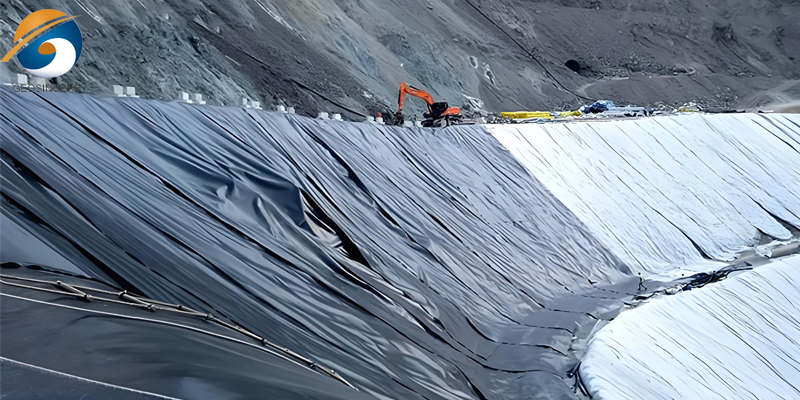
4.2 Mining Industry
In mining applications such as heap leaching, tailings dams, and process water ponds, geomembrane liners:
- Prevent toxic leachate from entering soil
- Improve resource extraction efficiency
- Reduce environmental risk
HDPE and LLDPE are the most widely used materials due to their strong chemical resistance.
4.3 Water Management and Irrigation Systems
Geomembrane liners help conserve water and prevent seepage in:
- Reservoirs
- Canals
- Agricultural ponds
- Aquaculture farms
In regions where rainfall is scarce, geomembranes play a vital role in improving water efficiency.
4.4 Construction and Civil Engineering
Geomembranes are essential in:
- Tunnel waterproofing
- Building foundations
- Road embankments
- Slope stabilization
Their ability to control moisture and prevent erosion enhances structural stability.
5. The Future of Geomembrane Liner: Trends and Innovations
5.1 Eco-Friendly Materials and Sustainability
The next generation of geomembrane liners holistically embraces the concept of environmental protection and care. The future definition of manufacturing will heavily revolve around the utilization of recyclable polymers of high purity, the use of green additives, and the employment of non-toxic stabilizers that are not capable of releasing hazardous chemicals. In addition to minimizing the carbon footprint and lowering the frequency of replacements by maximizing the production energy and the active life span of the material beyond 100 years, the industry is going full circle without any compromise on the structural efficiency of the product.
5.2 Intelligent Monitoring and Data-Driven Engineering
Thanks to digital technologies, we are turning those containment systems which were passive into risk management tools which are proactive. Geomembrane liner
systems of today come with fiber-optic sensor networks embedded inside and permanent electrical leak location (ELL) grids. Through the use of AI-based predictive maintenance software, these smart barriers have enabled the engineering teams not only to keep an eye on the liner's integrity from a distance and at any time but also to detect very small leaks almost instantly and fix problems even before an environmental contamination incident can happen.
5.3 Higher-Performance Composite Systems
Since composite geomembrane liners are having multiple layers, the revolutionary liners made in this way are setting a new benchmark for the whole industry. When polymeric membranes are bonded with either heavy-duty geotextiles or drainage geonets, these high-performance composites result in delivering outstanding puncture resistance, elevated interface friction even on the steep slopes, and superior tensile strength, thereby leaving no doubt about their reliability in mega-projects all over the world.
6. Conclusion
The Shandong GEOSINO New Material Co.,Ltd (Geosincere Geosynthetics) geomembrane liner has been evolving constantly and is a great example of human inventiveness at work - finding ways to achieve industrial development without causing harm to the environment. Initially a simple barrier, it has now been transformed into a highly sophisticated, data-integrated engineering tool that is not only helping to protect our precious groundwater but is also being used for eco-friendly mining and extracting ore, and for laying the secure foundations of our global infrastructure.
As the world faces unprecedented environmental challenges in the coming decades, the continuous innovation within the geomembrane liner industry will remain paramount. By bridging the gap between advanced material science and sustainable civil engineering, these high-performance materials will continue to silently shape a safer, cleaner, and more resilient future for both human infrastructure and the global ecology.