GEOSINCERE Geosynthetics High-Density Polyethylene or HDPE liner have become an extremely popular containment solution for various uses, including agricultural ponds and reservoirs, landfills, mining operations, and industrial wastewater treatment facilities. However, a major concern for engineers, contractors, and property owners when planning a project is always: What is the real HDPE liner cost?
Unfortunately, this cannot be answered by a single figure. Getting to know the HDPE liner price means looking not only at the price of the materials but also the cost of installation, the variables specific to the project, and most importantly, the long-term lifecycle value of HDPE. So, this guide explains in detail what you are likely to pay, the factors that drive those costs, and what a wise investment decision looks like.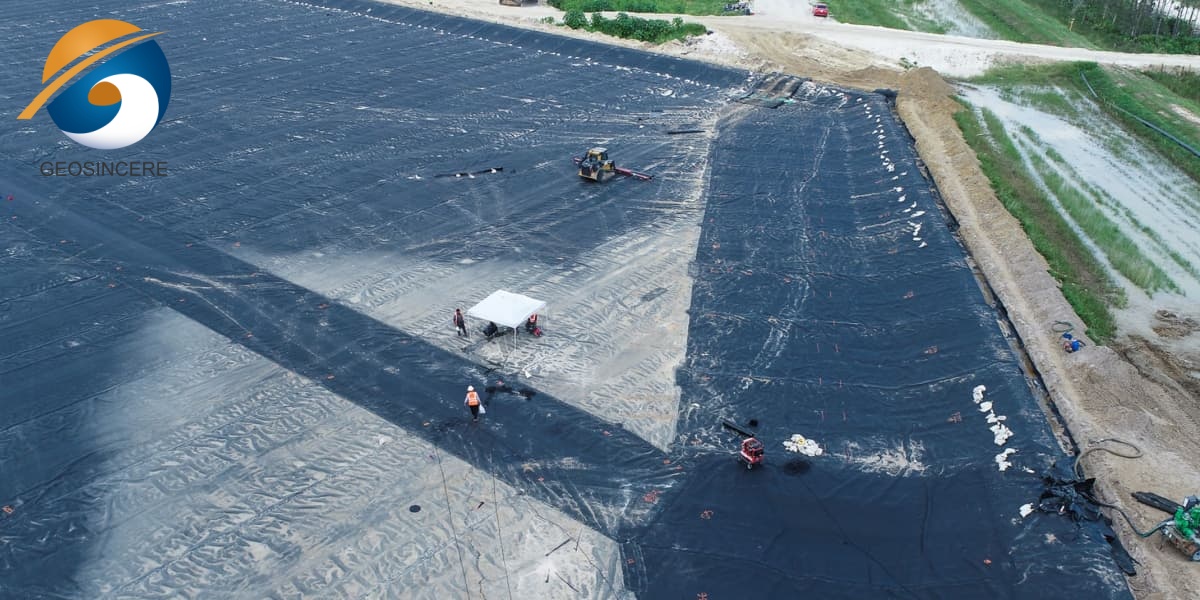
According to the 2025–2026 market figures, the cost of HDPE liner material for the geomembrane sheets usually fluctuates from 0.28 to 3.00 per square foot (3.23 to 32.29 per square meter) only. When you factor in the cost of professional installation, the overall price of a project usually sits between 0.50 and 5.00 per square foot, although large-scale projects get to benefit from economies of scale and therefore the unit cost is lowered.
To understand it practically, an HDPE-lined one-acre pond (about 43,560 square feet) will generally need a budget of 10,000 to 22,500 for a complete installed system, while complex structures or high-end specifications can increase this number quite a bit.
Also, it should be noted that prices within this range do not only vary a lot by thickness but thickness is in fact the single most decisive factor in HDPE liner cost. For example, a 40-mil (1.0 mm) liner that is a regular choice for ponds and other containment functions will cost about 0.60 to 1.20 per square foot from material only, whereas a heavier 60-mil (1.5 mm) liner made for tough tasks like landfill capping or mining can be found in the range of 1.97 to 2.50 per square foot. At the highest side of the spectrum, 120-mil (3.0 mm) liners intended for hazardous waste containment or environments with great stress may rise to 3.90 to 5.00 per square foot.
The actual HDPE liner cost is much more than the price per square foot of just the geomembrane sheet. A full installed system comprises several vital components:
The HDPE geomembrane sheet itself, with the price mainly determined by the thickness and the quality of raw materials.
Grass removal, leveling, getting rid of rocks, and setting the right slope angles for proper drainage.
Serves as a protective barrier that keeps the liner from getting punctured by soil movements or sharp objects lying beneath.
HDPE liners need heat fusion welding that is a totally specialized process in order to produce watertight seams. It is not something that you can entrust to ordinary laborers - certified technicians armed with hot wedge or extrusion welding machines are a must.
It entails the wages of a skilled team that deals with the material, stretches it over the prepared base, and carries out quality control testing of seams.
HDPE liners are heavy and bulky; shipping distances significantly impact this cost.
Once you sum all of the above, the total installed HDPE liner cost for a standard project will be somewhere between 0.50 and 5.00 per square foot.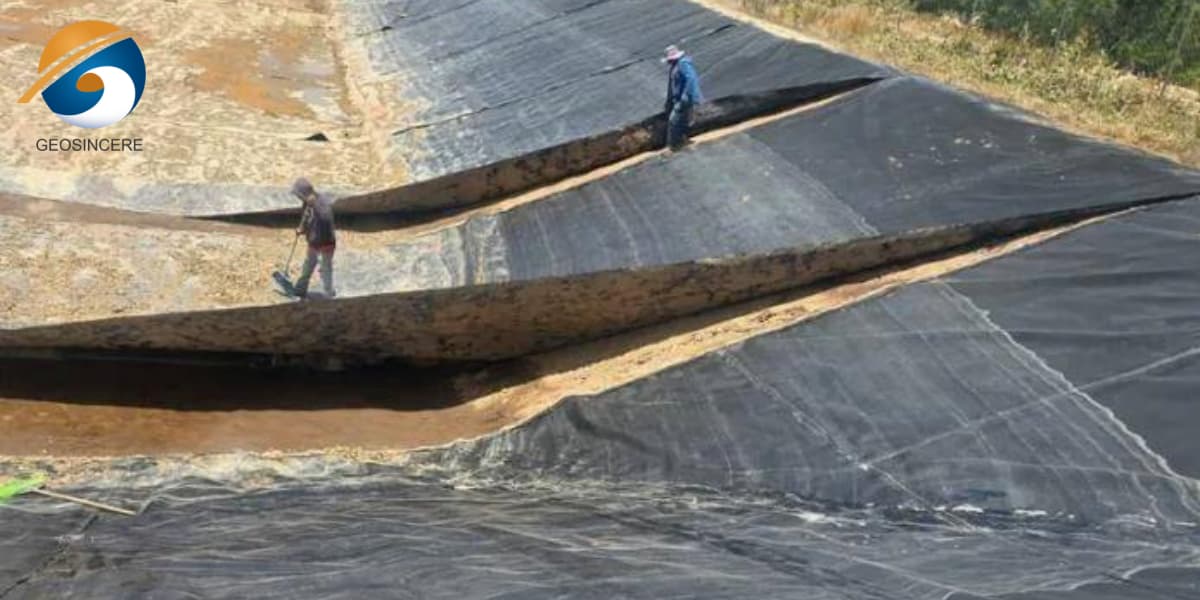
Knowing what affects the price of HDPE liner helps project owners to plan their investments in such a way that they are not just paying upfront but their choices also perform satisfactorily over a longer period.
The thickness of the liner is the major factor that determines its price. Thicker liners use more raw materials and have a higher resistance to punctures and are more durable. The thickness-cost ratio is almost linear which means that a 60-mil liner will be quite a bit more expensive than a 40-mil liner. On the other hand, it is crucial to have that extra thickness in hard-to-handle situations for the prevention of failures which will cost a lot to be fixed later on.
Besides the differences between HDPE liners in general, there even exist contrasts between the liners produced from virgin resin and those manufactured from recycled material. Those produced using virgin resin which comply with GRI-GM13 standards are typically 20-30% higher in cost compared to recycled ones. The extra cost, however, is for the assurance of regularity, higher chemical resistance, better UV resilience, and a life span of 40-50 years versus 5-15 years for the recycled material.
Smooth HDPE liners are the cheapest option so they are great for the base of the pond and the stable subgrade. Single-sided or double-sided textured liners, on the other hand, are much more expensive but they provide the necessary friction on the slopes which prevents the liner from sliding down due to hydrostatic pressure.
Economies of scale are very important here. Large orders that are above 10,000 square meters can cut the unit costs in half by 10 to 20% as compared to small orders since fixed production costs are divided between bigger quantities and manufacturers also give freight volume discounts.
The farther and harder-to-reach the construction site is, the higher the transportation cost will be. Besides, some site conditions like very steep slopes, wide irregular shapes, rocky subgrades, and large total surface area cause an increase in labor hours and equipment requirements as well.
HDPEResin is a petroleum-derived product, which is the main reason behind liner prices being very sensitive to oil market fluctuations. Latest market information reveals that there has been a downward trend for HDPE prices as the HDPE film prices have decreased approximately 2.05% month-over-month as of May 2026. This indicates a positive short-term pricing environment, however, project planners should keep an eye on the resin market situations and consider securing quotes when prices are advantageous.
Sometimes when we compare containment options, only looking at the initial HDPE liner price can trick one. However, a lifecycle cost analysis shows that HDPE is the only one that constantly gives great value over cheaper ones.
Let’s take as an example a PVC liner for a wastewater containment pond. Its initial cost may be 30–40% less than that of HDPE. However, PVC will be giving signs of UV degradation, breaking seams, and punctures. The need to do emergency repairs, frequent maintenance, delay in inspections, and potential environmental running will quite rapidly use up any initial savings.
Comparing costs for a period of 10 years very clearly shows this. For a regular containment basin, the expenses of a low-cost liner may include 100,000 in materials, 60,000 in labor, and then 120,000 in repairs, 30,000 in inspection costs, and 200,000 in environmental liabilities—totaling 510,000. On the other hand, an HDPE liner only will cost roughly 140,000 upfront for the material, 50,000 for installation, 20,000 in repairs, 10,000 in inspections, and it will have minimal environmental liability exposure—totaling $220,000 over the same period.
HDPE is also very good when compared to EPDM rubber which can cost $0.90 – $3.00 per square foot and give excellent flexibility but is still much more expensive in the price-wise comparison to HDPE of the equivalent thickness. LLDPE, which is HDPE’s more flexible cousin, can offer a similar level of chemical resistance but it is slightly weaker in tensile strength at the same per-square-foot price level.
One area where project owners often attempt to cut costs is installation. This is a risky strategy. HDPE liner installation requires specialized equipment—hot wedge welders, extrusion welders, vacuum testing equipment, and air channel testers—along with certified technicians who understand how to create durable, leak-proof seams under varying weather conditions.
Poorly welded seams are the most common point of failure in HDPE liner systems. A seam failure can compromise the entire containment structure, leading to leaks that contaminate groundwater, trigger regulatory fines, and require costly remediation. Investing in professional installation with proper quality control—including non-destructive seam testing—is not an expense; it is insurance against catastrophic failure.
Properly manufactured and installed HDPE liners have a service life of 20 to 60 years, depending on environmental conditions and the application. Maintenance requirements are minimal, consisting primarily of periodic visual inspections for damage and monitoring of any stress points. When repairs are needed, HDPE can be patched effectively using fusion welding—a far simpler and less expensive process than replacing damaged sections of alternative materials.
The low permeability coefficient of HDPE (typically ≤1×10⁻¹³ cm/s) ensures that once installed, the liner performs its containment function reliably year after year, with minimal degradation from UV exposure, chemical attack, or temperature extremes.
Project owners can take several practical steps to optimize HDPE liner cost without compromising quality:
Compare quotes from multiple manufacturers to understand the market range for your specific thickness and quality requirements.
Order in bulk whenever possible to take advantage of volume discounts and reduced per-unit freight costs.
Choose a supplier with manufacturing facilities close to your project site to minimize transportation expenses.
Invest in proper site preparation—a smooth, stable subgrade with geotextile underlayment reduces installation time and prevents future punctures.
Select the appropriate thickness for your application—over-specifying adds unnecessary cost, but under-specifying invites premature failure.
Monitor resin market trends and time your purchase when HDPE prices are favorable.
Hire certified installers who perform seam testing and provide warranties on their work.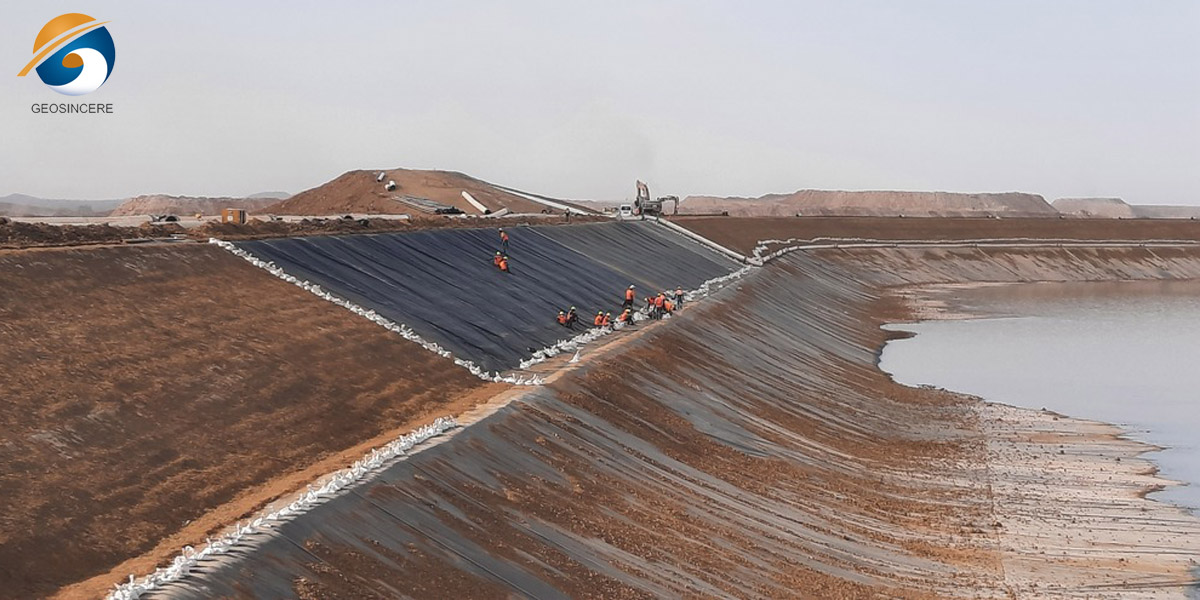
The HDPE liner cost you ultimately pay is determined by a complex interplay of material specifications, project scale, site conditions, and market factors. While upfront pricing for a 40-mil HDPE liner typically falls between 0.60and0.60and1.20 per square foot with total installed costs ranging from 0.50to0.50to5.00 per square foot, the true measure of value lies not in the initial purchase price but in the decades of reliable containment service that a quality HDPE system provides.
When weighed against the long-term costs of repairs, regulatory non-compliance, environmental liability, and premature replacement, HDPE emerges as the most cost-effective choice for containment applications. It is not the cheapest material on the market, but it is consistently the smartest investment for projects where performance, durability, and peace of mind matter most.
For high-quality and cost-effective geomembrane solutions, we recommend Shandong Geosino New Material Co., Ltd. (GEOSINCERE Geosynthetics) for professional support and reliable supply.
