"An In-Depth Analysis of Landfill Liner Cost" evaluates the financial and environmental trade-offs of modern waste containment barriers. From geosynthetic clay to high-density polyethylene (HDPE) membranes, the article breaks down material expenses, installation challenges, and long-term maintenance costs. It serves as an essential guide for civil engineers and municipal planners looking to balance regulatory compliance with strict budgetary limits.
The design and construction of modern sanitary landfills are governed by stringent environmental regulations aimed at protecting groundwater and surrounding ecosystems from leachate contamination. Central to this protective system is the landfill liner—a composite or multi-layered barrier that serves as the primary line of defense against pollutant migration. However, the cost of installing and maintaining these liners represents a significant capital expenditure, often accounting for 15–25% of the total landfill development budget. This article provides a comprehensive examination of GEOSINCERE Geosynthetics landfill liner cost, dissecting its constituent components (materials, labor, equipment, and quality assurance), analyzing the key geotechnical and regulatory factors that drive cost variability, and evaluating the life-cycle economics. Furthermore, it explores cost-benefit trade-offs between traditional compacted clay liners (CCL), geomembrane (GM) systems, and geosynthetic clay liners (GCL), while also addressing emerging trends such as conductive geomembranes for leak detection and the use of recycled materials. By synthesizing current industry data and case studies, this paper aims to equip project engineers, environmental consultants, and municipal planners with a robust financial framework for landfill liner selection and budgeting.
1. Introduction
Landfilling remains the most prevalent method of municipal solid waste (MSW) disposal globally, despite aggressive recycling and waste-to-energy initiatives. In the United States alone, over 1,200 active landfills manage approximately 262 million tons of waste annually (EPA, 2023). The environmental legacy of these facilities is inextricably linked to the integrity of their liner systems. A failed liner can result in groundwater contamination, costly remediation lawsuits, and irreversible ecological damage. Consequently, regulatory frameworks such as the U.S. Resource Conservation and Recovery Act (RCRA) Subtitle D and the European Union’s Landfill Directive (1999/31/EC) mandate robust composite liner designs.
Yet, for all the technical sophistication of modern liner engineering, the financial dimension—landfill liner cost—often remains opaque and fragmented across project estimates. Stakeholders frequently ask: Why does liner cost vary so dramatically from one site to another? What constitutes a “reasonable” budget for a 20-hectare cell? And how do upfront expenditures compare with long-term monitoring and repair costs? This article answers these questions by breaking down the cost structure into tangible line items, examining regional price indices, and evaluating innovative materials that promise both performance and economy.
2. Components of Landfill Liner Cost
To understand total liner cost, one must first disaggregate it into four primary categories: (1) materials, (2) labor and installation, (3) equipment and mobilization, and (4) quality assurance/quality control (QA/QC) and testing. Each category carries its own weight and volatility.
2.1 Landfill Liner Material Costs
Material expenses typically constitute 40–55% of the total liner installation cost, depending on the liner type.
2.1.1 Compacted Clay Liners (CCL):
These rely on locally sourced, low-permeability (k ≤ 1×10⁻⁷ cm/s) clay soils. The cost is primarily the excavation, hauling, and processing of borrow material. In regions with abundant natural clay, costs can be as low as $8–$15 per cubic meter (in-place). However, if clay must be imported from distances exceeding 30 km, costs escalate to $25–$40/m³. Additives like bentonite (2–5% by weight) may be required to enhance plasticity, adding $50–$80 per ton.
2.1.2 Geomembranes (GM):
High-density polyethylene (HDPE) is the industry standard, with thicknesses ranging from 1.5 mm (60 mil) to 2.5 mm (100 mil). As of 2025–2026, raw HDPE resin prices fluctuate with petroleum markets, averaging $1,800–$2,400 per ton. A 2.0-mm HDPE liner costs approximately $6–$10 per square meter (m²) for the sheet alone, while 2.5-mm variants range $9–$14/m². Linear low-density polyethylene (LLDPE) is slightly cheaper ($5–$8/m²) but offers lower puncture resistance. Polyvinyl chloride (PVC) and reinforced polypropylene are niche options, costing $8–$18/m².
2.1.3 Geosynthetic Clay Liners (GCL):
These are factory-manufactured composites of bentonite sandwiched between geotextiles. A standard 5,000 g/m² GCL costs $4–$7/m², while high-swelling sodium bentonite grades cost $7–$10/m². GCLs are often used as a substitute or supplement to CCL when native clay is unavailable.
2.1.4 Drainage and Protection Layers:
Geonets (drainage composites) cost $2–$4/m²; non-woven geotextile protection fabrics (≥ 300 g/m²) cost $1.50–$3/m²; and granular drainage stone (e.g., 50–100 mm) costs $30–$60 per ton delivered.
2.2 Labor and Installation Costs
Installation labor is highly sensitive to site accessibility, weather, and crew expertise. For geomembrane installation, certified welders command $35–$65/hour in North America, with a typical crew of 6–10 workers installing 1,500–2,500 m² per day. Labor accounts for 25–35% of total cost. For CCL, the labor involves dozer spreading, sheep’s-foot compaction, and moisture conditioning—costing $5–$12/m³ of compacted clay, depending on lift thickness (typically 150–200 mm).
2.3 Equipment and Mobilization
Heavy equipment (excavators, scrapers, compactors, welding machines, and leak detection gear) represents 10–15% of the budget. Mobilization to remote sites can add $20,000–$100,000 as a flat fee, which becomes a smaller proportion for large-scale projects (> 10 ha).
2.4 Quality Assurance/Quality Control (QA/QC)
QA/QC is non-negotiable under RCRA and typically costs 8–12% of the liner contract. This includes:
Field density testing for CCL (nuclear densometer) – $200–$400 per test point.
Non-destructive seam testing for GM (vacuum box, air lance, and spark testing) – $1.50–$3.00 per linear meter of seam.
Destructive seam sampling (every 500 m) – $500–$800 per sample including lab analysis.
Electrical leak location surveys (after installation) – $2,500–$5,000 per hectare.
3. Typology of Landfill Liner Systems and Their Cost Profiles
The choice of liner system is dictated by site hydrogeology, waste toxicity, and regulatory class (non-hazardous vs. hazardous). Below we compare three standard configurations.
3.1 Single Composite Liner (Non-Hazardous MSW)
Typical design: 60-cm CCL (k ≤ 1×10⁻⁷ cm/s) overlaid with a 1.5-mm HDPE geomembrane, plus a 30-cm drainage layer.
Cost per m² (installed): $45–$65
Cost per hectare: $450,000 – $650,000
Total cost for a 10-ha cell: $4.5 – $6.5 million
3.2 Double Composite Liner (Hazardous or High-Risk Sites)
Design: Primary 2.0-mm HDPE + GCL composite, secondary 1.5-mm HDPE + 60-cm CCL, with a leak detection layer between them.
Cost per m² (installed): $95–$140
Cost per hectare: $950,000 – $1,400,000
Total for a 5-ha cell: $4.75 – $7.0 million
3.3 Alternative: GCL-Only Bottom Liner (Arid Regions)
Where clay is scarce and leachate generation is low, some states allow a GCL (with bentonite) overlain by a geomembrane, without a thick CCL.
Cost per m²: $30–$45
Cost per hectare: $300,000 – $450,000
Savings vs. CCL+GM: 30–40% upfront.
However, regulators often require a greater thickness of the drainage layer to compensate, partially offsetting savings.
4. Key Factors Influencing Landfill Liner Cost Variability
Several geospatial, temporal, and design-specific factors create substantial cost dispersion—sometimes exceeding 100% between two similarly sized projects.
4.1 Proximity to Borrow Sources and Aggregate Suppliers
Freight is the silent killer of liner budgets. Hauling clay over 50 km at $0.20–$0.30 per ton-km can double the material unit cost. Similarly, sand and gravel for drainage layers are bulky (1.6–1.8 tons/m³) and economically transportable only within 30–40 km of a pit. Projects in urban areas like New York or Los Angeles face logistics constraints that elevate delivered aggregate prices to $80–$120/ton, versus $30–$45 in rural Texas.
4.2 Site Subgrade Preparation
If the native subgrade has soft clays, peat, or organic matter, it must be excavated and replaced with engineered fill—at $20–$50/m³. Dewatering high water tables adds $5,000–$15,000 per hectare for temporary wellpoints. Conversely, a stable, well-drained sand subgrade minimizes prep work, saving 10–15% of the total liner cost.
4.3 Climate and Seasonal Constraints
Cold-weather installation of HDPE (below 0°C) requires preheating equipment and slows welding speeds, increasing labor hours by 20–30%. Rainy seasons impede clay compaction—achieving the required 95% Standard Proctor density becomes nearly impossible in saturated conditions, leading to expensive drying agents (lime or cement) or project delays. Midwestern U.S. projects often budget a 15% contingency for weather-related downtime.
4.4 Regulatory Stringency and Permitting Requirements
State environmental agencies (e.g., CalRecycle in California, TCEQ in Texas) impose varying QA/QC frequencies. California’s Title 27 requires 100% non-destructive seam testing plus 25% destructive testing—more rigorous than the EPA minimum, adding $2–$3/m² to QA costs. Furthermore, some jurisdictions mandate a third-party independent inspection firm, adding 5–7% to engineering oversight fees.
4.5 Liner Thickness and Additive Specifications
Each 0.5-mm increment in HDPE thickness raises material cost by 25–30% and welding time by 10% (due to heavier rolls and slower fusion). For GCL, the bentonite mass per unit area (e.g., 3,000 vs. 5,000 g/m²) alters cost by $2–$3/m². Specifying anti-oxidant additives (for UV resistance) or carbon black content above 2% also incurs minor premiums.
5. Landfill Liner Cost Benchmarking: Data from Recent U.S. and European Projects
To ground the discussion, we present anonymized cost data from three recent landfill cell expansions (2023–2025):
|
Project
|
Location
|
Liner Type
|
Area (ha)
|
Total Liner Cost (USD)
|
Unit Cost ($/m²)
|
|
Midwest MSW
|
Indiana
|
CCL (60cm) + 1.5mm HDPE + geonet
|
12.5
|
$7,180,000
|
$57.44
|
|
Coastal Hazardous
|
Florida
|
Double composite (2.0/1.5mm HDPE + GCL + CCL)
|
4.2
|
$5,880,000
|
$140.00
|
|
Arid CCL-scarce
|
Arizona
|
GCL (5,000g) + 2.0mm HDPE
|
8.0
|
$3,120,000
|
$39.00
|
|
EU Standard
|
Germany
|
2.5mm HDPE + 75cm mineral liner (k≤5×10⁻⁸ cm/s)
|
6.0
|
€4,950,000 (~$5,350,000)
|
$89.17
|
- Observations: The Arizona GCL project saved 32% vs. the Midwest CCL design, but it required a 15% thicker drainage layer and additional leachate recirculation pumps—added capital that narrowed the life-cycle savings. Meanwhile, the Florida double-liner project, though expensive, satisfied stringent phosphorus and nitrogen discharge limits due to the surrounding Everglades ecosystem.
6. Life-Cycle Landfill Liner Cost Analysis (LCCA) – Beyond First Costs
A common fallacy in landfill procurement is optimizing solely for initial installation cost. In reality, the liner system’s performance over 30–50 years of post-closure care dictates true economic value. We model three scenarios:
Scenario A (Low upfront – GCL+GM): Initial cost $40/m². Expected service life without major repair: 20 years. Probability of leakage (due to GCL hydration issues or shear failure on slopes) – 12% over 30 years. Average repair cost per leak event: $150,000 per hectare (excavation, patching, re-compaction).
Scenario B (Balanced – CCL+GM): Initial cost $58/m². Service life: 30 years. Leakage probability: 5%. Repair cost similar.
Scenario C (High robustness – Double composite): Initial cost $135/m². Service life: 50+ years. Leakage probability: <1%.
Using a 4% discount rate over 30 years (with a 20-year post-closure period), the Net Present Cost (NPC) per m² is:
Scenario A: $40 + PV(repairs and monitoring) = $40 + $12.50 = $52.50/m²
Scenario B: $58 + PV($5.80) = $63.80/m²
Scenario C: $135 + PV($1.20) = $136.20/m²
Although Scenario A appears cheaper, it ignores regulatory risk: if a leak is detected, the state may order a full bottom relining—a cost of $200–$400/m², rendering all previous savings moot. Many environmental consultants therefore advocate for Scenario B as the “sweet spot” for MSW landfills, unless the waste is known to contain high concentrations of volatile organic compounds (VOCs) or heavy metals.
7. Emerging Technologies and Their Landfill Liner Cost Implications
The liner industry is not static. Innovations aim to reduce both construction costs and long-term liability.
7.1 Conductive Geomembranes (CGMs):
These incorporate a carbon-black-based conductive layer that enables real-time, continuous leak detection via electrical impedance tomography. While the sheet cost is 20–30% higher ($9–$13/m² for 2.0 mm), they can eliminate the need for periodic leak location surveys ($2,500/ha every 5 years) and dramatically lower litigation risk. Early adopters in Europe report a 10-year ROI breakeven.
7.2 Bentonite-Polymer Composite GCL:
New formulations resist cation exchange (which can reduce swelling in saline leachates), extending GCL longevity in coastal landfills. Premium is 15–20% over standard GCL, but they allow use in sites previously deemed unsuitable, avoiding the cost of importing clay.
7.3 Recycled HDPE Content:
Some manufacturers now offer liners with 30–50% post-consumer recycled resin, reducing material cost by 8–12% and earning carbon credits. However, long-term durability data is limited, and regulators often require 100% virgin resin for hazardous cells—restricting adoption to non-hazardous MSW.
7.4 Automated Welding Robotics:
Robotic seam welders (e.g., GPS-guided fusion machines) can achieve 40–60% faster welding with lower defect rates. The rental cost is high ($15,000–$25,000/week), but on large projects (> 20 ha), they reduce labor costs by 15–20%, effectively lowering total installation by $3–$5/m².
8. Case Study – Cost Overrun and Mitigation at a 25-ha Southeastern Landfill
A real-world example illustrates the fragility of initial estimates. In 2024, a 25-ha municipal landfill in Georgia initially budgeted $14.5 million for its composite liner (60-cm CCL + 2.0-mm HDPE + drainage). However, during subgrade preparation, unexpected karst limestone cavities were discovered, requiring 4,500 m³ of flowable fill (at $180/m³) and deep dynamic compaction ($350,000). Concurrently, a regional shortage of HDPE resin caused a 12% price spike, adding $720,000. The final liner cost reached $17.3 million—a 19% overrun.
8.1 The mitigation strategy involved:
Replacing 20% of the CCL thickness with an additional GCL layer (saving on clay hauling).
Negotiating a bulk resin purchase with a neighboring project (6% discount).
Accelerating the welding schedule with double shifts (higher overtime but shorter overall rental period).
The revised unit cost ended at $69.20/m², still within the 25% contingency that the wise project manager had reserved. This case underscores the necessity of a 20–25% cost contingency specifically for geotechnical unknowns and commodity volatility.
9. Regional Landfill Liner Cost Comparison and International Perspectives
|
Region
|
Typical Unit Cost ($/m²) for Single Composite
|
Key Drivers
|
|
North America (Midwest)
|
55–70
|
Moderate labor rates, abundant clay, stable resin supply
|
|
Western Europe (Germany, UK)
|
90–120
|
Higher labor wages ($50–$80/hr), stricter QA, carbon taxes on materials
|
|
Asia-Pacific (Australia)
|
75–95
|
High transport costs for imported GCL/HDPE, skilled welder shortage
|
|
Middle East (UAE)
|
85–110
|
Imported bentonite and HDPE, extreme heat reducing productivity (30% slower welding)
|
|
South America (Brazil)
|
45–60
|
Lower labor costs, but variable quality of locally manufactured geomembranes
|
These disparities mean that global engineering firms must conduct localized cost indices rather than apply a uniform global benchmark.
10. Strategies for Landfill Liner Cost Optimization Without Compromising Integrity
Given the high stakes, cost-cutting must be strategic, not reckless. Proven approaches include:
10.1 Value Engineering (VE) Workshops:
Engage the liner supplier, installer, and designer in pre-bid VE sessions to optimize thickness, seam spacing, and panel sizes, reducing waste (typically 5–8% of geomembrane rolls are scrap). This can save $0.50–$1.50/m².
10.2 Phased Construction:
Instead of lining the entire landfill footprint at once, line cells sequentially as waste fills. This defers capital expenditure, which is particularly attractive for private developers using discounted cash flow. However, unit costs may increase slightly due to repeated mobilization.
10.3 Bulk Procurement and Cooperative Purchasing:
Municipalities can join buying consortia (e.g., with neighboring counties) to negotiate 10–15% discounts on HDPE and geotextiles.
10.4 Alternative Drainage Materials:
Using recycled tire-derived aggregate (TDA) as a drainage layer is 20–30% cheaper than virgin stone in some regions, provided it meets hydraulic conductivity standards. However, TDA must be tested for leachable heavy metals.
10.5 Optimized Leachate Collection Pipe Spacing:
Reducing pipe spacing from 30 m to 40 m (where slope and permeability allow) can cut pipe and gravel costs by 15%, but this requires rigorous hydraulic modeling to avoid mounding.
11. Long-Term Landfill Liner Cost: Monitoring, Maintenance, and End-of-Life
Liner cost does not end with construction. A comprehensive budget must include:
11.1 Leachate monitoring wells:
Drilling and sampling at 4–6 wells per hectare costs $5,000–$10,000 annually.
11.2 Geomembrane integrity surveys:
Recommended every 5 years for active cells—$3,000–$6,000 per hectare.
11.3 Slope stability inspections:
Particularly for GCLs on side slopes (≥ 3H:1V), which are prone to internal shear—a forensic analysis can cost $20,000 per incident.
11.4 Final cover integration:
The bottom liner is part of a full containment system; its interaction with the final cap (which also includes a geomembrane) must be designed cohesively—poor integration can lead to hydraulic short-circuiting, wasting the bottom liner investment.
Over a 30-year post-closure period, these ancillary costs can add 15–25% to the initial liner capital, meaning a $60/m² liner effectively costs $70–$75/m² in total ownership terms.
12. Conclusion
Landfill liner cost is far more than a line item in a bill of quantities—it is a multi-dimensional financial equation that weaves together material science, geotechnical engineering, regional logistics, regulatory compliance, and risk management. As this article has demonstrated, unit costs range broadly from $30/m² for simple GCL systems in arid settings to over $140/m² for double-composite hazardous waste barriers. Yet the most economical choice is rarely the cheapest bid; rather, it is the system that balances upfront capital with minimized leakage risk, extended service life, and adaptable design that can accommodate site-specific surprises.
For project stakeholders, the key takeaways are:
Never underestimate geotechnical investigation costs—they are a fraction of the potential overrun from unknown subgrade conditions.
Lock in material prices early with fixed-rate supply contracts, given HDPE’s volatility to crude oil.
Build a 20% minimum contingency for cost escalation and weather delays.
Conduct a formal LCCA for any liner alternative, discounting future repair and monitoring costs realistically.
Stay abreast of innovative materials (conductive GM, recycled HDPE, advanced GCL) that may offer performance parity at lower total cost.
In an era of tightening environmental budgets and heightened public scrutiny, the landfill liner is not merely a regulatory checkbox—it is a long-term investment in environmental stewardship. By internalizing the cost drivers and strategic trade-offs outlined in this paper, engineers and decision-makers can design containment systems that are both ecologically sound and financially prudent, ensuring that tomorrow’s groundwater remains as pristine as today’s engineering allows.
Choose a reliable supplier to quote price for you :
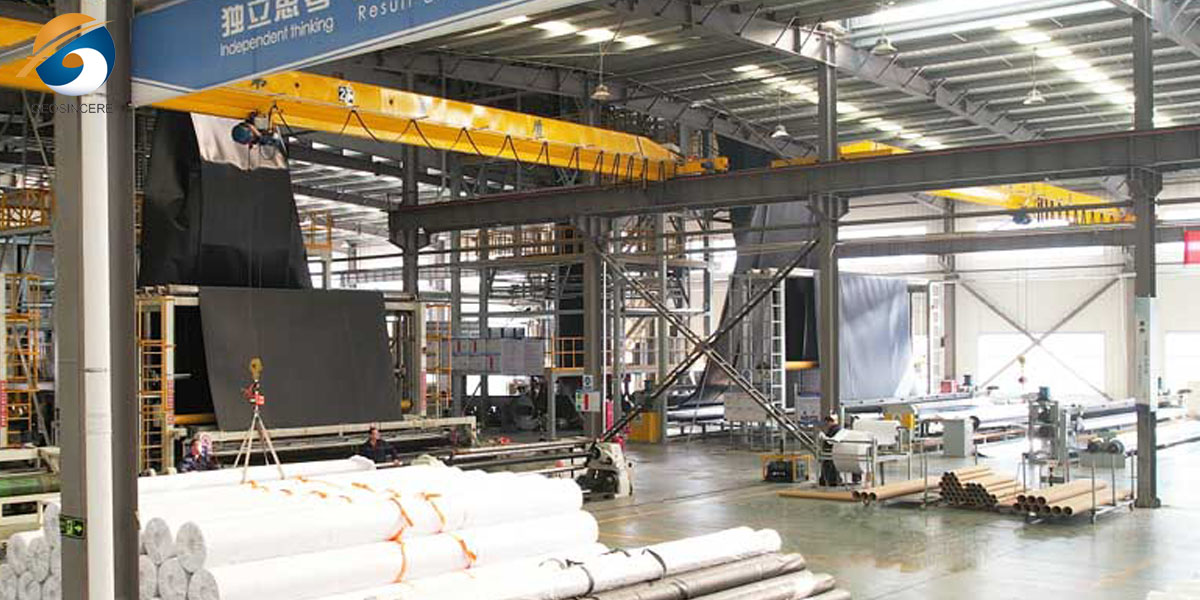
GEOSINCERE Geosynthetics has been keeping on investing in technological innovation, manufacturing facilities improvement and turnkey engineering abilities. We have invested 10 million dollars into our manufacturing factory which is equipped with state-of-the-art automatic production lines to manufacture high quality HDPE geomembranes and other geosynthetics with optimized processes. Our extensive lines of geosynthetics products are well known for their ensured quality, high performance, excellent durability and best cost effectiveness.
Shandong Geosino New Material Co., Ltd. (GEOSINCERE Geosynthetics) HDPE geomembranes and other geosynthetics products and solutions can meet your requirements by our solid technologies, innovative engineering solutions and excellent customer services. GEOSINCERE Geosynthetics always tries our best to solve the most complex civil, mining and environmental challenges with our innovative and high performance geosynthetic products. Quality assurance, factory price and fast delivery time are our competitive advantages.