One material has been drawing worldwide attention for the last few years in modern civil engineering, environmental protection, and industrial project construction, which is an HDPE impermeable liner. As governments continue to impose stricter environmental regulations and investors become more conscious of low-risk projects with long-term benefits, HDPE liners are the first choice for waterproofing, seepage control, environmental containment, and structural protection purposes.
The use of impermeable liner has become widespread in various applications. Essentially, they are used to line dikes in mining tailings dams, landfills, and aquaculture ponds, as well as vast reservoirs to provide a reliable physical barrier that prevents leaks of liquids, chemicals, or contaminants into the surrounding soil and groundwater.
So, what is an impermeable geomembrane, how does it function, and why is it popular among different industries?
This article is a detailed and real-life version of the explanation, which is perfect for engineers, contractors, procurement managers, and project decision-makers.
It is impossible to understand the significance of one material without first understanding the material itself. The terms HDPE Impermeable Liner and HDPE Geomembrane are often used interchangeably. However, they are mineral liner made from synthetic membrane fabricated mainly from High-Density Polyethylene (HDPE) resin. The geomembrane product is designed to serve as a barrier with a certain level of flexibility, continuity, and extremely high efficiency against the flow of liquids, vapors, and gases.
This is the most fundamental part of the material. HDPE is a thermoplastic polymer that is quite well known for its high strength-to-density ratio. The "high-density" refers to the fact that the polymer chains are linear with very little branching, thus allowing them to be packed closely together. This molecular structure gives a polymer that is extraordinarily strong, very hard, and capable of resisting impact as well as a wide range of chemicals.
This is what the product does at the core. The geomembrane material is constructed with the aim of having an extremely low hydraulic conductivity, normally with a permeability coefficient of<1 x 10⁻¹³ cm/s. In everyday terms, it is almost a perfect hydraulic barrier as allowed by modern engineering.
Defines its shape and work. The item comes in large rolls of sheet material, which after are laid and welded together locally to produce a seamless "basin" or "container" inside an excavation or a structure.
Essentially, an HDPE impermeable liner is a high-performance, factory-controlled sheet material that plays a significant role as a robust and durable shield to separate the materials being contained from the surrounding environment.
GEOSINCERE Geosynthetics offers you the advantage of selecting the best products suitable for your particular need in various projects with different demands. That is why we offer an array of products made from HDPE liners to meet your needs:
The standard and generally the most utilized type. It delivers the perfect combination of resistance to chemicals, low permeability, and affordability. Wood-lined landfill pits, banked reservoir linings, and canal projects where you are not required to consider the interface friction for your design will be the area where one would most likely find this product application.
A rough surface of the product (either one or two-sided textured) is achieved through specialized manufacturing processes. The texture drastically increases the interface shear strength between the liner and the adjacent soils or geosynthetics. The use of this textured geomembrane is the most appropriate for the implementation of landfill caps, tailings dams, and reservoir walls consisting of steep slopes where slope stability is of utmost importance.
This is a top-notch product where the inside of a smooth HDPE is co-extruded with the two surfaced textured ones. It assures the full standard thickness for barrier performance while at the same time providing the excellent frictional properties required for slope stability.
The impermeable liner creates a continuous, sealed, waterproof barrier placed between the soil and the liquid or waste. When installed properly:
- The impermeable geomembrane liner blocks downward seepage
- Prevents horizontal migration of contaminants
- Protects soil, groundwater, and surrounding ecosystems
- Ensures structural stability for storage ponds, dams, and waste facilities
In many applications, HDPE liners are used together with geotextiles, drainage nets, and clay liners (GCL) to form composite lining systems for even higher safety.
HDPE is nearly impermeable, providing a near-zero leakage rate that ensures reliable containment in reservoirs, wastewater lagoons, leachate ponds, and chemical storage facilities.
HDPE demonstrates strong resistance to acids, alkalis, salts, petroleum compounds, and leachate chemicals, making it highly suitable for demanding environments such as mining, industrial wastewater systems, and landfill containment.
Depending on thickness and UV exposure, impermeable pond liner provide exceptional longevity, typically lasting 20–30 years in outdoor environments and 40–50 years in covered or buried applications.
HDPE impervious liner offer excellent durability with strong resistance to puncture, tearing, stress cracking, and heavy loads, ensuring long-term performance even under challenging site conditions.
Compared with concrete or clay sealing systems, hdpe impermeable liner reduce both installation and long-term maintenance costs, providing a highly economical barrier solution.
HDPE is non-toxic, recyclable, and free of harmful plasticizers, making it a safe and eco-friendly choice that supports environmental compliance and sustainability goals.
HDPE liners play a critical role in landfill containment systems by preventing leachate from contaminating groundwater. They are widely used in bottom liners, leachate ponds, side slope protection, and landfill capping systems, providing long-term environmental safety through their excellent chemical resistance.
In mining operations, HDPE liners are essential for controlling tailings, acidic wastewater, and chemical residues. They are applied in heap leach pads, tailings dams, process ponds, and retention basins, ensuring hazardous substances do not infiltrate surrounding soil and water sources.
HDPE liners help aquaculture operators maintain stable water levels, reduce seepage, improve water quality, and prevent soil contamination. They are commonly used in shrimp ponds, tilapia ponds, crab farms, and large water reservoirs that support aquaculture operations.
In agricultural and irrigation systems, HDPE liners minimize water loss in irrigation canals, farm reservoirs, water retention ponds, and agricultural wastewater pits. This is especially valuable in regions with limited water resources where efficient water management is essential.
For oil, gas, and industrial sectors, HDPE liners provide reliable containment for petrochemical waste, hazardous liquids, chemical reaction ponds, and secondary spill control systems. Their high chemical resistance ensures safe handling and long-term environmental protection.
HDPE liners are widely used in sewage treatment plants, stormwater retention tanks, sludge drying beds, and groundwater protection systems. Their impermeability and durability help municipalities maintain compliance with environmental regulations and safeguard public infrastructure.
Thin HDPE liners are suitable for low-risk applications such as aquaculture ponds, basic water storage systems, and dust suppression ponds. Their flexibility and cost-effectiveness make them ideal for projects that require simple, reliable waterproofing.
Medium-thickness liners are commonly used in agriculture tanks, industrial water ponds, and moderate chemical containment environments. They offer a balanced combination of durability and affordability, providing enhanced protection for mid-level engineering needs.
Thick HDPE liners are required in high-risk containment areas such as landfills, mining operations, and oil & gas facilities. Their superior mechanical strength and chemical resistance ensure maximum safety and long-term performance in demanding environments.
Choosing the right liner thickness is essential for achieving both safety and cost-effectiveness in any containment project.
Proper installation is essential for achieving long-term impermeability and system performance. The process typically includes site preparation, subgrade leveling, deployment of the geomembrane, and seam welding using hot wedge or hot air methods. After installation, quality tests such as vacuum testing or air pressure testing are conducted, followed by surface protection with soil or geotextile to ensure optimal durability.
GEOSINCERE Geosynthetics uses 100% virgin HDPE resin with no recycled additives, ensuring maximum durability, safety, and long-term performance in demanding applications.
With automated extrusion lines, strict thickness control, and options for smooth or textured surfaces, GEOSINCERE Geosynthetics adheres to global QA/QC standards to produce high-performance HDPE liners for all engineering needs.
GEOSINCERE Geosynthetics exports HDPE liners to over 96 countries across Southeast Asia, the Middle East, Africa, South America, and Europe, supporting diverse environmental and industrial containment projects worldwide.
We provide customized thickness options, technical datasheets, welding guidance, project design suggestions, and rapid delivery to ensure seamless project execution from start to finish.
As a direct manufacturer, GEOSINCERE Geosynthetics delivers cost-effective HDPE liner solutions without compromising on quality, offering excellent value for both small and large-scale projects.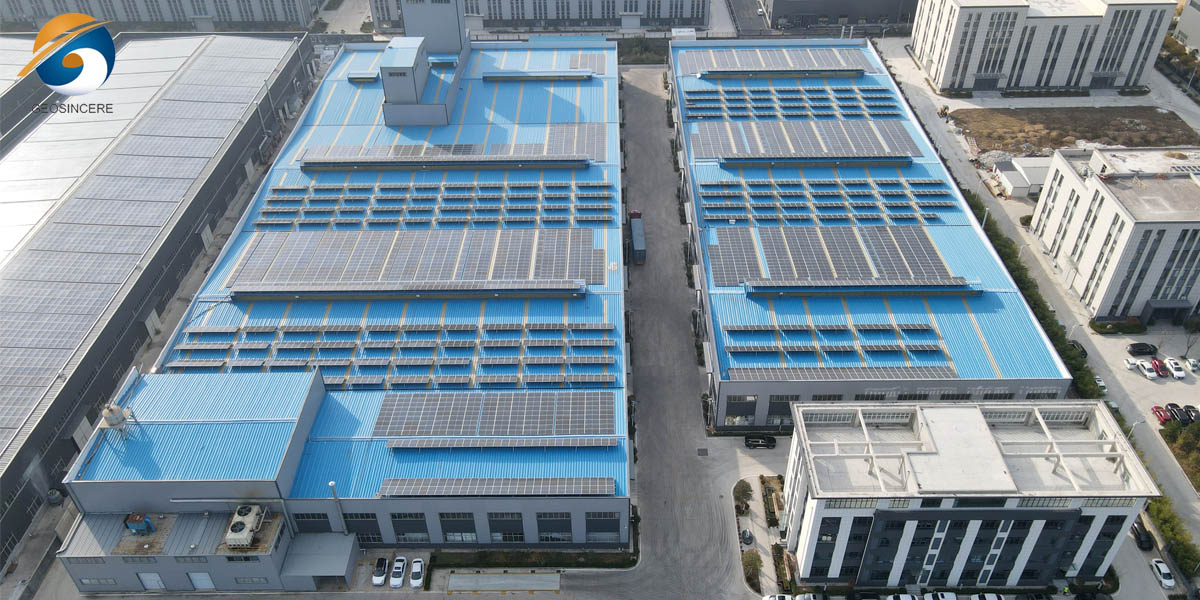
HDPE impermeable liner is one of the most reliable and widely used geosynthetics in modern engineering. Its:
- Exceptional waterproofing
- Chemical resistance
- Durability
- Low maintenance cost
Make it the preferred material for landfills, mining, aquaculture, agriculture, industrial containment, and environmental engineering.
Whether you are designing a new project or upgrading an existing facility, HDPE impermeable liners provide a safe, long-lasting, and cost-effective solution.
If you need technical specifications, samples, or quotations, Shandong Geosino New Material Co., Ltd (GEOSINCERE Geosynthetics) is ready to support you anytime.
