For dam owners, water storage project developers, and civil engineers, water seepage is one of the most persistent and costly challenges they face. Every liter of water lost through seepage is wasted investment—whether in irrigation agriculture, hydropower generation, or municipal water supply. This is where GEOSINCERE Geosynthetics PVC liners come into play.
PVC (polyvinyl chloride) geomembrane liners have been used in dam waterproofing since 1959, and they have proven themselves as one of the most reliable and cost-effective solutions available on the market today. In this comprehensive guide, we will explain what PVC dam liners are, why they are superior for many applications, and how they can help you stop water loss and protect your investment.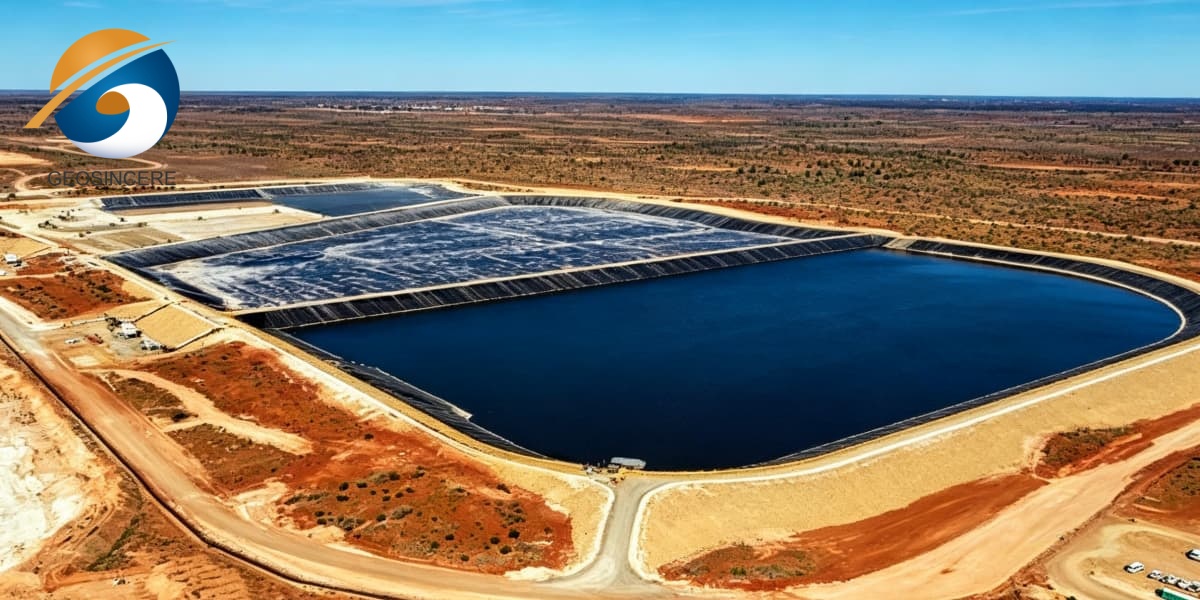
A PVC dam liner is a flexible, impermeable geomembrane sheet designed to be installed on the upstream face of a dam or at the bottom of a reservoir. It forms a continuous waterproof barrier that prevents water from seeping through the dam structure or into the surrounding soil. Unlike rigid barriers such as concrete, PVC geomembranes can stretch and accommodate ground movement without cracking.
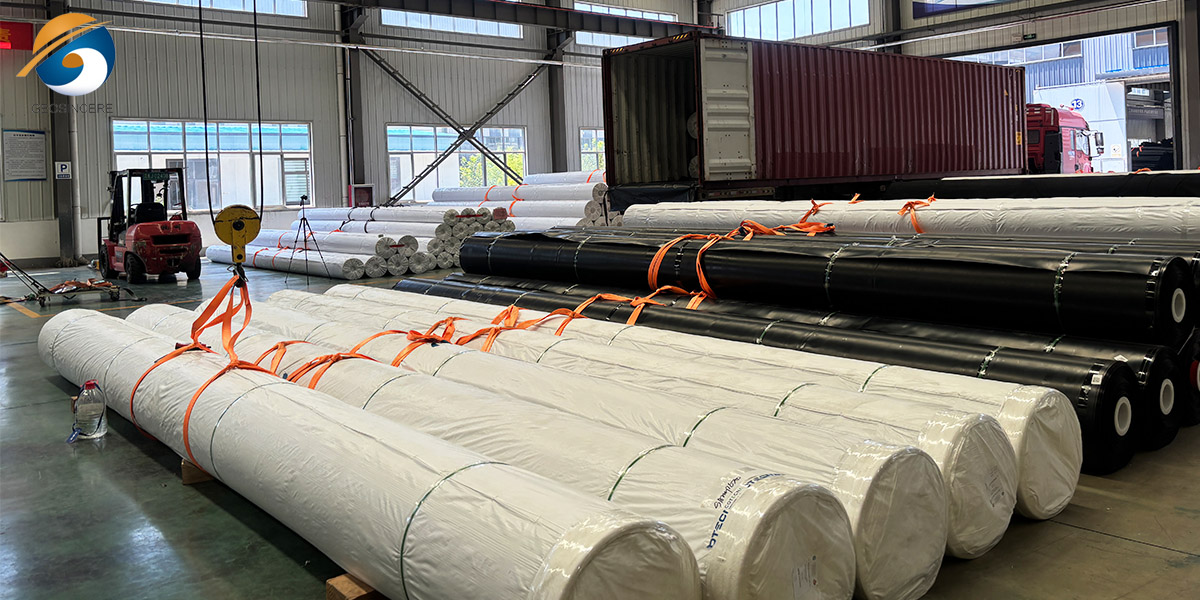
Modern PVC dam liners are often manufactured as geocomposites—a thick PVC geomembrane laminated to a protective nonwoven geotextile. This combination enhances mechanical properties and provides excellent anti-puncture protection. For large dam projects, PVC geomembranes can be up to 5.0 mm thick and reinforced with polyester or glass grids for extreme durability.
If you are evaluating options for your dam or reservoir waterproofing project, here are the key advantages that make PVC dam liners a compelling choice.
The most distinctive advantage of PVC geomembranes is their exceptional flexibility. With elongation exceeding 300%—and often reaching 360% to 430%—PVC liners can conform to any irregular surface. This is critical for dam applications because:
- Embankment dams inevitably settle over time
- Earthquake activity can cause differential movements
- Temperature changes cause expansion and contraction
A rigid water barrier like concrete would crack and fail under these stresses. A PVC geomembrane simply stretches and moves with the structure.
PVC geomembranes offer permeability far lower than traditional water barriers, creating an extremely effective water seal that blocks fluid migration through soil or structural substrates. This means your dam retains water efficiently, and your surrounding soil and groundwater remain uncontaminated.
PVC dam liners are engineered to perform in challenging chemical environments. They demonstrate excellent resistance to acids, alkalis, and hydrocarbons, remaining compatible with pH 2–12 environments. This makes them suitable not only for freshwater reservoirs but also for industrial water storage and mining applications where water may contain aggressive chemicals.
Compared to concrete construction or alternative geomembrane materials like EPDM, PVC offers significant cost advantages:
- Material costs are 20–40% lower than comparable polymeric membranes
- Installation is faster and requires less specialized equipment
- The total cost of a geomembrane-lined water reservoir can be up to four times lower than concrete construction
For projects with budget constraints, PVC delivers exceptional value.
PVC geomembranes are lightweight, with a density of approximately 1.3–1.4 g/cm³. They can be prefabricated into very large panels—up to 200,000 square feet—reducing the number of field seams required. Seams can be completed using adhesive bonding, heat welding, or radio frequency (RF) welding. Compared to HDPE, PVC welding is faster and requires lower equipment costs, enabling installation times up to 30% quicker.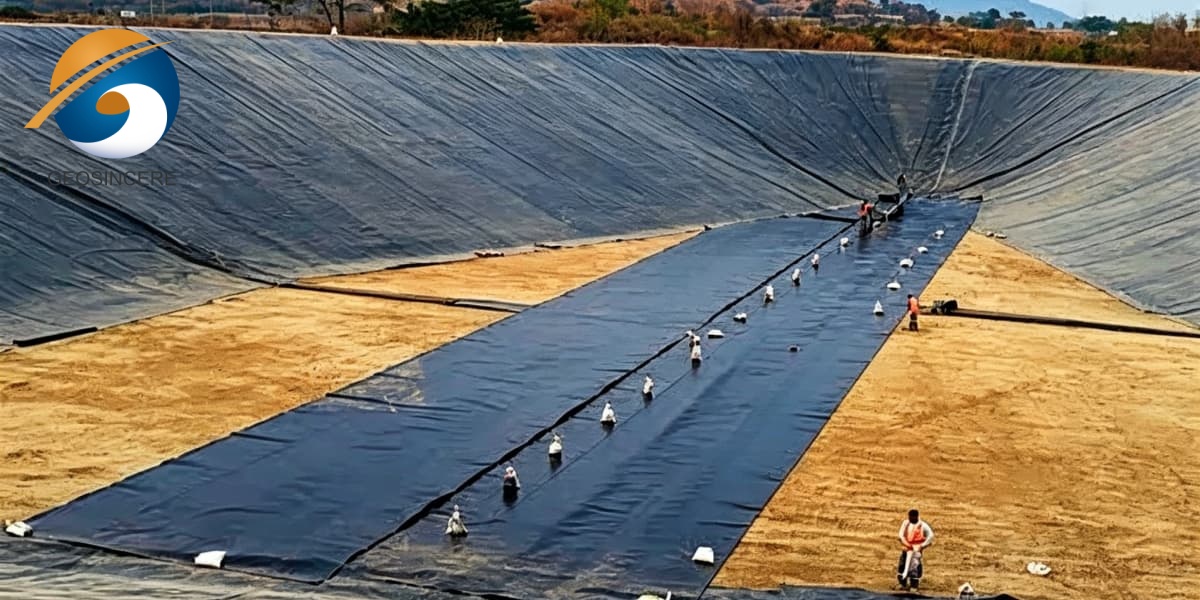
PVC geomembranes are versatile and have been successfully deployed in a wide range of dam and water infrastructure applications around the world.
In new dam construction, PVC geomembranes are installed as the primary waterproofing layer on the upstream face. They can be deployed over granular subgrades, concrete, or roller-compacted concrete (RCC). The system is anchored using stainless steel batten strips or PVC anchor strips embedded in extruded concrete curbs.
A notable example is the Nam Ou VI rockfill dam in Lao PDR, an 88-meter-high dam where the only water barrier is an exposed PVC geocomposite covering 38,000 square meters of the upstream face.
One of the most valuable applications of PVC dam liners is the rehabilitation of aging concrete or masonry dams. Many older dams develop cracks and lose imperviousness over time. Installing a PVC geomembrane on the upstream face provides a new, continuous waterproof barrier without requiring demolition of the existing structure.
An Italian study monitoring PVC-P geomembranes installed on dam upstream faces over a 25-year period confirmed their long-term functionality and durability.
PVC geomembranes have been widely adopted in RCC dams, particularly those with low cementitious content. The geomembrane separates the waterproofing function from the static function of the concrete, simplifying construction and reducing costs.
The Miel I dam in Colombia stands as a world-class example. At 188 meters high, it is the world‘s tallest RCC dam, with a 31,500-square-meter PVC geomembrane system installed on its upstream face. The PVC geomembrane is 3 mm thick in the deepest section and 2.5 mm thick above, laminated to a 500 g/m² polypropylene geotextile.
In mining operations, tailings dams must contain hazardous materials and prevent contamination of surrounding soil and water. PVC geomembranes provide an effective impermeable barrier that prevents leakage of harmful contaminants. Their chemical resistance and elongation properties make them ideal for this demanding application.
Beyond dams themselves, PVC liners are also used to line the reservoirs behind dams and the canals that distribute water. Sealing earthen channels can reduce evaporation losses by 20–30%, significantly improving water conservation in arid regions.
How long will a PVC dam liner last? This is one of the most common questions, and the answer depends on installation conditions.
For buried applications, PVC liners commonly last 20 years or more. When installed on exposed dam faces, modern UV-stabilized PVC formulations have demonstrated remarkable durability. Joaboa‘s PVC geomembranes, for example, maintained 85% tensile strength and 80% tensile elongation after 4,000 hours of accelerated UV exposure.
Manufacturers have also introduced new UV-resistant formulations with warranties up to 15 years for exposed applications.
The Italian 25-year study on exposed PVC-P geomembranes found that, despite plasticizer loss ranging from 14.83% to 21.86%, the functionality of the geomembranes was not affected—confirmed by both laboratory testing and on-site inspections.
While professional installation is strongly recommended for large dam projects, understanding the basic process helps you evaluate proposals and contractors.
The subgrade must be carefully prepared—smooth, free of sharp stones and vegetation, and well-compacted to avoid future settlements.
A geotextile protection layer (minimum 500 g/m²) is typically placed between the subgrade and the PVC liner to prevent punctures.
PVC geomembrane panels are deployed over the prepared surface, allowing the material to conform to the contours.
Panels are joined using heat welding or adhesive bonding to create a continuous, watertight barrier.
The liner is mechanically anchored at the perimeter using stainless steel batten strips or anchor trenches. For large dam faces, tensioning assemblies are installed at regular intervals to secure the liner against water pressure.
A drainage layer behind the liner allows any infiltration water to be collected and monitored, ensuring the integrity of the waterproofing system.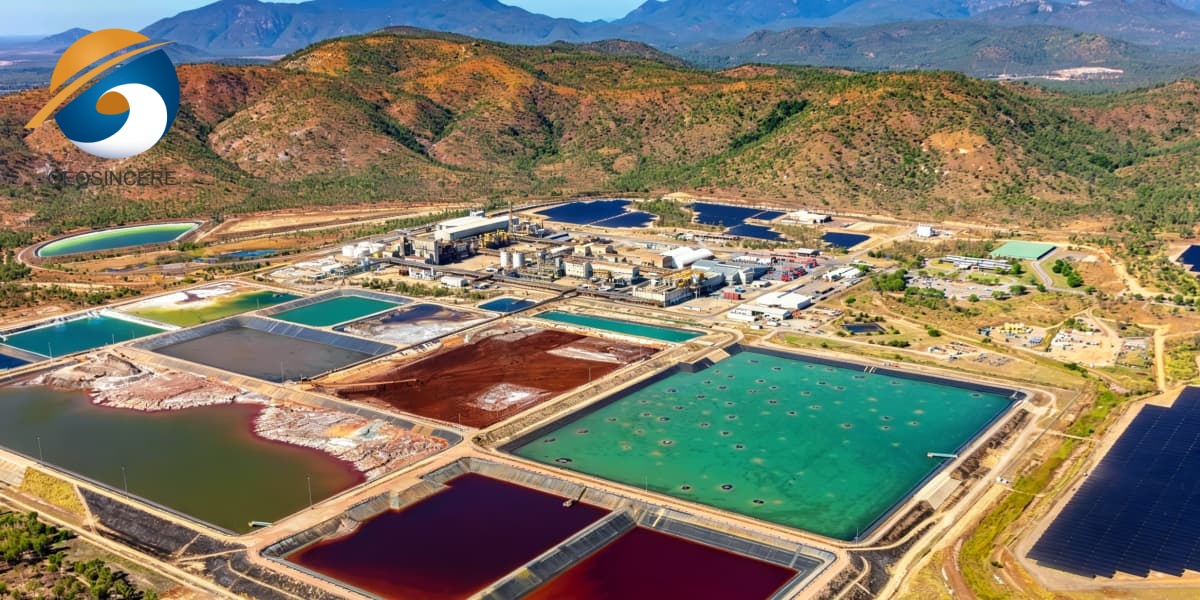
Buyers often ask whether PVC or HDPE (high-density polyethylene) is better for dam liners. The answer depends on your specific project requirements.
- Superior flexibility and elongation (exceeding 300%)
- Easier and faster installation with lower equipment requirements
- Lower upfront material costs
- Conforms better to irregular surfaces and complex geometries
- Higher tensile strength
- Lower permeability (1×10⁻¹¹ cm/s compared to PVC’s 10⁻⁹–10⁻¹⁰ cm/s)
- More UV resistant for exposed applications
For projects with high exposure to intense sunlight and a required lifespan exceeding 25 years, HDPE may be the better choice. However, for projects where flexibility, ease of installation, and cost-effectiveness are priorities, PVC is often the superior option. For projects with expected lifespans under 15 years and budget constraints, PVC offers compelling advantages.
Not all PVC dam liners are created equal. When sourcing your liner, ensure it meets these quality standards:
- ASTM Compliance: Look for ASTM D7176 certification for non-reinforced PVC geomembranes
- Virgin Materials: Liners made from 100% virgin resins offer superior consistency and durability compared to those using recycled content
- UV Stabilization: Ensure the formulation includes carbon black additives and UV inhibitors for exposed applications
- Geotextile Lamination: For dam applications, a laminated geotextile provides critical anti-puncture protection
- Third-Party Certification: ISO 9001 quality management certification and ISO 14001 environmental management certification are reliable indicators of manufacturer quality
Every dam is unique. The right thickness, width, and formulation for your project depends on factors including:
- Dam height and water head pressure
- Soil conditions and subgrade characteristics
- Climate and UV exposure levels
- Budget and expected service life
We offer high-quality PVC geomembrane liners manufactured to international standards (ASTM, ISO, CE). Our products are available in thicknesses from 0.5 mm to 3.0 mm and widths up to 8 meters. Whether you need a liner for a small agricultural reservoir or a large-scale hydropower dam, we have the expertise and manufacturing capacity to deliver.
Contact us today to discuss your project. Fill out the inquiry form below or send your specifications to our technical team. Shandong Geosino New Material Co., Ltd. (GEOSINCERE Geosynthetics) will respond with a detailed proposal and a competitive quote within 24 hours.
PVC Dam Liners — Stop Seepage. Save Water. Protect Your Investment.