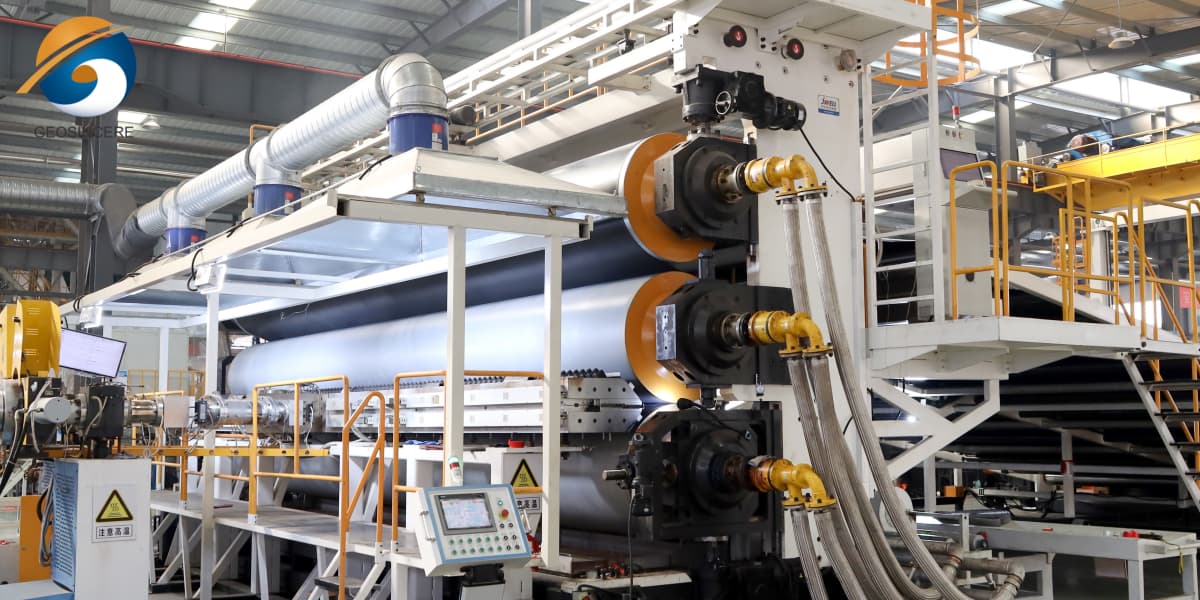
Choosing an HDPE liner manufacturer is not a purchasing formality. It is one of the few decisions in a containment project that determines whether the system will still be performing decades from now. The material itself—high-density polyethylene geomembrane—is a commodity in the sense that many companies produce it. But the manufacturers behind those rolls differ enormously in resin sourcing, extrusion control, certification depth, and the willingness to stand behind a project after the invoice is paid.
Global demand for GEOSINCERE Geosynthetics geomembrane continues to expand, driven by stricter landfill regulations, growth in mining, and the rapid development of commercial aquaculture. The geomembrane suppliers competing for that demand fall into distinct tiers. Understanding those tiers, and knowing which one fits a given project, is more useful than comparing price lists.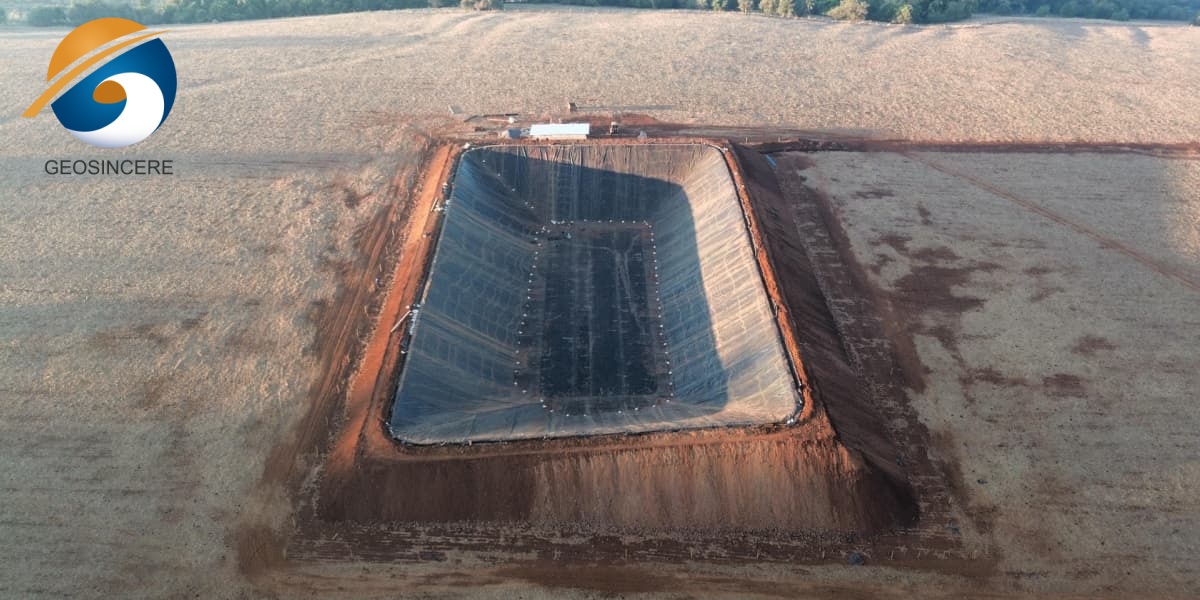
HDPE liner production is concentrated among a relatively small number of companies, but the supply landscape is geographically diverse.
European manufacturers, particularly those based in Germany, Austria, and Italy, have built their reputations around certification rigor and technical support. They typically operate under EN and ASTM standards simultaneously, maintain in-house laboratories, and provide engineering assistance during design and installation. Their products are frequently specified for landfills, tunnels, and environmental containment where documentation and traceability matter as much as the sheet itself.
North American producers, including several that are now part of larger international groups, dominate large-scale environmental and mining projects. Their advantage lies in volume capacity, established distribution networks, and familiarity with EPA and state-level regulatory requirements.
Asian manufacturers have expanded rapidly in export markets. Chinese producers in particular have invested heavily in extrusion capacity and now supply significant volumes to Southeast Asia, Africa, the Middle East, and South America. Their pricing is competitive, and their production scale is substantial. The variation within this group is wide, however. Some operate modern lines with automated thickness control and third-party certification; others compete almost entirely on price with limited documentation.
Middle Eastern manufacturers serve regional demand for water containment, agriculture, and municipal infrastructure. They often combine imported resin with local extrusion, and their certification profiles vary by market.
The first practical question for any buyer is whether the manufacturer can produce the required volume, in the required dimensions, within the project schedule.
A manufacturer running an eight-meter extrusion line can supply wider rolls than one limited to four or five meters. Wider rolls mean fewer field seams, and fewer field seams mean lower installation cost and fewer potential leak paths. On a large reservoir or landfill cell, the difference between a four-meter and an eight-meter roll can translate into hundreds of meters of avoided welding.
HDPE geomembrane is typically specified with a minimum average thickness and a tolerance band. A sheet that varies by ten percent across its width will not weld consistently. The hot wedge penetrates differently at different points along the seam, and the resulting weld may pass visual inspection while containing weak zones. Manufacturers that maintain tolerance within five percent across full rolls give installation crews a predictable material to work with.
Modern production lines increasingly incorporate online thickness measurement, spark testing, and automated feedback control. These systems do not merely improve quality control; they reduce labor cost and allow manufacturers to run faster without sacrificing consistency. The capital investment required for such lines is substantial, which is one reason the top tier of manufacturers remains relatively small.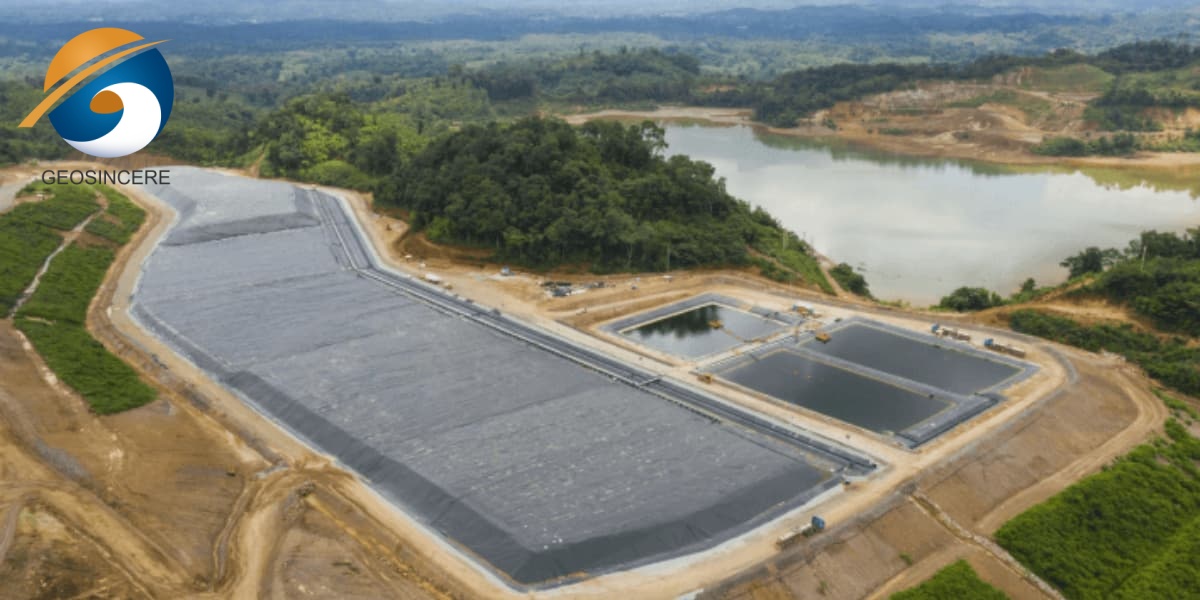
Two HDPE liners can look identical on delivery and behave completely differently after five years in service. The difference almost always comes down to the resin and the additive package.
Virgin HDPE resin with a controlled molecular weight distribution produces a liner with predictable creep resistance, stress crack resistance, and oxidative stability. Carbon black, typically added at two to three percent, provides UV protection. Antioxidants and stabilizers determine how long the liner will resist degradation when exposed to sunlight or aggressive chemicals.
Recycled or off-spec resin is cheaper. It is also more variable. A manufacturer using recycled content may produce a liner that passes a short-term tensile test but fails prematurely under sustained load or UV exposure. For regulated containment—landfills, mining leach pads, hazardous waste—recycled content is generally unacceptable unless the project specification explicitly permits it and the manufacturer can demonstrate equivalent long-term performance.
The most reliable way to evaluate formulation is through oxidative induction time (OIT) testing and carbon black dispersion analysis. OIT measures the liner’s resistance to thermal oxidation, which correlates with service life. Carbon black dispersion indicates whether the UV stabilizer is uniformly distributed or concentrated in patches. Both tests should be performed by an accredited third-party laboratory, not by the manufacturer alone.
GRI-GM13 is the benchmark specification for HDPE geomembranes in containment applications. It sets minimum values for density, tensile yield strength, puncture resistance, carbon black content, and OIT. A manufacturer claiming GRI-GM13 compliance should be able to provide third-party test reports confirming those values.
But compliance with a specification is not the same as consistent production. A single passing test report from a pilot batch says nothing about batch-to-batch variation. The more meaningful evidence is lot-by-lot testing data. Manufacturers that publish thickness, density, and tensile results for each production lot give buyers a way to verify that the material shipped matches the material specified.
ISO 9001 certification indicates a documented quality management system. ISO 14001 and ISO 45001 address environmental and occupational health and safety management, respectively. These certifications are useful indicators of organizational discipline, but they do not replace product-specific testing.
For projects in regulated markets, factory audits and witnessed testing are increasingly common. A buyer or third-party inspector visits the production facility, observes the extrusion process, and selects samples for independent testing. This is the most reliable way to confirm that a manufacturer’s claims match its actual production.
The best HDPE liner manufacturers do more than ship rolls. They provide welding procedure specifications, recommend compatible welding equipment, and offer on-site technical assistance during installation.
Welding is the most critical field operation in any HDPE containment system. Hot wedge welding parameters—temperature, speed, and pressure—must be adjusted for ambient conditions, sheet thickness, and resin formulation. A manufacturer that understands its own material can provide starting parameters that reduce trial-and-error and lower the risk of seam defects.
Some manufacturers also supply welding rod from the same resin batch as the liner. This matters because extrusion welding at T-joints, pipe penetrations, and repairs requires compatibility between the rod and the sheet. Mixing materials from different production runs can produce welds that appear sound but fail under stress.
Data-logging welding machines, such as those that record temperature, speed, and GPS position for every meter of seam, are becoming more common on large projects. Manufacturers that integrate this technology into their installation support can provide project owners with a documented quality record covering the entire liner system.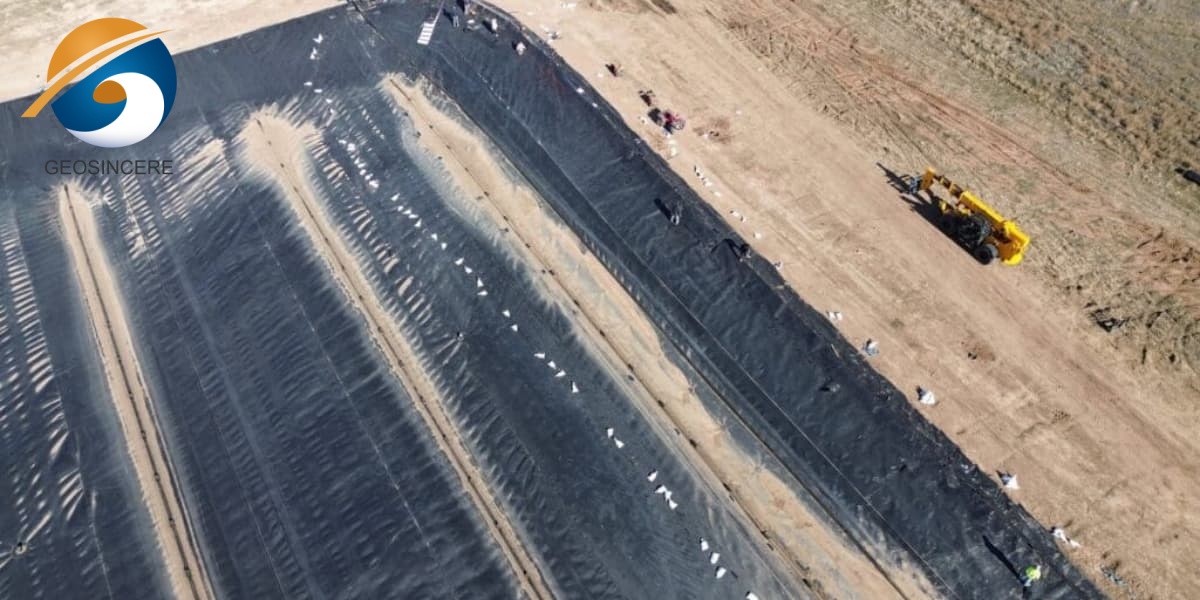
Marketing materials describe every manufacturer as a global leader. Project references tell a more useful story.
When evaluating a manufacturer, ask for references from projects comparable in scale, application, and climate. A manufacturer with extensive experience in Southeast Asian aquaculture may not be the best choice for a cold-climate mining project, even if the liner specification is identical. Resin formulation, welding parameters, and installation practices all vary by environment.
Contact the references. Ask about delivery performance, technical support, and whether the manufacturer responded promptly when issues arose. A manufacturer that performs well when everything goes smoothly is not unusual. One that performs well when a seam fails or a shipment is delayed is worth specifying.
Material cost is the most visible number in any liner procurement, but it is rarely the most important.
A complete HDPE containment system includes subgrade preparation, geotextile cushion, liner material, welding, seam testing, anchor trench construction, and accessories. Material typically represents thirty to fifty percent of the installed cost. Saving ten percent on the liner by choosing a cheaper manufacturer may reduce total project cost by three to five percent—while increasing the risk of a seam defect that could cost many times that amount to repair.
The most expensive liner is the one that fails. Draining a pond or excavating a landfill cell to replace a failed liner costs far more than the original installation. Lost production, environmental remediation, and regulatory penalties add to the total. When evaluating manufacturers, the relevant question is not which one offers the lowest price. It is which one offers the most reliable performance at a price the project can justify.
Before selecting an HDPE liner manufacturer, gather answers to the following questions:
Does the manufacturer hold GRI-GM13 compliance with third-party test reports?
Can it provide lot-by-lot test data for thickness, density, tensile strength, and OIT?
What is the roll width, and how does it compare to project requirements?
What is the thickness tolerance across full rolls?
Is the resin virgin HDPE, and what is the carbon black content?
Does the manufacturer provide welding procedure specifications and on-site support?
Can it supply matching welding rod from the same production batch?
Are there references from projects of similar scale and application?
What is the manufacturer’s delivery record on past projects?
Does the manufacturer allow factory audits or witnessed testing?
HDPE liner manufacturers are not interchangeable. The global supply landscape includes companies with decades of containment experience, modern production lines, and deep technical support—and companies that compete almost entirely on price with limited documentation.
The right choice depends on the project. A decorative pond may tolerate a commodity liner from a regional supplier. A landfill cell, a mining leach pad, or a commercial aquaculture facility cannot. In those applications, the manufacturer’s certification depth, resin sourcing, production control, and installation support matter as much as the sheet itself.
Evaluate manufacturers on evidence, not claims. Verify certifications with third-party reports. Ask for lot data. Check references. And remember that the liner is only one part of a containment system—the manufacturer who understands that is the one worth specifying.